
Anniversaries
Anniversaries reflect an awareness of history
What began as an event for dignitaries, attended by a small circle of selected guests and featuring a service of honour, ceremonial speeches and doctoral conferrals, soon became a major representative event for the university, featuring demonstrations of the latest scientific achievements, and ultimately culminated in a large-scale public relations campaign to promote the university as an educational institution, attracting huge crowds and taking on the character of a public festival. The last centenary celebration in honour of Julius Echter even took place over the course of a whole year, featuring smaller events and a major ceremony in May. The university now strove with all its might to foster closer ties between the citizens of Würzburg and the university; the aim was to open up and present to the public an accessible and open-minded university. In the process, however, it increasingly lost touch with the student body, with the result that – particularly against the backdrop of the conflicts of ’68 and the major higher education reforms of the 1970s – students felt increasingly sidelined and under-represented, which not infrequently led to discontent on the one hand, but also to disinterest on the part of the students on the other. Today, only a few students are aware of the circumstances surrounding the university’s founding or its historical background; the spirit of mass education and depersonalisation has left its mark.
1682: The highest echelons of the clergy and the middle classes pay tribute to Julius Echter
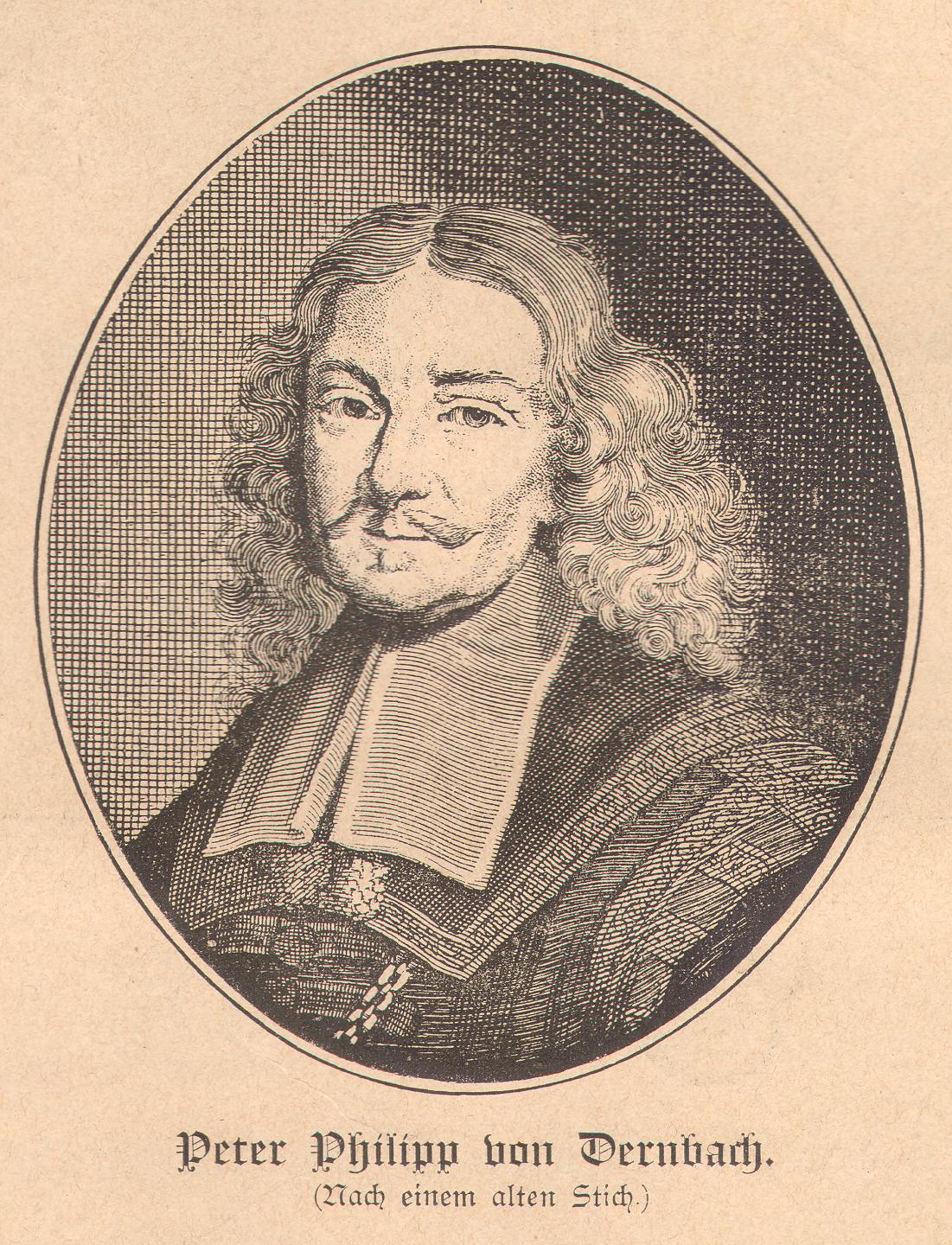
Even the very first centenary celebrations were organised on a grand scale. Despite the difficulties caused by the lingering damage from the Swedish invasions and the Thirty Years’ War, Prince-Bishop Peter Philipp von Dernbach presided over nine days of festivities in honour of the founder. As with the founding celebrations, the circle of invited guests was restricted to the higher and highest echelons of the clergy and the bourgeoisie, alongside nobles and scholars, who together listened to lectures and debates, attended the honours and church services, and commemorated the founder at convivial banquets. At the beginning and end of the centenary celebrations, cannon fire thundered down from the fortress on the Marienberg, providing the backdrop to the events.
1782: Commemoration with representatives from Protestant universities
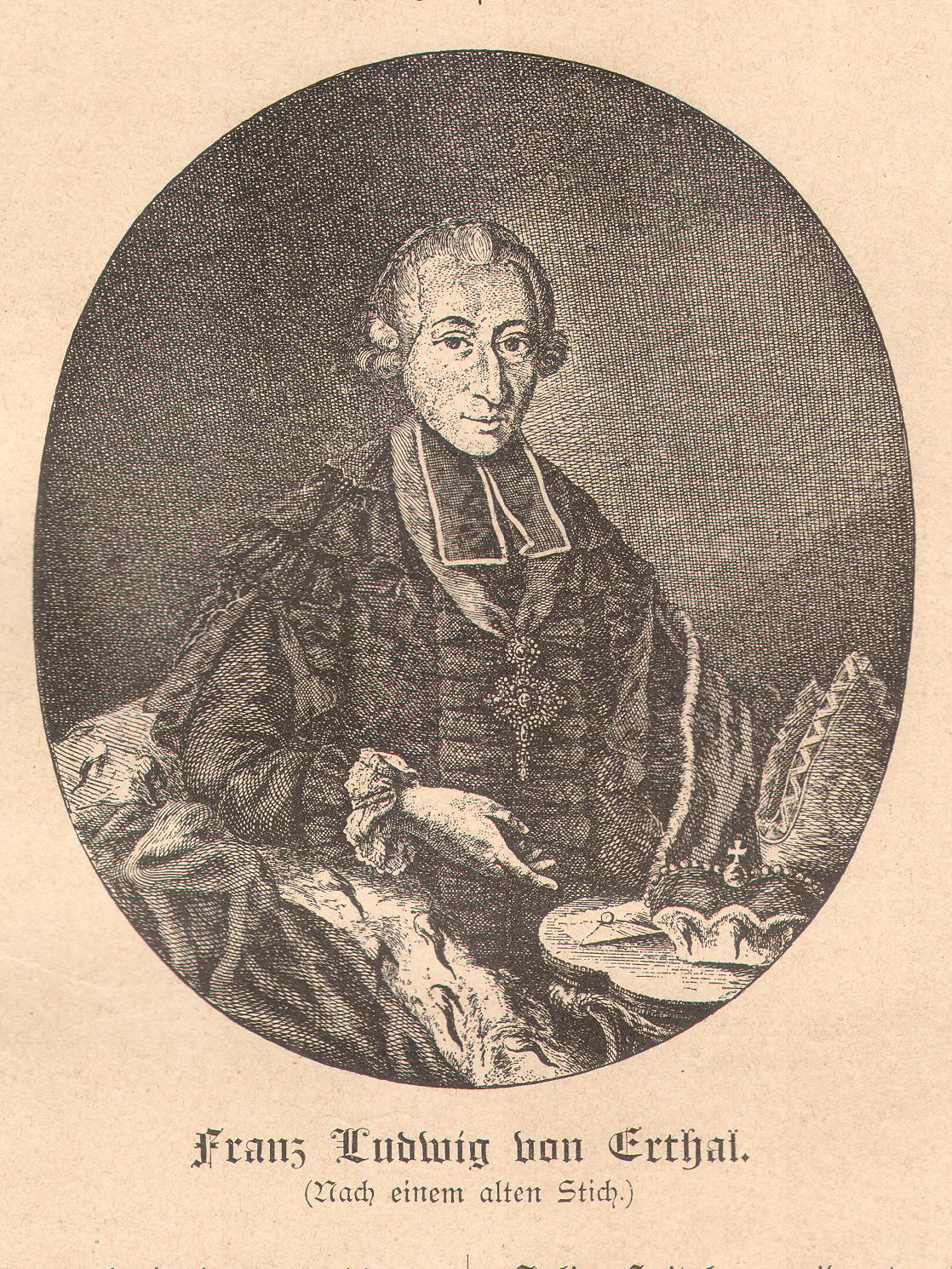
A century later, the cannons at the fortress were once again permitted to greet the guests’ arrival with a thunderous roar, for even the otherwise very frugal Prince-Bishop Franz Ludwig von Erthal decided to honour the founder in a most fitting manner. For the first time, representatives from Protestant universities were also invited, and the celebrations included not only ceremonial speeches and academic debates by the faculties of theology and Arts, but also a proud display of scientific achievements in the form of demonstrations and public physics experiments. Court Councillor Professor Karl Kaspar Siebold personally conducted guided tours of the Juliusspital, showcasing the collections of the latest technical equipment.
The banquet in the Kaisersaal of the Residenz, at which 23 different varieties of Franconian wine were served, will surely remain in the memories of the 92 selected guests for a long time to come. In addition to intellectual and culinary delights, such as a historical wine tasting featuring wines from the years 1540 to 1775 at the Marienberg Fortress, the programme was now also expanded to include sightseeing tours and all manner of artistic performances. Not only was a festive procession organised with student participation, but also a grand ball to round off the celebrations in style. Generously presented with Franconian wine as well as gold and silver anniversary coins, the satisfied guests were bid farewell to the thunderous roar of the fortress cannons.
1882: A city in a state of emergency
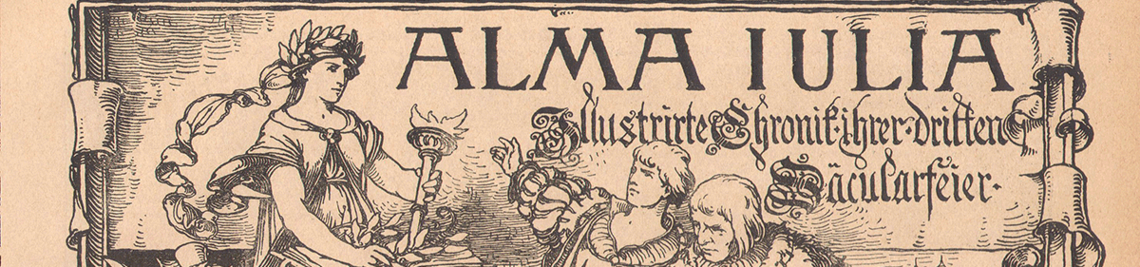
What was arguably the most magnificent jubilee celebration was organised to mark the three-hundredth anniversary; planning began in earnest as early as six years beforehand. A chronicle of almost two hundred pages, illustrated by Franz von Stuck, commemorates the lavish celebrations in honour of the founder, whilst a two-volume history of the university pays tribute to its past. To everyone’s relief, donations flowed in abundantly, so that this time, alongside academic events and church services, there were numerous festive gatherings featuring culinary delights, dancing and music, speeches, honours, theatre performances and socialising.
Despite frequent downpours in summery Würzburg, the city was in a state of excitement and up to 6,000 guests enjoyed the folk-festival-like events in the Ludwigshalle and on the new site belonging to Henry Böttinger, the owner of the former Royal Court Brewery, on Höchberger Straße, from where ‘refreshing, cellar-fresh drink from eight or more sources’ was to flow to all those who were thirsty. 300 guests of honour and delegates feasted at a four-hour banquet, with ten glasses of varying shapes and colours at each place setting – a different one for each of the selected wines. A historic parade featuring magnificent floats, imaginative costumes based on historical designs and numerous marching bands included not only representative delegations from the University of Würzburg, but also showcased all the trades of the city of Würzburg with lovingly decorated parade floats.
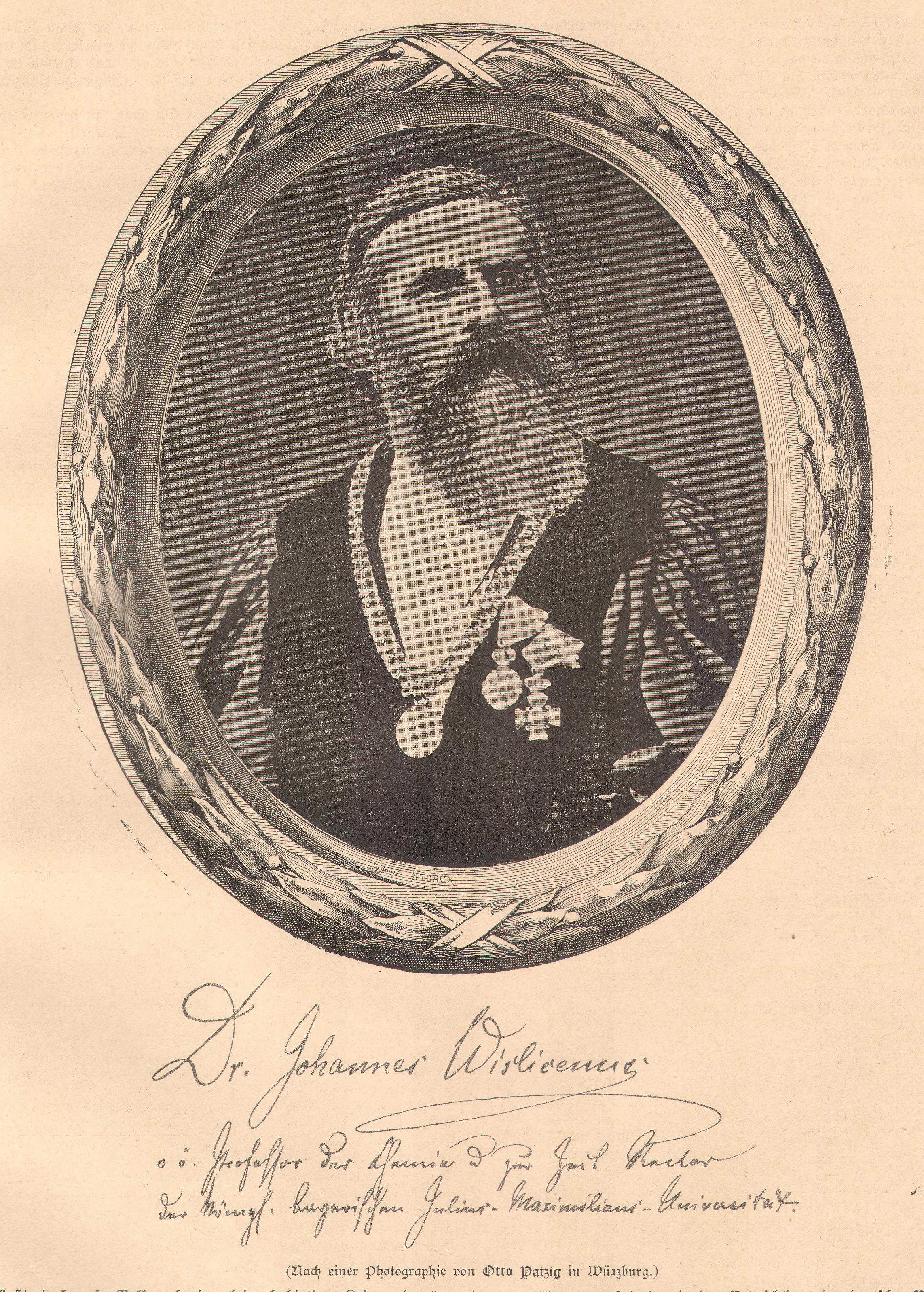
It was not just students and academics, but the whole city that celebrated its university. On the final evening, to round things off, a torchlight procession, accompanied by five marching bands, made its way through Würzburg city centre; it was organised by the entire student body in gratitude and honour of their highly deserving Rector, Professor Johannes Wislicenus.
1932: A first for the half-century celebrations
Inspired by the example set by other universities, it was decided in 1932 to hold the first half-century celebrations marking the founding of the University of Würzburg. However, these were overshadowed by the economic crisis from which the country had only recently emerged and were therefore far from being as grand as might have been hoped. Private donations were scarce, whilst state funding was entirely absent, yet, by joining forces, the organisers managed to put on an anniversary celebration featuring church services, academic ceremonies, a concert featuring the State Conservatoire, and a student production of ‘Wallenstein’s Camp’.
A bronze statue by the Würzburg artist Friedrich Heuler, bearing the apt motto ‘Lord, grant us courage and strength for unity and freedom’, was unveiled in the foyer of the New University, and a commemorative publication running to almost 800 pages was presented. All in all, the organisers succeeded in offering the guests a thoroughly varied programme of entertainment, including guided tours, wine tastings and a convivial celebratory gathering organised by the student body in the Ludwigshalle. Although there was no formal banquet, a grand boat party on the Main was organised to bring the celebrations to a fitting close. The defining feature of this anniversary was likely, first and foremost, the historical context and the associated restrictions; at the end of the report on the celebrations, the author expresses the wish:
‘May the next major commemoration, the four-hundredth anniversary of Alma Julia, be witnessed by a happier generation, able to celebrate carefree festivities in a homeland that has blossomed anew and grown stronger, but may it also be able to recognise that, despite everything that weighs upon and burdens our days, we have done our utmost to preserve and enhance the glory and splendour of the Julius Maximilian University.”
1982: Celebrations overshadowed by student protests
Just as the author of the report on the 350th-anniversary celebrations had hoped, the 400th-anniversary celebrations were indeed a completely different affair from the previous jubilee. Nevertheless, the arrangements cannot be described as unproblematic. The student body was still under the influence of the 1968 movement, and politicisation persisted. As before, the students did not feel adequately represented or involved; this was also the case with this anniversary, which, unlike the previous ones, spanned the whole year with a vast programme of academic events. The actual celebrations commemorating the university’s founder were limited to a few official ceremonies held behind closed doors. Even students who were not members of fraternities or sororities were excluded from taking part, with the exception of a few representatives. Concerts, theatre performances, several exhibitions throughout Würzburg and a public festival lasting several days served to entertain the public and the invited guests. At the heart of this anniversary celebration, however, was the aim of positioning Würzburg as a centre of learning, fostering academic exchange and providing an opportunity to present the University of Würzburg to a wide audience as an institution of knowledge and education. It was hoped that this would foster dialogue between society and academia, and the university’s opening up – including to the citizens of Würzburg – was declared a desired objective. Naturally, alongside a wide-ranging presentation of the university’s activities through countless events, such as lectures, conferences and symposia, its founder was also to be honoured in a fitting manner. To this end, a special commemorative service was held on 13 September to mark the 365th anniversary of Julius Echter’s death, organised by the cathedral chapter and secular dignitaries in the New Church, which had finally been fully rebuilt from its ruins. In a stele commissioned by the University of Würzburg and created by Julian Walter, the Bishop of Würzburg, Paul-Werner Scheel, enshrined the founder’s heart – which had been recovered from the rubble following the night of bombing in 1945 – in the university church, thus fulfilling Echter’s wish to entrust his heart to the care of the university, contrary to tradition.
2002: First commemoration of the university’s foundation in 1402
The 600th-anniversary celebrations, which commemorated the founder, Johann von Egloffstein, on a large scale for the first time, were similarly focused on public perception. Alongside regular university fairs, such as JUMAX, the anniversary celebrations were also intended to bring Würzburg as a centre of higher education more firmly into the public eye. A film produced specifically for the 600th-anniversary celebrations provided an overview of the key stages in the university’s history, its most famous figures, and insights into the current state of research, teaching and services. With around 17,000 students, the university remained one of Germany’s medium-sized universities, and the introduction of the new degree programmes was intended not only to offer more opportunities but also to enable a welcome reduction in the duration of studies. An anniversary year thus provided an opportunity to further tap into the global ‘market’ of first-year students, enhance the university’s public image and attract school leavers. The aim was to uphold the University of Würzburg’s excellent reputation both at home and abroad, and to consolidate and expand its standing. The anniversary celebrations, declared the ‘Year of Science’, comprised a wide-ranging and extremely rich programme. Würzburg, as a ‘destination with a future’, celebrated the founder of university education in Würzburg under the motto ‘Intellectual Awakening in the Middle Ages’ with over a hundred events and numerous academic and cultural highlights. The academic ceremonies for representatives from the worlds of culture, academia, business and politics, held in honour of the founder, played only a minor role.