
![[Translate to Englisch:] Nobelpreis Röntgen Ausschnitt](/fileadmin/_processed_/8/4/csm_Nobelpreis_Ausschnitt_cbf91ddcc5.jpg)
Baldwin and Inge Knauf Award
From 2025, Julius-Maximilians-Universität Würzburg (JMU) will be awarding the "Baldwin and Inge Knauf Prize for Excellent Scientific Achievements". It serves to promote young scientists at the JMU and is intended to strengthen the idea of excellence and competitiveness in all scientific fields.
The images used are generally protected by copyright.
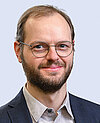
Christof Weiß (2026)
Music researcher Christof Weiß receives the Baldwin and Inge Knauf Award in the Humanities for outstanding achievements in Digital Humanities and Computational Musicology. He combines musical expertise with computer science methods and opens up new approaches to music analysis. His work on machine learning methods, specialised algorithms and their application is internationally visible and groundbreaking. With numerous high-ranking publications, he established himself early on as a leading voice in an interdisciplinary field of research. He is also committed to dialogue between disciplines and communication to a broad public. His research exemplifies the productive combination of technology and culture in the digital age.

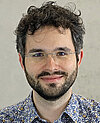
Mona Garvert (2026)
Neuroscientist Mona Garvert has been awarded the Baldwin and Inge Knauf Prize in the Social Sciences for her internationally recognised research at the interface of cognitive neuroscience, psychology and medicine. She investigates neuronal mechanisms of learning, decision-making and their changes in mental illness. Her innovative approach combines imaging techniques, mathematical models and behavioural experiments. A high number of publications, strong citations and significant third-party funding, including an ERC Starting Grant, attest to the quality of her work. She has achieved international independence in a short period of time. She is also committed to gender equality and the promotion of young researchers and combines basic research with social relevance.
Anton Freund (2026)
Junior Professor Anton Freund receives the Baldwin and Inge Knauf Prize in the Natural Sciences for outstanding achievements in mathematical logic. As a highly productive and visionary researcher, he is already one of the European leaders in his field. His work at the interface of logic and theoretical computer science makes fundamental contributions to central scientific issues. They are characterised by depth, conceptual clarity and methodological innovation. Numerous publications in leading journals and his presence at international conferences ensure he has a high visibility. His involvement in scientific organisations is also recognised. Freund epitomises the combination of analytical precision and visionary thinking and is an example of excellent, forward-looking research.

Erik Frank (2026)
Biologist Dr Erik Frank receives the Baldwin and Inge Knauf Award for Life Sciences and Medicine. He was absent from the award ceremony due to urgent fieldwork in Spain. He was honoured for his internationally acclaimed research on the evolution of social wound care in ants. He innovatively combines behavioural ecology, microbiology and chemical ecology. His work shows for the first time that ants treat injured conspecifics in a targeted manner and even amputate limbs to ensure their survival. This opens up new perspectives on social immunity. In addition to his high publication output, Frank's dynamism, collaborations, acquisition of third-party funding and outstanding science communication are impressive.

Dr Jakob Zimmermann (2025)
Since 2024, Dr Zimmermann has been a group leader at the Institute of Systems Immunology Würzburg, the so-called WÜSI, a joint initiative of the University of Würzburg and the Max Planck Society to promote excellent immunological research. Zimmermann's work ranges from basic mechanism research to concrete, therapeutically useful applications. With his specially developed intestinal colonisation models and innovative analysis methods, he has succeeded in making dynamic interactions between microbiota and T cells visible. Zimmermann has already received numerous prizes and awards for his work, such as the Marie Curie Fellowship from the European Union for postdoctoral researchers, the Young Investigator Grant from the Bern Centre for Precision Medicine and, most recently, the prestigious ERC Starting Grant.

Dr Tobias Huber-Loyola (2025)
Tobias Huber-Loyola has been researching at the Julius-Maximilians-Universität Würzburg since 2018. He initially joined the Chair of Technical Physics as a team leader. Since 2021, he has been a habilitation candidate at the Faculty of Physics and Astronomy, and since 2022 he has been independently leading a Quantum Futur junior research group, funded by the BMBF. His research focuses on the generation, characterisation and analysis of quantum states of light and matter. In particular, he is dedicated to the efficient generation of highly entangled photonic states - so-called cluster states - using semiconductor quantum dots, which opens up new perspectives for quantum communication and photonic quantum computing. A world record achieved by him and his colleagues for the indistinguishability of photons from quantum dots emitting directly at telecommunication-relevant wavelengths impressively underlines his profound insight into physics, his dedication to detail and his scientific originality. He plans to integrate the Würzburg site into quantum time frequency networks and to establish a campus-wide quantum network.
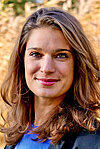
Prof Dr Laura Otto (2025)
Prof. Dr Laura Otto is being honoured as a scientist whose research impressively rethinks the relationships between humans and the environment in a rapidly changing world. Laura Otto has been Junior Professor of Anthropology of the Rural in European Ethnology/Empirical Cultural Studies at Julius-Maximilians-Universität Würzburg since October 2023. Her research is located at the interface of environmental anthropology, multispecies studies and science and technology studies - an interdisciplinary field that she shapes with exceptional methodological care and theoretical foresight. In November 2024, Laura Otto was awarded the prestigious Emmy Noether Fellowship from the DFG for her project "AquaNaturenKulturen". This new project is dedicated to standing bodies of water in rural Bavaria and explores them as political, social and ecological spaces. With over 20 peer-reviewed articles, three monographs and numerous book contributions, Laura Otto regularly publishes in renowned international journals. She is also extremely committed to academic teaching: She has taught over 30 courses in German and English at five universities. Her teaching activities were honoured with a certificate for excellent teaching in 2020.

Prof Dr Alicia von Schenk (2025)
After a good year as a postdoctoral researcher at the interdisciplinary Center for Humans and Machines at the Max Planck Institute for Human Development in Berlin, Alicia von Schenk was appointed to the University of Würzburg in September 2022 at the age of just 26 as one of the youngest junior professors in Germany. Her research focuses on combining behavioural and organisational economics with the challenges of digitalisation. Alicia von Schenk researches how people interact with artificial intelligence, how cognitive biases shape social decisions and how we can counteract disinformation based on evidence. Alicia von Schenk places particular emphasis on the transparency and acceptance of AI in organisations, cooperation with intelligent algorithms and de-biasing mechanisms. She develops experimental designs in which AI acts as a partner, observer or advisor in order to systematically investigate questions of fairness, responsibility and cooperation in human-machine interaction. She is also involved in the field of social knowledge transfer: As the main project manager, she is responsible for an ongoing cooperation with the Bavarian Ministry of the Interior to develop a platform to educate people about disinformation.