![[Translate to Englisch:] Nobelpreis Röntgen Ausschnitt](/fileadmin/_processed_/8/4/csm_Nobelpreis_Ausschnitt_cbf91ddcc5.jpg)
Honorary Senators
Honorary Senators of the University of Würzburg
The title of Honorary Senator is the highest honour awarded by the University of Würzburg. The year in which the honour was awarded is shown in brackets after the name.
The images used are generally protected by copyright.
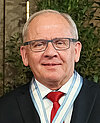
Dr Eugen Ehmann (*1958), appointed in 2026
The University of Würzburg awarded Dr Eugen Ehmann the title of Honorary Senator in 2026 in recognition of his many years of service to the state, law and society as well as his impetus for the development of JMU. Born in 1958, the lawyer shaped public administration in Bavaria for decades with his professional precision, strategic vision and strong sense of responsibility.
After studying law in Mannheim and Erlangen and completing his doctorate, he began his career in the Bavarian civil service. He took on numerous positions of responsibility, including in the Ministry of the Interior, in the State Chancellery and as Vice-President of the Government and finally as President of the Government of Lower Franconia.
In this role, he strengthened a modern, efficient and citizen-centred administration and oversaw major construction projects at the university. In addition to his administrative work, he was also involved in academic research, particularly on data protection and socially relevant legal issues.
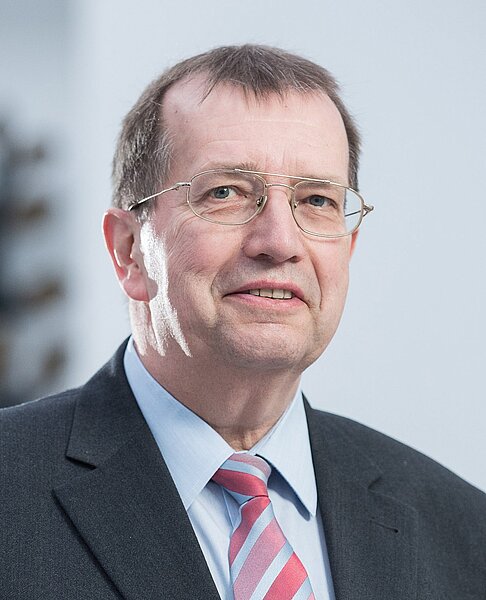
Prof. Dr Dr h.c. mult. Alfred Forchel (*1952), appointed in 2022
In 1990, Alfred Forchel accepted the Chair of Technical Physics at the University of Würzburg. In 1994, he took over the management of the microstructure laboratory, which he held until 2009. He is one of the initiators of the Nanostructure Technology degree programme, the first engineering degree programme at JMU, which was established in the 2000/01 winter semester, and one of the initiators of the Wilhelm Conrad Röntgen Research Center for Complex Material Systems (RCCM), which he headed from 2007 to 2021. From 2007 to 2009, Alfred Forchel was Chairman of the Senate before being elected President of the University by the JMU University Council in 2009. In 2015, he was confirmed for a further term of office until he retired from this position in 2021. Since his retirement, he has been a senior professor at the Faculty of Physics and Astronomy. Alfred Forchel's achievements have been recognised with numerous national and international awards. Alfred Forchel has strategically developed JMU with great foresight and the highest level of personal commitment. He paid particular attention to promoting the acquisition of third-party funding in all disciplines. Particular highlights include JMU's success in acquiring funding for the Cluster of Excellence "Complexity and Topology in Quantum Materials - ct.qmat". Another milestone in the further development of JMU was the remodelling of the Hubland Nord university campus, which opened in 2011. He also focused on improving the framework conditions for studying and teaching. In 2018, JMU was the first Bavarian university to receive system accreditation.
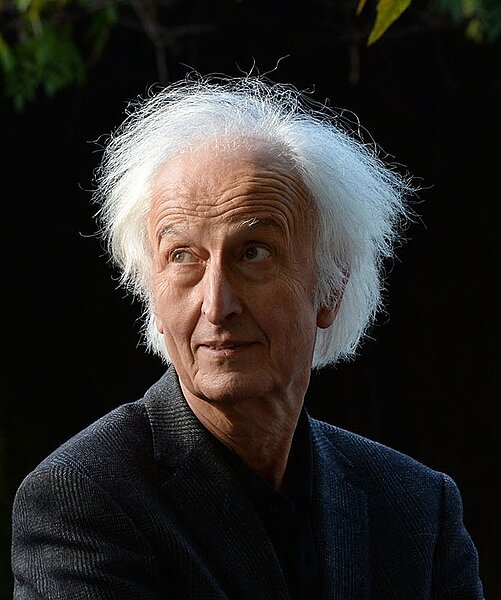
Prof. Dr Dr h.c. mult. Helmut Schwarz (*1943), appointed in 2022
Helmut Schwarz conducts research in the field of molecular chemistry. He is an expert in organometallic chemistry, especially transition metals that are able to selectively activate bonds in organic molecules in the gas phase. This research makes an important contribution to the understanding of catalysers and catalytic processes. He was also instrumental in developing the mass spectrometry analysis method that is frequently used today. He has received a large number of research awards for his scientific achievements. From 2019 to 2021, Helmut Schwarz took on the honourable and difficult task of chairing the JMU University Council. With his immense expertise, he has provided the University of Würzburg with important impetus for research and development. With his foresight, he made a significant contribution to equipping JMU for the future.
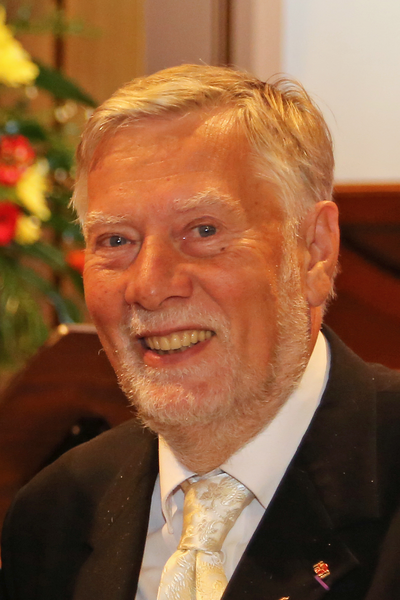
Prof Dr Ekhard Salje (*1946), appointed in 2020
In October 2011, Ekhard Salje became a member of the University Council of Julius-Maximilians-Universität. From 2015 to 2019, he took over its chairmanship. He fulfilled this office with great foresight and a high level of personal commitment.
Ekhard Salje was particularly committed to the founding of the "Siebold-Collegium. Institute for Advanced Studies (SCIAS)" at JMU and enriched its concept with valuable ideas.
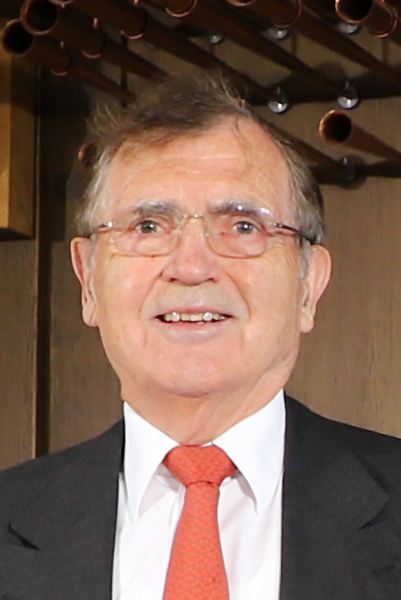
Baldwin Knauf (*1939), appointed 2020
Baldwin Knauf was a member of the University Council of Julius-Maximilians-Universität from 2011 to 2019. As a member of the JMU Board of Trustees since 2019, he has always shown extraordinary commitment to the well-being of Alma Julia. Scientific progress and a close exchange between business and science are particularly close to Baldwin Knauf's heart. He has been committed to promising research projects for many years. For example, he supports ambitious projects in the field of infection research and cancer immunotherapy at Alma Julia. Since 2010, his symposium "Fascination of Research" has been a further sign of his close ties with the University of Würzburg. Since 2011, Baldwin Knauf has been supporting outstanding students at JMU as part of the Germany Scholarship Programme initiated by the German government. He has also supported other university projects and events in a variety of ways, such as the inclusive sports festival "No Limits!".
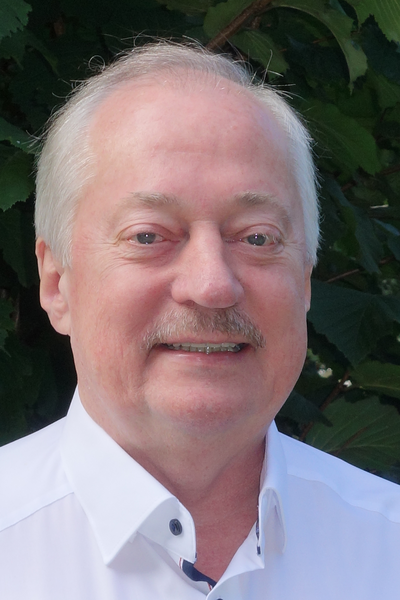
Prof Dr Axel Haase (*1952), appointed in 2020
Axel Haase was appointed to the Chair of Experimental Physics V (Biophysics) at Julius-Maximilians-Universität (JMU) in 1989.
He was President of the JMU from 2003 to 2009. The development of Alma Julia was decisively shaped during his presidency. The first phase of his term of office was characterised above all by the development and implementation of an optimisation concept to sharpen the profile of the University of Würzburg. In his second term of office, he took the initiative to expand the university after the withdrawal of the American armed forces. In a joint effort by the state government, members of parliament from the region, the government of Lower Franconia, the city and building authorities, the Free State acquired the current Hubland-Nord area for Alma Julia (2009). It was also possible to generate a considerable amount of investment for the first remodelling phase.
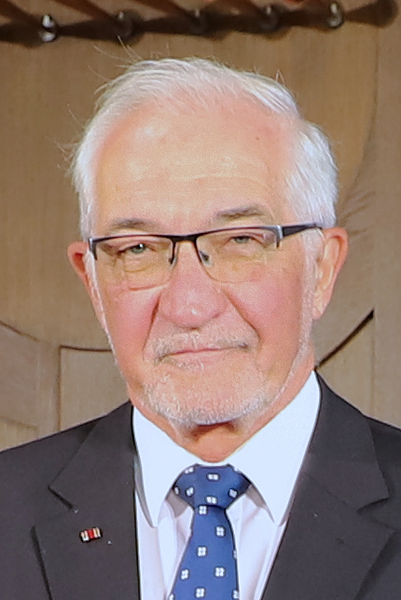
Dr Paul Beinhofer (*1953), appointed in 2020
Paul Beinhofer, to whom science and research have always been of great importance, has not only distinguished himself as a great supporter of Julius-Maximilians-Universität. He also championed the entire region as a centre of science. For example, the establishment of several non-university research institutions can be counted as a remarkable success. The construction and expansion projects of Alma Julia have also always received his full support. As a member of the JMU Board of Trustees, Paul Beinhofer also advised the university in many ways and supported it with great commitment. Furthermore, as Chairman of the Lower Franconian Memorial Year Foundation for Science, he was involved in the annual honours for outstanding doctoral theses together with the University of Würzburg.
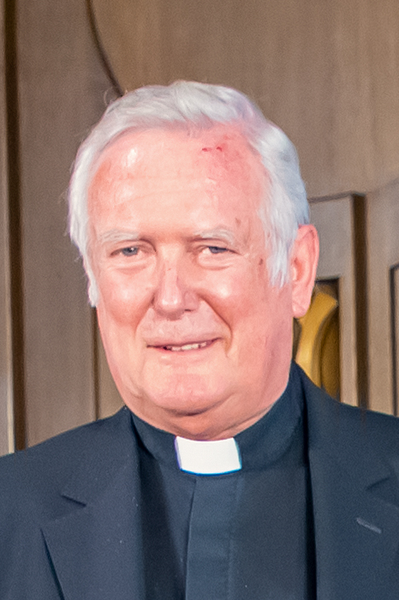
Bishop emeritus Dr Friedhelm Hofmann (*1942), appointed 2020
Friedhelm Hofmann has been a member of the Board of Trustees of Julius-Maximilians-Universität since 2013. In this role, he has shown great commitment and supported the university in many ways. It is largely thanks to him that JMU has been able to use premises on the property of the Congregation of the Sisters of the Redeemer in Würzburg since the 2019/20 winter semester. In the period after the Second World War, the chairs and facilities of the Faculty of Catholic Theology were spread across several properties. Thanks to Friedhelm Hofmann's tireless commitment, it was possible to reunite them close to the old university and the new church. In addition, Friedhelm Hofmann was a strong advocate for the funding of the endowed Chair of Missiology and Dialogue of Religions.
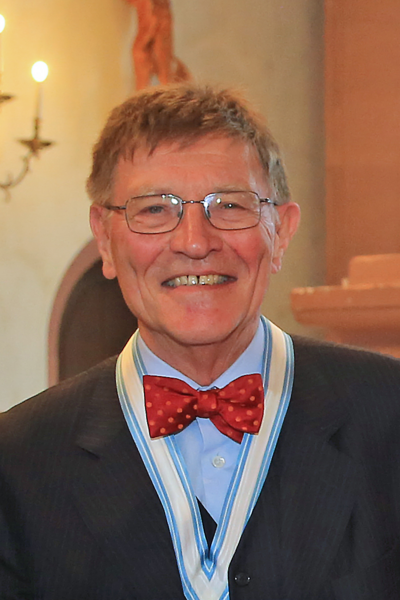
Eberhard Sinner (*1944), appointed in 2019
The expansion of Bavaria as a centre of science, and Würzburg in particular, was a particular concern of Eberhard Sinner. During his time in office, for example, he rendered outstanding services to the establishment of non-university research institutes.
Before the withdrawal of the US Army from the Leighton Barracks at Hubland in autumn 2008, he spoke out with great personal commitment at the "Round Table", which he and Dr Thomas Goppel chaired, in favour of the planned expansion of the university campus on the former barracks site. In a joint effort by members of the regional state parliament, the government of Lower Franconia, the city and building authorities together with the Free State of Bavaria and the university, Eberhard Sinner made a decisive contribution to making the university's construction and expansion plans possible, realising them and thus sustainably strengthening JMU's future viability.
It is largely thanks to Eberhard Sinner's extraordinary commitment and personal dedication that the Free State of Bavaria acquired the Hubland North Campus for Julius-Maximilians-Universität, which has been used successfully and with great visibility since its opening in April 2011 and is being continuously expanded.
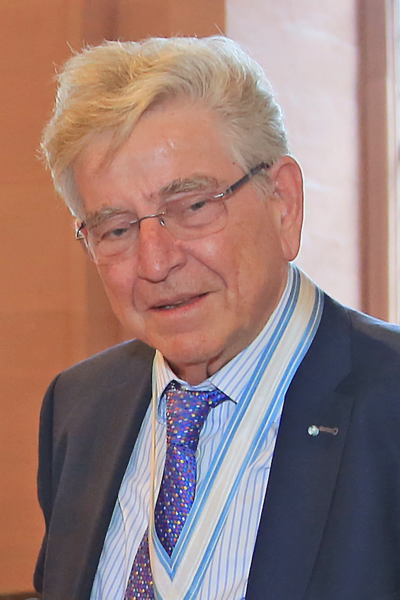
Thomas Goppel (*1947), appointed in 2019
The expansion, refurbishment and modernisation of universities in Bavaria were key political goals of Thomas Goppel, to which he dedicated himself with great personal commitment in the ministry and directly on site. He was instrumental in supporting and accompanying numerous construction and renovation projects on the Würzburg University Hospital campus, for example the construction of the Centre for Internal Medicine or the conversion of the Old Surgery into a state-of-the-art biomedical research centre, which today houses the Rudolf Virchow Centre and the Institute of Molecular Infection Biology, among others. The sports centre at Hubland, which opened in 2004, was also a forward-looking expansion of the university campus in which he was involved.
Thomas Goppel's outstanding support for the conversion of the former barracks site of Leighton Barracks laid the foundation for the decision to acquire the Hubland North Campus in a special way: a forward-looking decision that was finally realised in close cooperation with the government of Lower Franconia, the city and the building authorities.
The Bavarian state government's decision to buy around 40 hectares of military land from the federal government and make the site available to the University of Würzburg was a milestone for JMU that will remain essential for its future as an internationally visible, modern and high-performance university for a long time to come.
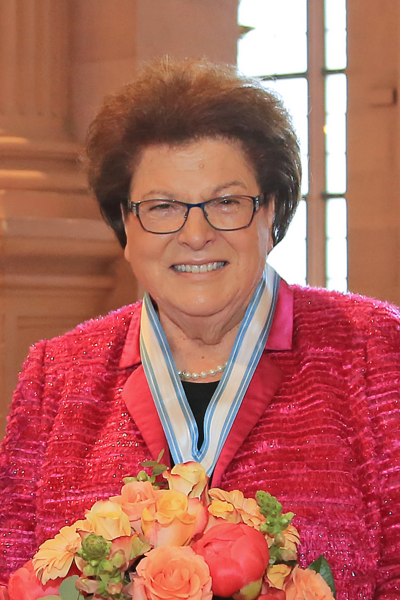
Barbara Stamm (1944-2022), appointed in 2019
For many years, Barbara Stamm helped to shape the fortunes of Julius-Maximilians-Universität (JMU) Würzburg with great personal commitment. As a member of the university's Board of Trustees, she always accompanied and supported JMU's concerns and projects with admirable skill, great goodwill and foresight. In 2009, for example, she made a decisive contribution to facilitating the expansion of the university campus on the Hubland as part of the conversion programme. Barbara Stamm was particularly instrumental in setting the course for the establishment of a non-university research institute, the Helmholtz Institute for RNA-based Infection Research (HIRI).
As a prominent supporter, Barbara Stamm also makes an invaluable contribution to numerous university projects, for example as Honorary President of the "Forschung hilft" foundation of the "Hilfe im Kampf gegen Krebs e.V." association and as patron of the 400th anniversary year of our university library. As part of the "Elterninitiative leukämie- und tumorkranker Kinder Würzburg e.V." and the Interessengemeinschaft zur Förderung der Kinder der Würzburger Intensivstation e.V. (KIWI), she is impressively committed to helping those affected and their relatives, including providing hospital-related accommodation for family members during treatment.
Barbara Stamm has also achieved a great deal for JMU in the area of the University Hospital in particular and has provided long-term support, for example for the German Centre for Heart Failure (DZHI) or the Comprehensive Cancer Centre (CCC) as well as numerous construction measures to further optimise clinical care and infrastructure.
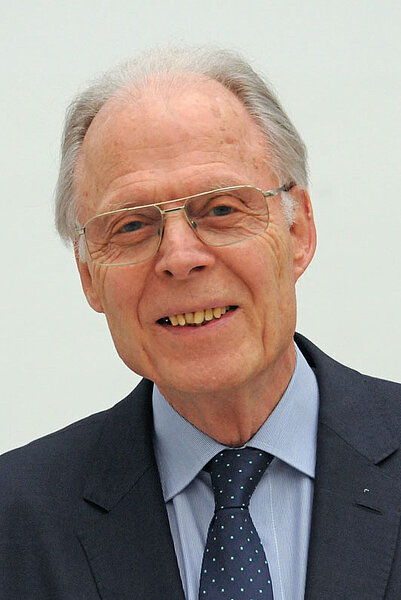
Prof Dr Dr h.c. Volker ter Meulen (*1933), appointed in 2018
After several research stays in the USA, Volker ter Meulen was appointed Head of the Department of Clinical Virology in 1971 and, in the following year, Associate Professor at the JMU Würzburg. In 1975, he was appointed Full Professor of Clinical Virology and Immunology at the Institute of Virology, which he headed until his retirement in 2003. He is a key pioneer of molecular biological virus research and a pioneer of neurovirology. As a member and honorary member of various scientific academies and associations, he has left his mark on the German and global research community. Countless awards honour his commitment, including the Max Planck Research Prize, the Ernst Jung Medal for Medicine and the Robert Koch Gold Medal, as well as various crosses and medals of merit from the Federal Republic of Germany and the Free State of Bavaria. The JMU has already honoured him for his many years of extraordinary commitment with the "Bene Merenti" medal in gold and the Rinecker Medal of the Faculty of Medicine.
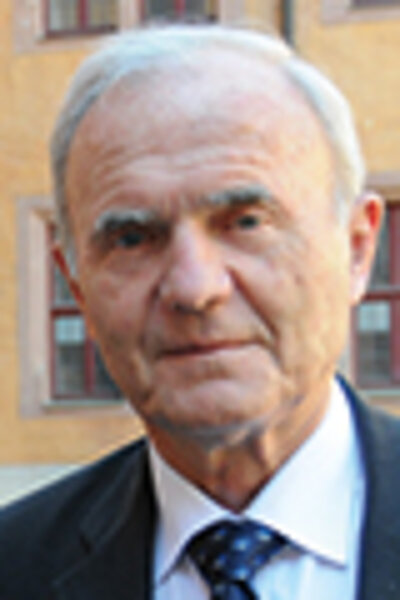
Prof Dr Otmar Issing (*1936), appointed in 2016
Otmar Issing was Professor at the University of Erlangen-Nuremberg from 1966 and Director of the Institute for International Economic Relations. In 1973, he moved to the Chair of Economics, Money and International Economic Relations at the University of Würzburg, which he held until 1990. In 1990, he took over the position of Chief Economist on the Executive Board of the Deutsche Bundesbank. From 1998 to 2006, Issing was a member of the Executive Board of the European Central Bank with responsibility for the Directorate-General for Economics and Economic Research. He helped shape the fortunes of the University of Würzburg as a member of the University Council and later the University Council from 2004 to 2015.
Prof Dietmar Willoweit (1936-2023), appointed in 2013
Dietmar Willoweit held the Chair of German Legal History, Civil Law and Canon Law at the University of Würzburg for 20 years and was President of the Bavarian Academy of Sciences and Humanities for five years. The academic focus of Willoweit's research is on the influence of legal thought on the processes of state formation since the High Middle Ages and related problem areas. These include the development of public criminal law in the late Middle Ages and the early modern period and the legal status of Jews in the Middle Ages.
Prof Dr Siegfried Hünig (1921-2021), appointed in 2011
Siegfried Hünig was Professor of Organic Chemistry from 1961 to 1988. As the last director of the former Institute of Chemistry at the university, he took on the task of organising its reorganisation into the Institutes of Inorganic Chemistry and Organic Chemistry. He also had to plan the new chemistry centre on the Hubland campus, as the buildings on Röntgenring had become too cramped.
Prof Dr Ernst Helmreich (1922-2017), appointed in 2011
Professor of Physiological Chemistry from 1968 until his retirement in 1990, he established the Department of Physiological Chemistry at the university and led it to national and international scientific success. Together with the biochemist Professor Guido Hartmann, he designed the university's Biocentre from the early 1970s onwards and eventually realised it.
Prof Dr Kurt Kochsiek (1930-2013), appointed in 2010
From 1980 until his retirement in 1998, Professor of Internal Medicine and Director of the Medical Clinic. At the university, he established cardiovascular research and its co-operation with physics in NMR imaging. This constellation established Würzburg's leading position in cardiovascular research in Germany. The basis for this success was also a successful appointment policy, which Kurt Kochsiek played a decisive role in shaping as Dean of the Faculty of Medicine (1989-1991) and as Medical Director (1994-1997) of the University Hospital.
Prof Dr Jörg Hacker (*1952), appointed in 2009
From 1986 to 2008, first Professor of Microbiology, then (from 1993) holder of the Chair of Molecular Infection Biology at the University of Würzburg. Among other things, he was spokesman for the Centre for Infection Research and coordinator of the European Union-funded network of excellence EuroPathoGenoMics. President of the Robert Koch Institute (Berlin) since 1 March 2008. President of the German Academy of Sciences Leopoldina (Halle) since March 2010.
Prof Dr Walter Eykmann (*1937), appointed in 2009
Member of the Bavarian State Parliament from 1978 to 2008, where he was a member of the Cultural Policy Committee until 1998 and Chairman of the Committee for Civil Service Issues from 1986. Among other things, he worked to ensure that the university was able to set up technical degree programmes and was awarded the pioneering first Professorship of Grammar School Education in Bavaria in 2005. In 2002, he was appointed honorary professor at the University of Würzburg (Chair of General Educational Science).
Manfred Ach (1940-2024), appointed 2009
Member of the Bavarian State Parliament from 1994 to 2008, where he chaired the Committee for State Budget and Financial Affairs. He has always been a staunch and unreserved advocate for the financing of major university projects and construction measures in the state parliament.
Prof Dr Dieter Salch (*1940), appointed in 2007
Honorary professor of tax and corporate law since 2001. Member of the Board of the Universitätsbund since 1990, member of the Board since 1997. In 1991, Salch set up a foundation under the umbrella of the Universitätsbund with the aim of promoting research and teaching, particularly at the Faculty of Law. In 1999, he became a member of the University Council of the University of Würzburg, a position he held for several years, initially as deputy chairman and finally as chairman.
Prof Dr Hans Zehetmair (1936-2022), appointed in 2005
Bavarian Minister of State from 1986 to 2003, with responsibility for science and research from 1989. Honoured for the constant support he gave the university in developing its profile.
Prof Dr Theodor Berchem (*1935), appointed in 2004
President of the University of Würzburg from 1975 to 2003. During his time in office, a whole series of decisions were made that led to the university becoming one of Germany's top universities. He made targeted structural changes to build on the university's strengths. Among other things, he introduced application-oriented degree programmes, promoted international cooperation and exchange programmes and expanded collaboration with industry.
Rosemarie Preh (1921-2005), appointed in 2001
Sponsor of the Universitätsbund and the Preh Foundation. Back in 1990, the University of Würzburg made her an honorary citizen for her services to supporting research and teaching at Alma Julia. Rosemarie Preh was also honoured with the Federal Cross of Merit on Ribbon and the Bavarian Order of Merit.
Prof Dr Paul-Werner Scheele (1928-1919), appointed in 2000
Bishop of Würzburg from 1979 to 2003, for his close ties with the Julius Maximilian University, in particular the Faculty of Catholic Theology, and for his services to ecumenism and as a scholar.
Dr Franz Vogt (*1935), appointed in 2000
President of the government of Lower Franconia from 1984 to 2000. Through his commitment to the university, he particularly supported efforts to introduce engineering degree programmes.
Dr Herbert Brause (1920-2012), appointed in 1995
Honorary doctorate from the University of Würzburg (1980) and its constant supporter. In 1976, he took on a teaching position in school education at the university, where he also imparted technical media knowledge. In 1986, he set up a foundation named after him which, among other things, promotes media education. The foundation financed, for example, the purchase of a multimedia system in the ENT clinic and the construction of the new Centre for Languages and Media Didactics at Hubland.
Arnold Heimberger (1913-2016), appointed in 1993
From 1948 to 1978, Syndikus of the University of Würzburg, from 1969 also permanent deputy to the Chancellor, for his services to the resumption and further development of university operations after the destruction of the city of Würzburg in March 1945.
Dr Michael Klett (*1938) appointed 1992
Chairman of the Management Board of Klett AG (Stuttgart). Klett has been closely associated with the university since 1970 at the latest, when it financed the first language laboratory. Michael Klett was involved in the university's efforts to counteract the drifting apart of medicine/natural sciences and humanities as co-organiser of the Würzburg Symposia.
Dr Werner H. Dieter (1929-2024), appointed in 1990
Chairman of the Management Board of the then Mannesmann Rexroth GmbH (Lohr) from 1972, Chairman of Mannesmann AG (Düsseldorf) from 1985, President of the Würzburg-Schweinfurt Chamber of Industry and Commerce from 1979 to 1982. He was responsible for strengthening contacts between the university and Main-Franconian companies and was involved in the IHK company donation for the 400th anniversary of the university in 1982.
Dr phil. h.c. Otto Schäfer (1912-2000), appointed in 1990, Member of the Board of the Universitätsbund Würzburg, Schweinfurt.
Baron Richard von Swaine (1901-1994), appointed in 1990, Member of the Board of the Universitätsbund Würzburg, Schweinfurt.
Albrecht Fürst zu Castell-Castell (1925-2016), appointed in 1984, for his services to the University as Chairman of the Universitätsbund for many years.
Dr iur. et rer. pol. Rudolf Maron*, appointed in 1978
Heinz Günder (1904-1972), appointed in 1967, District President of Lower Franconia.
Gunnar Wester*, appointed 1967, Consul of Sweden, Chairman of the Management Board of SKF Schweinfurt.
Hellmut Metzing (1919-1999), appointed in 1964, Honorary Consul of Guatemala, owner of Zeidler und Wimmer, Kirchheim.
Dr Werner Premauer (1912-1996), appointed 1962, Member of the Board of Bayer. Vereinsbank, Munich-Geiselgasteig.
Dr Franz Steffen*, appointed in1962, member of the Board of Management of Bayer. Vereinsbank, Munich.
Kurt Schuster*, appointed 1961, Director, Rottach-Egern
Dr Hanns Seidel (1901-1961), appointed 1959, Bayer. Minister President, Munich.
Josef Kern (1906-1985), appointed in 1959
Director of Überlandwerk Unterfranken AG, Würzburg.
Dr Georg Schäfer (1896-1975), appointed in 1958, co-owner of Kugelfischer, Georg Schäfer & Co, Schweinfurt.
Dr Karl Wilhelm Peterson (1891-1964), appointed in 1957, Managing Director of SKF Kugellagerfabrik GmbH, Schweinfurt.
Dr Franz Stadelmayer (1891-1971), appointed 1956, Lord Mayor, Director of BR, Würzburg.
Anton Gastreich* (1900-), appointed 1955, owner of Richter & Frenzel, Würzburg.
Dipl.-Ing. Josef Riepl (1898-1987), appointed 1955, owner of the construction company Josef Riepl, Munich.
Dr Gotthold Wahl*, appointed in 1954, Director of Landesversicherungsanstalt Unterfranken, Würzburg.
Dr Friedrich Noell (1881-1967), appointed in 1952, Kommerzienrat, Würzburg.
Prof. Dr med. Dr med. h.c. Fritz König (1866-1952), appointed in 1951, Privy Medical Councillor, Director of the Surgical University Clinic, Clinic Director of the Luitpold Hospital, Würzburg.
Prof. Dr phil. Dr rer. Nat. Dr med. h.c. Georg Rost (1870-1958), appointed in 1950, Privy Councillor, Würzburg.
Prof. Dr phil. Josef Martin (1884-1973), appointed in 1949, Professor of Classical Philology and Rector in Würzburg.
Jakob Preh (1889-1945), appointed in 1942, factory owner, Würzburg.
Prof. Dr Rudolf Denig (1867-1960), appointed 1938 , ophthalmologist and professor of clinical ophthalmology at Colombia University, New York.
Rudolf Leonhardt*, appointed in 1933, Kommerzienrat, Director of the Würzburg University printing works Stürtz.
Dr med. h.c. Hans Löffler (1872-1955), appointed 1932, Lord Mayor, Würzburg.
Dr med. h.c. Dr phil. h.c. Ferdinand Springer (1881-1965), appointed 1931, publisher, Berlin.
Georg Karl Völk (1877-1947), appointed in 1929, Kommerzienrat, Würzburg.
Dr iur. h.c. Julius Ritter von Henle (1864-1944), appointed 1929, District President, Würzburg.
Dr Josef Schneider (1845-1927), appointed 1922, ophthalmologist, Milwaukee.
*Life data unknown.