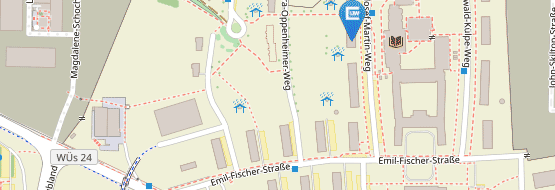
Event overview

Date: 24 March, 5 - 7 p.m.; online via GoToMeeting
Speakers: Prof Doreen Reifegerste, Prof Frank Schwab
Doreen Reifegerste is Professor of Health Communication at the University of Bielefeld and focuses, among other things, on how health promotion can be communicated in a gender-sensitive way. To this end, she will first clarify a few terms and then use historical and current practical examples to show which DOS and DON'TS need to be considered in the field.
In the second part of the event, Frank Schwab will provide information on the psychological foundations of emotions and stress in the workplace and explore the question of whether stress reactions are being intensified, particularly as a result of advancing digitalisation, and whether they are also being transferred to the private environment as a result of increasing home working.
Registration up to and including 22.03.2021 via the registration form on our homepage.
Successful marketing is a basic recipe for successful companies. This applies today more than ever. In digitalised and international markets, companies are confronted with the task of attracting the attention of more and more potential customers. Small and medium-sized companies in particular often lack the human and financial resources to realise marketing projects professionally. However, there are already cost-effective and user-friendly ways of realising professional marketing. Digital storytelling plays an important role here.
Narratives have always fundamentally characterised human communication. However, digital storytelling is more than just a form of communication or narrative. Digital storytelling can be used not only to convey content, but also values, visions, experiences, questions, solutions to problems and, last but not least, emotions.
"Storytelling is based on the assumption that our brain does not store images of objects and processes, but rather structures of sub-elements that appear together again and again. The magic word is patterns. We humans are successful models of evolution because we have a memory that stores sequences of patterns, recalls patterns auto-associatively, stores patterns as unchanged representations and organises patterns hierarchically." (Häusel quoted from Wieskamp 2016, p.2)
In our online seminars "Digital Storytelling (Part I)" and "Digital Storytelling - Practice for Marketing and Public Relations (Part II)", we offer you the opportunity to gain a theoretical and application-oriented insight into the various forms and practices of storytelling for PR and marketing. From the benefits of storytelling, basic strategies and tools of successful storytelling to practical application tailored to the needs of your company / organisation and your target groups.
Lecturer: Anja C. M. Schönau (academic counsellor, visual artist, Julius-Maximilians-Universität Würzburg and others)
Where: Online via GoToMeeting
When: Part I: Monday, 08.03.2021, 10.00-12.00 hrs
Part II: Friday, 12.03.2021, 10.00 - 12.00 a.m.
Registration: Part I: By Thursday 04.03.2021 via the registration form in the event overview on our homepage.
Part II: By Wednesday 10 March 2021 via the registration form in the event overview on our homepage.
Please bring along: 3-5 short films showing activities of your company / business (10-20 sec.), pictures of customer / business premises, if necessary portrait pictures / pictures of employees in work processes that you want to include
Successful marketing is a basic recipe for successful companies. This applies today more than ever. In digitalised and international markets, companies are faced with the task of attracting the attention of more and more potential customers. Small and medium-sized companies in particular often lack the human and financial resources to realise marketing projects professionally. However, there are already cost-effective and user-friendly ways of realising professional marketing. Digital storytelling plays an important role here.
Narratives have always characterised human communication. However, digital storytelling is more than just a form of communication or narrative. Digital storytelling can be used not only to convey content, but also values, visions, experiences, questions, solutions to problems and, last but not least, emotions.
"Storytelling is based on the assumption that our brain does not store images of objects and processes, but rather structures of sub-elements that appear together again and again. The magic word is patterns. We humans are successful models of evolution because we have a memory that stores sequences of patterns, recalls patterns auto-associatively, stores patterns as unchanged representations and organises patterns hierarchically." (Häusel quoted from Wieskamp 2016, p.2)
In our online seminars "Digital Storytelling (Part I)" and "Digital Storytelling - Practice for Marketing and Public Relations (Part II)", we offer you the opportunity to gain a theoretical and application-oriented insight into the various forms and practices of storytelling for PR and marketing. From the benefits of storytelling, basic strategies and tools of successful storytelling to practical application tailored to the needs of your company / organisation and your target groups.
Lecturer: Anja C. M. Schönau (academic counsellor, visual artist, Julius-Maximilians-Universität Würzburg and others)
Where: Online via GoToMeeting
When: Part I: Monday, 08.03.2021, 10.00-12.00 hrs
Part II: Friday, 12.03.2021, 10.00 - 12.00 a.m.
Registration: Part I: By Thursday 04.03.2021 via the registration form in the event overview on our homepage.
Part II: By Wednesday 10 March 2021 via the registration form in the event overview on our homepage.
Please bring along: 3-5 short films showing the activities of your company / business (10-20 sec.), pictures of customer / business premises, portrait pictures / pictures of employees in work processes that you would like to include, if applicable
Digitalisation is an essential prerequisite for the optimisation of existing processes and the associated cost reduction, especially during the pandemic. Processes are simplified, standardised and optimised with the integration of a suitable ERP system.
Find out in the keynote speech by Prof Dr Axel Winkelmann why an ERP system can represent a decisive competitive advantage, especially for small and medium-sized companies.
In the subsequent supervised case study, you will have the unique opportunity to test weclapp's cloud-based ERP system up close and find out how you too can benefit from digitalisation.
The event will take place virtually on 05.03.2021 from 10:00 - 11:30 am.
In order to ensure intensive personal support for all participants during the framework case study, we unfortunately have to limit the number of participants to a maximum of 10 people.
Secure your free participation today by registering by 26 February 2021 at the following e-mail address:
Digitalisierung@uni-wuerzburg.de
Once you have successfully registered, we will send you the access data for the event and the ERP system as soon as possible.
First Come, First Serve
We look forward to your participation!
02.03.21, 17.00 hrs
In many areas, small and medium-sized enterprises (SMEs) are among the pioneers of technological progress. In this presentation, we would like to show you the possibilities of support for your research and development through federal funding. The support provided by the federal government, the EU and the state of Bavaria in the form of project funding within the framework of specialist programmes, special funding programmes, funding for technology transfer, business start-ups or research infrastructure will be presented and explained.
Please register by e-mail at alessandra.bierwagen@uni-wuerzburg.de. The registration deadline is 01.03.2021.
The symptoms and course of COVID-19 couldn't be more different between patients - some don't even notice their infection and others need intensive care. What role do gender and age play in this? In this lecture, PD Dr Christine Krempl will explain the current state of knowledge on infections caused by SARS-CoV-2 and the pathogenesis of the disease involved. Particular emphasis will be placed on the gender- and age-specific differences in patient reactions.
The event is part of the ESF-PromptNET Gender Medicine project and is free of charge for cooperation partners thanks to EU funding. This event will take place online on 18.02.21 at 12 noon . Please register by the day before at laura-sofia.colon@uni-wuerzburg.de until the day before.
We look forward to seeing you there!
Your PromptNET Team
We are currently experiencing a very different way of working together than we could have imagined a year ago. Work and interpersonal dialogue often take place online. Contact restrictions prevent us from meeting up with friends, colleagues and family as usual. All of this can be stressful.
Mindfulness-based stress reduction offers various formal and informal exercises for focussing on the present moment. Staying in the here and now, remembering that it is always the present moment in which life takes place, can slow things down, especially in these turbulent times. In her online offer, Prof Kübler presents exercises that everyone can do on their own or together.
The event is part of the ESF-PromptNET Gender Medicine project and is free of charge for cooperation partners thanks to EU funding. This event will take place online on 10.02.21 at 5 pm . Please register by the day before at laura-sofia.colon@uni-wuerzburg.de until the day before.
We look forward to seeing you there!
Your PromptNET Team
When? Wednesday, 03.02.2021, 5 pm
Where? Online via GoToMeeting
Lecturer: Prof. Dr Frank Schwab, Chair of Media Psychology, Julius-Maximilians-Universität Würzburg
Digital media and digital communication are very popular. It is impossible to imagine both the workplace and private life without them. Digital information, digital entertainment, websites, intranet, Zoom and Microsoft Teams, messengers and smartphones...
How and why are they used? What are the special features of media use in companies? Are there gender-specific differences in usage behaviour? Isn't it actually all a waste of time and what needs are we bringing to these digital worlds? From a psychological perspective, we look at everything we do as people with the media we create. At first glance, many things seem illogical, but at second glance they seem understandable and explainable.
Registrations are possible until 01.02.2021 at ricardo.muench@uni-wuerzburg.de You will receive the access data for the meeting room the day before the event.
Many of us have been working from home a lot since the coronavirus pandemic began. As a result, we move less - we don't get to go to work, but we also don't get to go to the next meeting, visit colleagues in the office next door or take a short walk to lunch. This makes it all the more important to incorporate exercise breaks into our home office routine.
In his presentation, Dr Andreas Petko will combine theory and live online exercise sessions - join in and use this event as an incentive to get moving regularly, even when working from home.
The event is part of the ESF-PromptNET Gender Medicine project and is free of charge for cooperation partners thanks to EU funding. This event will take place online on 27.01.21 at 5 pm . Please register by the day before at laura-sofia.colon@uni-wuerzburg.de until the day before.
We look forward to seeing you there!
Your PromptNET Team
Stately vs pixie-like, pastel-coloured recipe ideas vs lumberjack steaks for "real blokes". The differences in the generally accepted ideal image of a male or female body are immense, and this also determines how overweight and obesity are perceived and dealt with by the sexes In addition, there are actual gender-specific differences in fat distribution and energy balance caused by sex hormones Type 2 diabetes mellitus is not only closely associated with obesity, but here too gender-specific differences influence screening, treatment and complications.
Dr Ann Cathrin Koschker, specialist in internal medicine with a focus on endocrinology and diabetology, heads the Diabetes and Metabolism Outpatient Clinic and the Internal Obesity Outpatient Clinic at Würzburg University Hospital.
The event is part of the ESF-PromptNET Gender Medicine project and is free of charge thanks to EU funding. This event will take place online on 21.01.21 at 5 pm . Please register by 20.01.21 at laura-sofia.colon@uni-wuerzburg.de .
We look forward to seeing you there!
Your PromptNET Team
Not only do mental illnesses occur differently in men and women, but the severity, progression and psychological and somatic comorbidities can also vary considerably. This can and should also be taken into account in drug and non-medication therapy.
The lecture will provide an overview of the current data on this topic and discuss how gender aspects of mental illness can be better taken into account in the future in order to optimise the diagnosis and treatment of those affected.
Prof Dr Sarah Kittel-Schneider has been Deputy Clinic Director of the Clinic for Psychiatry, Psychotherapy and Psychosomatics at Würzburg University Hospital since 2019. She is Professor of Developmental Psychiatry and Head of the Mother-Child Unit. Her research interests include the genetics of mental illness, ADHD and peripartum psychiatry.
The event is part of the ESF-PromptNET Gender Medicine project and is free of charge thanks to EU funding.
This event will take place online on 9.12.20 at 6 pm. Please register by 8.12.20 at laura-sofia.colon@uni-wuerzburg.de.
We look forward to seeing you there!
Your PromptNET team
Evidence-based practice for healthcare professionals and other interested parties
Nowadays, help with health problems is just a mouse click away. The internet is full of testimonials, tips and recommendations. And therapists, doctors and pharmacists can also research a wide range of study results, reviews and case reports online. Drug manufacturers substantiate their advertising promises with risk reduction, event-free courses and significance values.
In this jungle of information, therapists and patients can quickly lose the overview. It is often difficult to reliably recognise the difference between good and bad information. Basic knowledge of statistical evidence can help here.
In this presentation, which will be followed by a discussion, we would like to give you a brief introduction to the necessary basic statistical terms, and then in the main part give you practical tips on how to apply evidence-based practice in your own everyday life and present helpful research options.
If you have any questions or suggestions regarding the event, please contact our email address prompt.net@uni-wuerzburg.de
Please register here by 11.12.20.
Thursday 29 October 2020, 2:00 pm
Online via GoToMeeting
When filing a patent application, knowledge of the market is a basic prerequisite for the success of the project. Especially in globalised markets, it is often difficult to gain exactly this overview.
In our patent search workshop, our expert Saschan Korder will show you how you can gain this overview. He will introduce you to the right search methods, parameters and media and practise these with you using practical examples.
For further information and suggestions, please contact prompt.net@uni-wuerzburg.de
Please registerby 27 October 2020 using the following form.
Online via GoToMeeting / Thursday 22 October 2020, 2:00 pm
Industry 4.0 and internationalised markets are contributing to ever faster production innovation. These innovations must be protected quickly and correctly by patents.
Our lecturer Saschan Korder will introduce you to the basics of the patent system and explain the requirements and effects of a patent application.
In a second part, he will also explain how to read and understand patents using examples.
For further information and suggestions, please contact prompt.net@uni-wuerzburg.de
Registration until 20 October 2020
Please register using the following form.
The digitalisation of processes and business models will play a key role in determining the future competitiveness of German SMEs. At the same time, the number of success stories is limited. This is not least due to the fact that the potential of digitalisation is often not understood and the necessary prerequisites for implementing innovation and digital solutions are lacking.
In this webinar, researcher and management consultant Dr Marcus Fischer presents concepts for holistic digitalisation. How digital are we? What pent-up demand exists in key areas? When and how can I use technologies such as artificial intelligence and process automation effectively? Dr Fischer will answer these and other questions and show best practices and helpful examples.
Subnetwork: Digitalisation
Speakers: Dr Marcus Fischer
Date: 16.10.2020,15:00-16:00 o'clock
Registration via: www@digital-and.de
Please enter the title of the corresponding webinar when registering. You will receive the participation link after successful registration.
Digitalisation has been the dominant topic in business and society for over a decade now. The emergence of new technologies such as "artificial intelligence" and "blockchain" suggests that this will remain the case in the coming years.
How has digitalisation changed companies in Mainfranken? What benefits has it brought and what new business models have been implemented? The Digital Compass 2019/2020 answers these and many other questions. 50 companies were analysed as part of a cooperation between the University of Würzburg and the Würzburg Schweinfurt Chamber of Industry and Commerce to examine the current status of digitalisation in Mainfranken.
We would like to present the most important results of the study in the associated webinar.
Subnetwork: Digitalisation
Speakers: Dr Marcus Fischer and Dr Florian Imgrund
Date: 15.10.2020,16:00-17:00 o'clock
Registration via: www@digital-and.de
Please enter the title of the corresponding webinar when registering. You will receive the participation link after successful registration.
In recent years, more and more girls and women have been diagnosed with autism spectrum disorders, even though there is still little information about the "typical characteristics" of women.
This lecture will provide basic knowledge about the various terms used to describe ASD and the special features of the behaviour and perception of girls and women on the autism spectrum. Understanding these particularities forms the basis for autism-specific support and encouragement for autistic people. The external view in this lecture will be presented by Daniela Ursel, employee at the Autismus Kompetenzzentrum Unterfranken e.V. (Autism Competence Centre Lower Franconia).
Nadine Amend will present the very personal inside view of a young woman on the autism spectrum. With a lively presentation, she will give an insight into her very personal and not only professional everyday life.
Both speakers will be happy to answer questions after the presentation.
Please register by 22.09.20 at laura-sofia.colon@uni-wuerzburg.de by 22 September 2020.
We look forward to seeing you there!
Speakers | Daniela Ursel Nadine Amend - Autism Competence Centre Lower Franconia e.V. |
Date | 23.09.2020 18.00 - 20.00 hrs |
Place | tba |
It has been proven that good leadership behaviour has a positive effect on the health of employees in a company, resulting in fewer sick days. The new conditions of the increasingly digitalised world of work in Industry 4.0 in particular pose new challenges for companies when it comes to employee health, satisfaction and loyalty to the company. Health management that is customised to the needs of companies and their employees is becoming increasingly important. This is more than just the opportunity to exercise during the lunch break and fruit in the coffee kitchen. Through efficient and strategic health management, every company can develop the right measures to maintain the health and performance of its employees.
We want to talk to you about occupational health management and shed light on the gender-specific, psychological and physiological advantages and disadvantages of good and bad health management.
Date 1: Workshop, 09.07.2020, 6 pm
Good health management adapts to the day-to-day work of employees and the structures of a company.
Together with researchers from JMU, we would like to familiarise ourselves with your company's health management and discuss it with you. The resulting questions and discussion points will be dealt with in greater depth in our online seminar (27 July): Our experts will present options for expanding and optimising your BGM concept.
Please register by (07.07.2020) to(prompt.net@uni-wuerzburg.de)!
Attention, the number of participants is limited!
Date 2: Dialogue: Presentation of the university concept with a focus on the gender aspect, 16.07.2020, 6 pm
Lecturer: Prof.'in Dr Marie-Christine Dabauvalle (University Women's Representative, Cell Biologist)
Prof Dr Marie-Christine Dabauvalle is a member of the Health Management Steering Committee at JMU and will give you an insight into the university's best-practice example. The "physical working environment" - the laboratory, the lecture theatres, the office, the workshop, etc. - is part of the "health" complex. - is one part of the "health management" complex. The other part is the "psychological working environment": the relationships between managers and employees, the tone of everyday working life and conflicts.
In both parts, the needs of women and men often differ greatly. Recognising these differences and acting accordingly makes it possible for employees to grow together with the company.
Get to know diversified and gender-equitable health management from the perspective of the university and ask your questions to our expert.
Registration until 16.07.2020 at 14:00 (extended!) via our registration form on our website
Date 3: Online seminar ,27.07.2020, 5 pm
Lecturers:
Prof. Dr Marie-Christine Dabauvalle (University Women's Representative, Chair of Electron Microscopy)
Prof Dr Frank Schwab (Chair of Media Psychology)
Dr Birgit Sperlich (Institute of Sports Science)
Sebastian Seibel (Institute of Work, Industrial and Organisational Psychology)
Katja Beck-Doßler (Head of the JMU Conflict Counselling Centre)
Julius-Maximilians-Universität has a great deal of expertise in the field of occupational health management, both in research and in practice. Our researchers from the fields of psychology, biology and sports science, together with members of the university's health management steering committee, will discuss aspects of good health management in various companies with you. In short presentations and case studies, a number of different application scenarios will be dealt with in which the participating companies can find themselves in order to obtain helpful and profitable starting points for their own health management.
Registration by (27.07.2020 at 14:00) via our registration form on our website
The economic development towards a new Industry 4.0 continues to drive the internationalisation of markets and trade. Even smaller, regional businesses are being given the opportunity to sell their goods nationwide or even worldwide and expand their customer base thanks to online retail. On the one hand, this means that there are greater sales opportunities for goods and services in digitalised markets. On the other hand, however, the competitive pressure on individual providers is increasing - it is becoming more and more important to provide your own company and your own product with a special recognition value.
The protection of trade marks and patents is therefore becoming increasingly important, but also more complex. If you want to protect your trade mark, you not only have to observe formal requirements, but also carry out intensive preparatory work.
In our online seminar "Trade marks and patents", we offer you the opportunity to gain an insight into the various aspects of the trade mark and patent application process. From using the right search tools, to identifying the right trade mark forms and classifications, to the correct handling of forms, we offer a comprehensive introduction to the topic of "Trade Marks and Patents".
Lecturer: Saschan Korder (Inventor Consultant and Patent Manager, Service Centre for Research and Technology Transfer, Julius-Maximilians-Universität Würzburg)
Where: Online via GoToMeeting
When: Thursday, 25 June 2020, 2-4 p.m.
Registration: Please register using the following form
The coronavirus pandemic is keeping the whole of Germany on tenterhooks. The current shutdown in particular is not only bringing far-reaching changes to private life, but is also presenting the economy with enormous challenges. We have therefore also decided in favour of the webinar format, which you can attend conveniently online without having to travel to and from the event.
In the current crisis, many companies are developing a new appreciation for a reliable IT infrastructure. However, almost as many companies, especially SMEs, are finding that they have missed out on helpful investments in digitalisation. Existing processes do not have the necessary flexibility to perform large parts of task processing from the home office, to adapt processes as required or, thanks to suitable company software, to be able to dispense with spontaneous agreements between colleagues and the need to look up information in Leitz folders.
Major obstacles include incompletely digitalised processes and the currently unreliable quality of company data in the software solutions used. The most common problems are incomplete entries, outdated information, errors and inconsistencies of all kinds.
We would like to show you why now is the right time to digitise your company and what you need to bear in mind.
So take your chance and find out on
24.04.2020 from 10.00 am - 12.00 pm from our speakers, among others:
- Prof Dr Axel Winkelmann (Chair of Management and Business Information Systems)
- Corona as a catalyst for digitalisation
- What digital processes have to do with a new Porsche
- Opening up new business areas
- Dr Florian Imgrund (digital& GmbH)
- Why now is the ideal time for digital transformation
- Concepts for the sustainable digitalisation of internal processes
- How the short-term digitalisation of small companies can succeed
- Recommendations for action & best practice
- Sophie Prauser & Julian Hornung (University of Würzburg - NAVIBIS)
- Advantages of a reliable corporate data foundation
- Consequences and costs of poor data quality in practice
- Technical and organisational measures to improve data quality
- Julia Holleber (IHK Würzburg-Schweinfurt)
- Presentation of various funding programmes for digitalisation, including "Go Digital" & Digitalbonus Bayern
Following the presentations, you will have the opportunity to ask our experts individual questions in an open discussion round.
You can look forward to an exciting and entertaining webinar with high-calibre speakers from business and science as well as illustrative examples and best practices.
Participation is free of charge. For better planning, please register by 22.04.2020 by email to: digitalisierung@uni-wuerzburg.de You will then receive a confirmation email with the access data for the webinar.
The event is organised for representatives of small and medium-sized enterprises as part of the PROMPT@NET knowledge transfer project, which is funded by the European Social Fund (ESF). ESF in Bavaria - investing in your future.
If you have any further questions, please do not hesitate to contact me. If you do not wish to receive any further news in the future, please let us know.
3D printing is a hot topic. The possibilities associated with this technology, from rapid prototyping to the customised printing of spare parts, offer both opportunities and challenges for companies. For SMEs in particular, the purchase of such printers often represents a considerable investment.
We would like to show you how you can benefit from 3D printing even without this investment. As part of the sharing economy, digital platforms are emerging that enable companies to buy and sell printing capacity automatically. The idea and concepts behind such platforms and the technology of 3D printing will be presented by various speakers.
So take your chance and find out more from our speakers on 9 October 2019 from 16:00-18:00:
- Johannes Beischl (3D Prima Technologie Deutschland GmbH)
- Overview of the development of 3D printing
- Current status and possible applications
- Challenges and developments of modern 3D printing processes
- Demonstration of a 3D printer and 3D scanner
- Chair of Management and Business Information Systems
- Presentation of the DiHP research project on the automatic trading of production capacities
- Oliver Stübs (Infosim GmbH & Co. KG)
- Data exchange between companies
- Role of ERP systems & transfer standards
- Anne Ain (3YOURMIND)
- Requirements and framework conditions for a platform for trading production capacities
- 3D printing specific factors
- Links to third-party systems
- Automated verification of printing capacities within a network
Following the presentations, you will have the opportunity to have individual questions answered by our experts in an open discussion round.
You can look forward to an exciting and entertaining evening with high-calibre speakers from business and science, as well as illustrative examples and applications of this disruptive technology.
Participation is free of charge. For better planning, please register by 04.10.2019 by email to: digitalisierung@uni-wuerzburg.de
Subnetwork | |
Speakers | Chiara L. Freichel, Laurell Popp, Fabian Schatz |
Date | 9 October 2019,16:00-18:00 |
Venue | Peking Hall, Josef-Stangl-Platz 2 |

In addition to an exclusive tour of the university's exhibition stand, ESF-PROMPTNET will be presenting itself to its cooperation partners with a number of exciting workshops.
Among other things, the JMU Business Informatics sub-network Digitalisation offers the opportunity to test a completely new purchase-sales programme using an ERP demonstrator.
In the "Honeycloud", you can use the example of bee welfare to find out how state-of-the-art sensor technology can be used optimally in sensitive areas to conveniently read valuable data via an app. A central field for Industry 4.0.
The ESF-PROMPTNET Lounge on the stand offers the opportunity to network and exchange ideas.
On Tuesday, 1.10.Gender Medicine and the LivingLABs experimental network will also be holding a barefoot trail on the topic of "Walking correctly" for you.
Free guest tickets to these events are available for co-operation partners.
Please register briefly by e-mail: prompt.net@uni-wuerzburg.de
We look forward to welcoming you to our stand.
In addition to our exclusive event for cooperation partners on 2 October from 11 a.m. to 1 p.m.on Tuesday, 1 October, Gender Medicine and the LivingLABs experimental network will be offering a barefoot trail on the subject of "Walking the right way" at the university stand at the Mainfranken Messe .
In four workshops throughout the day (11:00, 13:00, 15:00 and 17:00) you will learn more about the importance of feet for our health, the role of walking in the prevention of diseases and the benefits of walking barefoot. Afterwards, you can have your feet and movement analysed and get practical tips for walking barefoot while walking along the barefoot path.
Free guest tickets to this event are available for co-operation partners.
Please register briefly by e-mail: corinna.frank@uni-wuerzburg.de
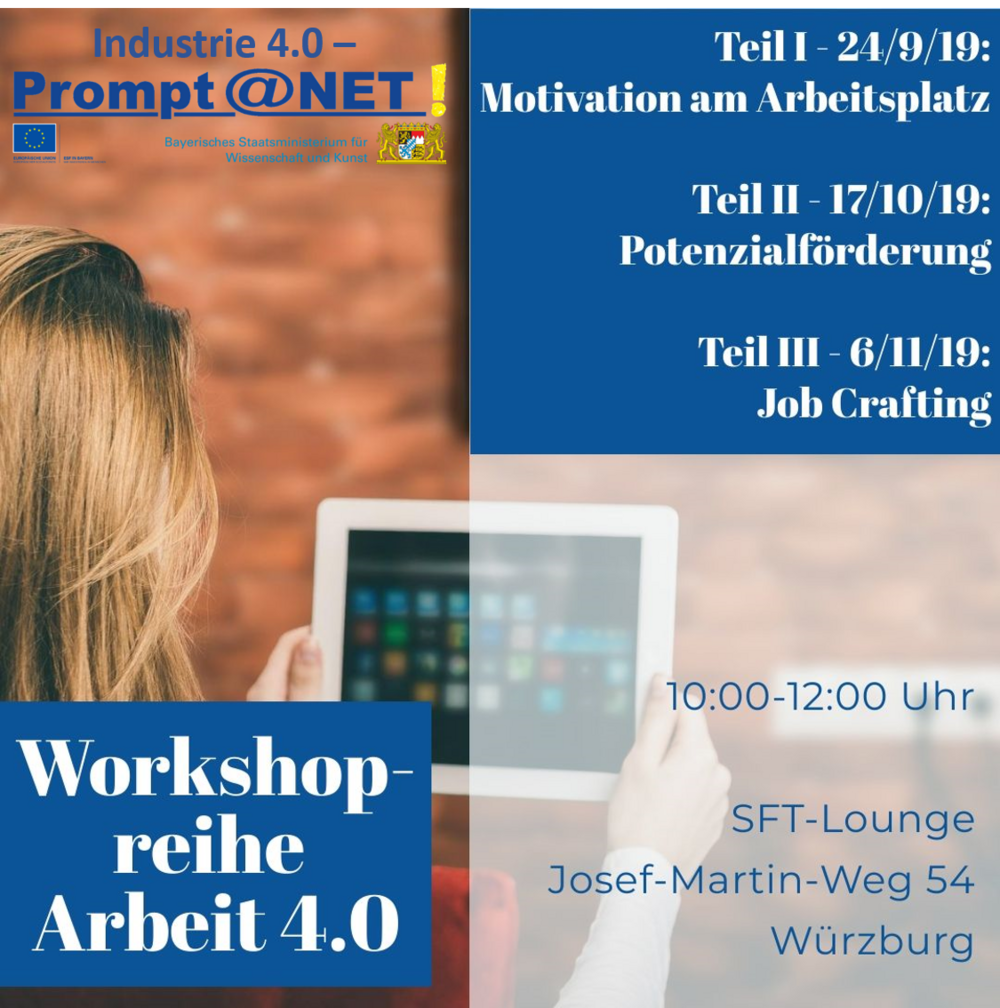
Digitalisation as part of the so-called Industry 4.0 revolution brings with it completely new challenges for employees and companies in and around the workplace.
How can the motivation and potential of employees be recognised and promoted, even against the backdrop of a shortage of skilled workers, and how can employees adapt their own jobs to new challenges independently?
Our experts in occupational, industrial and organisational psychology have the answers to these questions for you. The three-part ESF-PROMPTNET workshop series provides managers, HR staff and all interested employees with the latest scientific findings on Work 4.0.
Part I Workshop: Motivation in the workplace, 24.09.2019 (10:00-12:00)
Motivation is a challenge but also a prerequisite for successful action. Motivation not only has a favourable effect on employee performance, but also reduces staff turnover. But what exactly is motivation and how can it be encouraged? In the course of the workshop, we will work out specific ways to increase (employee) motivation. You will learn about different approaches and how you can use them in your company and in everyday life.
Lecturer: Leonie Schelp (Theis)
Registrations still possible!
Part II Workshop: Promoting potential, 17.10.2019 (10:00-12:00)
Even in times of digitalisation and globalisation, employees represent important potential for companies. Recognising and promoting potential is an important key to Professional Development. During the workshop, we will work on ways to recognise and promote potential. We will also take a look at possible challenges and how we can deal with them.
Lecturer: Leonie Schelp (Theis)
Registration until: 9 October 2019
Part III Workshop: Job Crafting, 06.11.2019 (10:00-12:00)
Digitalisation is constantly changing the world of work and brings with it both challenges and opportunities. In order to master these successfully, job crafting involves independently adapting your own work to your personal goals, skills and values. You will have the opportunity to try out this method for yourself under our guidance and find out what levers you can use to optimise your job.
Lecturer: Thea Ebert
Registration until: 29.10.2019
Please register by email to prompt.net@uni-wuerzburg.de.
Download invitation and programme
Subnetwork | |
Speakers | Chair of Work, Industrial and Organisational Psychology: Leonie Schelp (Theis), Thea Ebert |
Programme dates | 24.9. / 17.10. / 6.11.2019, each 10:00-12:00, followed by a closing session |
Venue | SFT-Lounge ( 4th floor right), Josef-Martin-Weg 54/2, 97074 Würzburg |
Dr Löffler is a senior physician at the Interdisciplinary Day Therapy Centre at the University Hospital of Würzburg and heads the consultation hours for complementary oncology and integrative medicine at the Comprehensive Cancer Centre Mainfranken.
What's the story behind the famous man's cold? What role does this small difference play in (complementary) oncology and what does it mean for our daily work with patients?
Together, we looked at the current state of studies on the topic and explored ideas for integrating gender aspects into patient care using the example of complementary medicine.
Subnetwork | |
Speakers | Dr Claudia Löffler, Senior Physician at the Interdisciplinary Day Therapy Centre at Würzburg University Hospital |
Date | 07.08.2019, 17:00-20:00 hrs |
Venue | Seminar room 205, Building 46, University of Würzburg |
A special lecture event took place on Wednesday, 24 July 2019. Under the title "Broken Heart", cardiologist Prof Dr Christiane Angermann looked at this topic with regard to sex and gender differences. Although suicide, Takotsubo cardiomyopathy and depression occur differently in men and women, pathophysiologically there are common roots...
Interesting insights are provided and some aspects are placed in a medical and literary context. An exciting exchange of different perspectives on the human organ that leaves no one untouched: the heart.
We ask for binding registrations with the names of all participants by 19 July 2019 to corinna.frank@uni-wuerzburg.de.
Subnetwork | |
Speakers | Prof Dr Christiane Angermann |
Date | 24 July 2019, 18:00 hrs |
Venue | At Hubland, University of Würzburg |
The blockchain hype is still in full swing even after the crash of Bitcoin in 2018. Cryptocurrency is just the first use case of a technology that has the potential to fundamentally change many industries. It is important to note that there is no such thing as THE blockchain, but that the underlying technology differs depending on the use case. What all blockchains have in common is that they do not need to be managed, coordinated and controlled by a central organisation.
Take your chance and find out on 26 June 2019 from 16:00-18:00, among other things:
- What exactly is a blockchain?
- How can I utilise the potential of this technology in my company?
- What new business models are possible with blockchain?
- Can blockchain threaten my business model?
We would also like to introduce you to our current research project PIMKoWe (Platform for the Integrated Management of Collaborations in Value Creation Networks). The research project deals with the question of how relevant business data can be stored decentrally and unalterably on a blockchain on the basis of cryptographic chaining, so that the integrity of value creation partners is guaranteed and trust and transparency within corresponding networks are ensured.
We look forward to seeing you there!
Subnetwork | |
Speakers | Gregor Friedrich-Baasner, Adrian Hofmann, Fabian Schatz (University of Würzburg) |
Date | 26 June 2019, 16:00-18:00 |
Venue | Peking Hall, Josef-Stangl-Platz 2 |
The workshop series "Promoting physical activity in old age" focussed on various aspects of physical activity and ageing. In the first part, the participants dealt with the theoretical basics. Prof Billy Sperlich explained the biological processes of ageing and their consequences for movement sequences and ability. The relevance of the topic became clear from the many questions asked by the participants.
In the second part, the participants were able to experience age for themselves: using the GERT simulation suit, they were able to try out how well they can still move with 30-40 additional years of life and which everyday movements cause problems. Under the guidance of sports scientist Philip Kunz, the participants learnt specific exercises to prevent movement problems in old age and to promote movement in old age.
The last part of the series was specifically geared towards the needs of SMEs, which were identified in the first and second parts. The SMEs' main areas of interest can be summarised under the keywords "prevention" and "everyday practice". The participants worked with fictitious people for whom strategies to promote physical activity were to be found and, under the guidance of Dr Birgit Sperlich, developed solutions for more physical activity in everyday life. They also discussed ways of creating state-funded programmes to promote physical activity and offering courses.
Thursday, 16.05.2019
18:00-20:00
Focus: state of research
Thursday, 23 May 2019
17:00-20:00
Focus: Simulation & Practice
Tuesday, 28 May 2019
17:00-20:00
Focus: Development (R&D)
Subnetwork | Gender Medicine |
Speakers | Prof Dr Billy Sperlich |
Date | 16.05.2019 18:00-20:00 |
Venue | Sports Centre of the University, Mergentheimer Str. 76, 9782 Würzburg |
Automation, digitalisation, Industry 4.0 - these are seen as the key to maintaining and increasing the competitiveness of companies in global competition. However, in order to automate processes and workflows, it must be ensured that the data is available in a processable, i.e. standardised, format. For this purpose, special formats have been defined for structuring data, which are summarised under the term eStandards.
Although the use of electronic standards ensures a large number of competitive advantages, their introduction is associated with high implementation costs. The consequences are enormous expenditure in terms of time and resources, which often also represent a financial risk for small companies. The assessment of success before the actual introduction of eBusiness standards is therefore a particularly difficult task for SMEs, as they often have no experience in this environment and the investment potential is very limited.
This is where the information platform developed as part of the Komplex-e research project(https://tool.komplex-e.de/#/de) can help. The platform provides SMEs with an interactive tool that offers support both in the selection of suitable eStandards and in the associated cost estimation.
We look forward to seeing you there!
Subnetwork | |
Speakers | Gregor Friedrich-Baasner and Daniel Neuß (University of Würzburg) |
Date | 15.05.2019,16:00-18:00 h |
Venue | Peking Hall, Josef-Stangl-Platz 2 |
Craftsmen are often faced with the following problem: customers want a quotation, they have to write invoices and want to process the orders on hand. This is not always easy to organise in terms of time. But there is a support solution: modern business software, such as ERP systems for the office.
Participants learn how to use the human factor when introducing new, digital solutions in the company and how to involve and integrate employees in the digitalisation process. The aim is to organise change in company processes in a harmonious and effective way. This session will focus on emotions and processes in particular. Participants will learn ways to utilise them productively.
Please register for the event by emailing tanja.granzow@uni-wuerzburg.de
Subnetwork | |
Speakers | Prof Frank Schwab, Dr Astrid Carolus |
Date | 14.05.2019 16:00-19:00 |
Venue | New University (seminar room 411/4th floor), Sanderring 2, 97070 Würzburg |
Coaching on gender-typical communication situations in the
healthcare sector
This event looks at the connections between gender and sex
and communication. This will be explained and
reflected on in role plays and commentaries. We consider communication as a process that takes place on a non-verbal,
paraverbal and verbal level. Empirical studies show that men and
women communicate quite similarly in some cases, but also very
differently in others. Gender-typical communicative patterns are worked out and described
and made tangible and reflected upon in the role-playing games.
Sub-network | |
Speakers | Prof Frank Schwab |
Date | 25.04.2019 |
Venue | Centre for Media Didactics (Room 005), Theodor-Boveri-Weg |
Find out in exciting short presentations:
- How online and offline retail can be efficiently linked - How to create a consistent customer experience across all sales channels
- How you can achieve significant cost savings with the help of IT-supported business management
- Where you can obtain support and funding Afterwards, you will have the opportunity to network and exchange ideas with all speakers and other participants during a "get together".
The programme including agenda and speakers can be found here.
The aim of the event is to give regional specialist and retail businesses an understanding of the great opportunities offered by digitalisation and the associated multichannel sales.
Participation is free of charge.
For better planning, please register briefly by email to: digitalisierung@uni-wuerzburg.de
We look forward to seeing you there!
Subnetwork | |
Speakers | Prof Dr Axel Winkelmann, Ralf Ludewig Handelsverband Bayern, Fabian Gwinner Chair of Management and Business Information Systems, Christian Meier 4SELLERS GmbH, Bernhard Weiß plentymarkets GmbH, Alex Schönberg webfellows UG |
Date | 02.04.2019, 16-19 o'clock |
Venue | Peking Hall, Josef-Stangl-Platz 2 |

Have you never attended a Campfire Breakfast before? Are you interested in the topics of sensor technology and security in communication networks?
Then take the opportunity to generate your own knowledge in these fields.
How do you do that?
As part of our Campfire Breakfast, you can generate the majority of the moderated discussion and knowledge exchange yourself following short presentations by selected experts. You can direct your own learning, hear multiple perspectives on the same topic and share experiences with people in the room. The central idea of this special setting is networking and the free development of new ideas.
10:00 am -Towards the omni-present firewall
Nicholas Gray, Chair of Communication Networks
In the business world, as in the private sector, the Internet is playing an increasingly central role and the degree of networking associated with it is constantly increasing. Driven by new applications, mobile devices and the connection of entire production plants in the context of Industry 4.0, as well as critical infrastructure, the management of these networks has become increasingly complex. An important area here is secure operation and the use of active protection mechanisms against a variety of attackers with different interests and available means. In their presentation, the researchers will highlight new approaches to how previously unknown security vulnerabilities can be discovered more quickly and how the security of modern networks can be increased through the use of new concepts such as software-defined networking (SDN) and network function virtualisation (NFV) in order to stay the necessary steps ahead of attackers.
10:40 a.m. - Sensors for optical gas analysis
Dr Fabian Hartmann, Chair of Technical Physics
Molecules or chemical compounds have a characteristic "colour", which is exploited in light-based analysis methods. Light of a certain "colour" (or wavelength) is absorbed by molecules, causing them to vibrate and attenuating the light. The chosen "colour" (or wavelength) selects the molecules and the degree of attenuation quantifies their quantity. Current fields of research include the monitoring and reduction of nitrogen oxides (NOx), ammonia and other molecules and gases. Novel detector technologies for optical gas analysis for the wavelength range between approx. 2 and 7 µm are produced at the Chair of Technical Physics.
11:10 am Discussion
11:30 a.m. Closing with networking
Please register informally by e-mail (prompt.net@uni-wuerzburg.de).
Subnetwork | |
Speakers | Dr Fabian Hartmann, Nicholas Gray |
Date | 01.04.2019, 10:00-11:30, followed by a closing event |
Venue | Josef-Martin-Weg 54/2, SFT-Lounge ( 4th floor right), 97074 Würzburg |
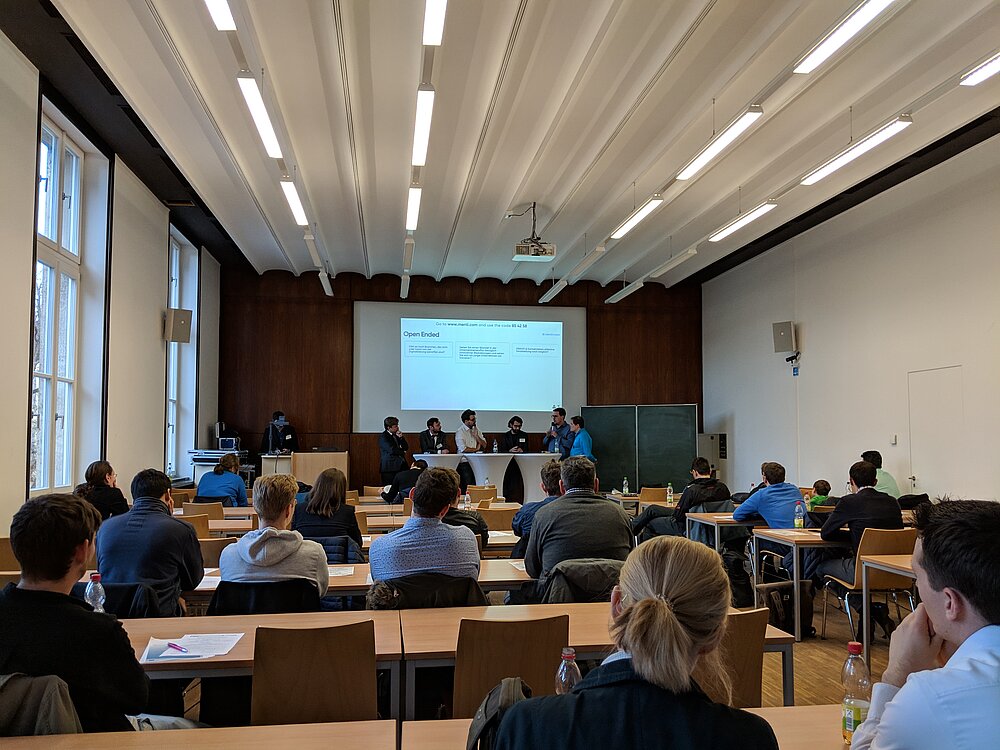
What makes some technology start-ups so successful and what can established companies learn from them? Representatives from business and science will address this question at this free networking event.
The aim is to provide small and medium-sized enterprises (SMEs) with new food for thought and to present possible role models that have already taken the path from technological innovation to a successful business model.
Firstly, the speakers of the evening will introduce themselves with compact presentations and explain from their point of view what makes them successful and what others can learn from them.
During the subsequent moderated panel discussion between the speakers, similarities and differences between the successful companies will be discussed in order to provide the audience with further ideas and inspiration.
After the event, there will be an opportunity to network and discuss further questions at a get-together.
3.45 pm | Registration |
16:00 hrs | Welcome |
16:15 hrs | Why digitalisation is taking place so quickly |
16:30 | Intelligent sensors & measuring systems for Industry 4.0 |
16:45 | Capture leads & contacts automatically! |
17:00 | The new generation of ERP software |
17:15 | Financing innovations - Digitalbonus Bayern |
17:30 | Break / Reorganisation Panel discussion |
17:45 | Moderated panel discussion |
19:00 | Get Together |
Subnetwork | |
Speakers | Prof Dr Axel Winkelmann, |
Date | 27 March 2019, 16:00-19:00 |
Venue | Large lecture theatre (01.001), Josef-Stangl-Platz 2 |
The "Gender Medicine in Practice" format was launched on 13 March 2019. In this series of events, SMEs have the opportunity to present themselves and their company. Of course, the focus here is also on gender-specific differences and the relevance of these differences in practice.
Mr Kemmelmeyer from Sports Activities kicked things off. He spoke about our most important leg, the foot.
Feet are one of our most complex body parts, are one of our central sensory organs and have a holistic effect. Mr Kemmelmeyer explained how complex our feet are and why they are one of our central sensory organs, the importance of feet for our health and the role that running plays in preventing illness. Although the foot plays an important role in our health, the differences between men and women when it comes to walking, for example, have hardly been researched. Nevertheless, well over a third of all adults complain of foot problems. During the stimulating discussion, it became clear how important education and research on gender-specific medicine is and that there is still a great need for action.
Subnetwork | |
Speakers | Karlheinz Kemmelmeyer, Prof Dr Marie- Christine Dabauvalle |
Date | 14 March 2019, 5:00 pm |
Venue | Seminar room 205, Gerda-Laufer-Str. 46, 97074 Würzburg |
Germany's largest regional trade fair is back in Würzburg this autumn: the Mainfranken-Messe, 28.09.-06.10.19
Cooperation partners and scientists planned joint trade fair events. This gave us the opportunity to exchange wishes and suggestions and to consider how you can co-present innovations at our university stand as a cooperation partner.
Digitalisation as a prerequisite for Industry 4.0 will also form the thematic focus of the university's trade fair stand and the entire Hall 1, which is why further interesting projects were presented:
-
Geography: Augmented Reality Sandbox - using 3D visualisation and your own hands to shape topographical formations
-
"HoneyCloud" - a high-tech beehive with an infrared camera
-
Visually impaired people exploring the botanical garden - is that possible? In the age of digitalisation, this idea can be realised - let us surprise you!
And the special highlight for all participants: an exclusive free guided tour of the Botanic Garden by our scientific curator Dr Gerd Voss himself (approx. 1 hour)
Subnetwork | |
Speakers | Dr Gerd Voss, Rosalinde Baunach, Saschan Korder |
Date | 01.03.2019, 10:00-12:30, followed by a closing event |
Venue | Lecture theatre in the Botanical Garden, Julius-von-Sachs-Platz 4, 97082 Würzburg |
Business meets science
The ability to act flexibly and purposefully in our rapidly changing society is a decisive factor for the success of small and medium-sized enterprises (SMEs). Science offers important insights and impulses, for example on the utilisation of resources, the tailored training of foreign skilled workers, the use of technology in old age, STEM didactics in the context of training, customer acquisition, the transfer of experience in the company and much more. In an informal atmosphere, companies can enter into dialogue with scientists from the university and develop new ideas and concepts together.
Programme
From 16:00 to 18:00, scientists from the university will present aspects of their research that are relevant to companies in a kind of science slam, each lasting seven minutes.
This will be followed by a dialogue forum from 18:00 to 19:00, where participants will have the opportunity to exchange ideas and present further interaction formats. Representatives of companies will have the opportunity to talk directly to the scientists over a small snack, address topics relevant to their company and agree on further dialogue and cooperation beyond the event.
16:15 | Literacies (Prof. Michaela Fenske, European Ethnology and Folklore)Skills such as reading and writing have become rarer in the societies of the Global North. Experts even speak of a crisis of classical literacies. At the same time, new literacies are increasingly needed, for example in the area of mastering new media. What this means for society and the economy, what place plural literacies have in the everyday lives of people today, is one of the many research topics of European ethnology. |
16:25 | The smallest antennas in the world (Enno Kraus, Physics)The miniaturisation of components has changed our world forever. The latest digital revolution is only possible because basic electronic components such as the transistor have become smaller and smaller. In his current research, Enno Kraus is working on the miniaturisation of another classic component, the antenna. Antennas in the nanometre range no longer work with radio waves, but with light. They can amplify the signals of individual molecules, realise new types of light sources and form the basis for ultra-small optical circuits. |
16:40 | Narrative interviews and knowledge transfer in companies (Prof. Elke Wagner, Special Sociology and Qualitative Methods of Empirical Social Research)How can communication be established between employees and company management? How can knowledge be synchronised between former and new employees? Elke Wagner will present methods from the field of qualitative social research that can contribute to establishing communication between different perspectives. She will focus in particular on the narrative interview. |
16:50 | How DAX and badgers are connected - commitment to biodiversity as a success factor for companies (Dr Frauke Fischer, Animal Ecology and Tropical Biology)Biodiversity has always been the basis of all economic activity. While the links to the production of food or the development of new medicines are obvious, the connection between biodiversity and global financial markets or the digital economy is not immediately apparent. Frauke Fischer explains what DAX and badgers have to do with each other and how system boundaries that are too narrow without taking ecological aspects into account have a negative impact on the core business of many companies. But it is also about entrepreneurial opportunities and the right - because goal-orientated - commitment. |
17:05 | Digitalisation, mathematics, professional context - what can mathematics didactics contribute to this (Prof. Hans-Stefan Siller, Didactics of Mathematics)Mathematics didactics initially appears to be a (research) field that exclusively develops or provides concepts, results, methods and the like for the educational sector, in particular mathematics teaching. The lens of mathematics didactics allows different perspectives with different, also combinable focusses. In the context of a short presentation, different perspectives will be taken and possibilities for (innovative) co-operation will be shown. |
17:15 | Lifeworld effects of design - How do designers think and do everyday things? (Isabella Kölz, European Ethnology and Folklore)As commonplace as mass-produced everyday objects such as the office chair or the smartphone may seem to us, they have a major impact on our living environment. Work and action processes are mechanised, automated and digitalised through and with everyday objects. "Everyday objects" are always something designed and moulded: Society materialises in them - at the same time they have an effect on it. In order to understand the socio-cultural effects of our "product environment", production and appropriation processes must be analysed qualitatively. On the production side, product designers have a key role to play here. In the practical design of "everyday things", they contribute to the formation of people and society. In order to find out which ideas of and for society materialise in designed products, the process of their "becoming" (i.e. designing, planning and producing) must be ethnographed. |
17:30 | Customer communication / tapping into new target groups (Prof. Guido Fackler & Michael Koller, Museology & Museum am Dom)Even if museums and business seem to have little in common at first glance, they are dependent on visitors and customers. Consequently, the Museum am Dom, with the support of museology/museum science, is trying to learn more about its audience in order to better tailor its own offers to their expectations and needs. This change from an institution-centred offer orientation to a service-centred customer orientation begins in-house and should also be of interest to entrepreneurs in terms of more sustainable customer loyalty. |
17:40 | Designing and testing technology with and for people of all generations (Stephan Huber, Psychological Ergonomics)The ability to use current technology (or not) divides generations. Yet technology even has the potential to connect generations - we just need to listen better to all potential users. This presentation shows ways to design inclusive systems and explains how the experiences of people with dementia can also be incorporated into the development. |
17:55 | Inclusion! - People with disabilities - handicaps with potential! (Prof Roland Stein, Special Education)The debate about inclusion has also reached the world of work. The topic is proving to be highly emotionalised. It is helpful to take a sober view, which, based on disabilities, impairments and handicaps, also opens up serious potential for the world of work and for vocational training. How can companies and people with disabilities be brought together constructively? The current state of research provides a variety of starting points that will be outlined in this article. Different forms of disability, individual support needs on both sides - the companies and the people - as well as helpful approaches in this regard must be taken into account. |
18:00-19:00 | Dialogue forumCome and talk to the scientists in a relaxed atmosphere. |
Subnetwork | |
Speakers | Prof. Michaela Fenske, Enno Kraus, Prof. Elke Wagner, Dr Frauke Fischer, Prof. Hans-Stefan Siller, Isabella Kölz, Prof. Guido Fackler, Michael Koller, Stephan Huber, Prof. Roland Stein, |
Date | 19.02.2019, 16:00-19:00 (followed by a closing event) |
Venue | Central Lecture Hall and Seminar Centre "Z6", Am Hubland, 97074 Würzburg |
As part of the "Craftsmanship meets science" event series - 12 February/12 March/02 April 2019 - you will learn how to successfully introduce new business software in your company and who could support you in the process. Interactive sessions will show you how you can get employees on board with digitalisation in your company.
Subnetwork | |
Speakers | Julian Kolb, |
Date | 12 February 2019, 15:45 - 18:00 |
Venue | Peking Hall, Josef-Stangl-Platz 2 |
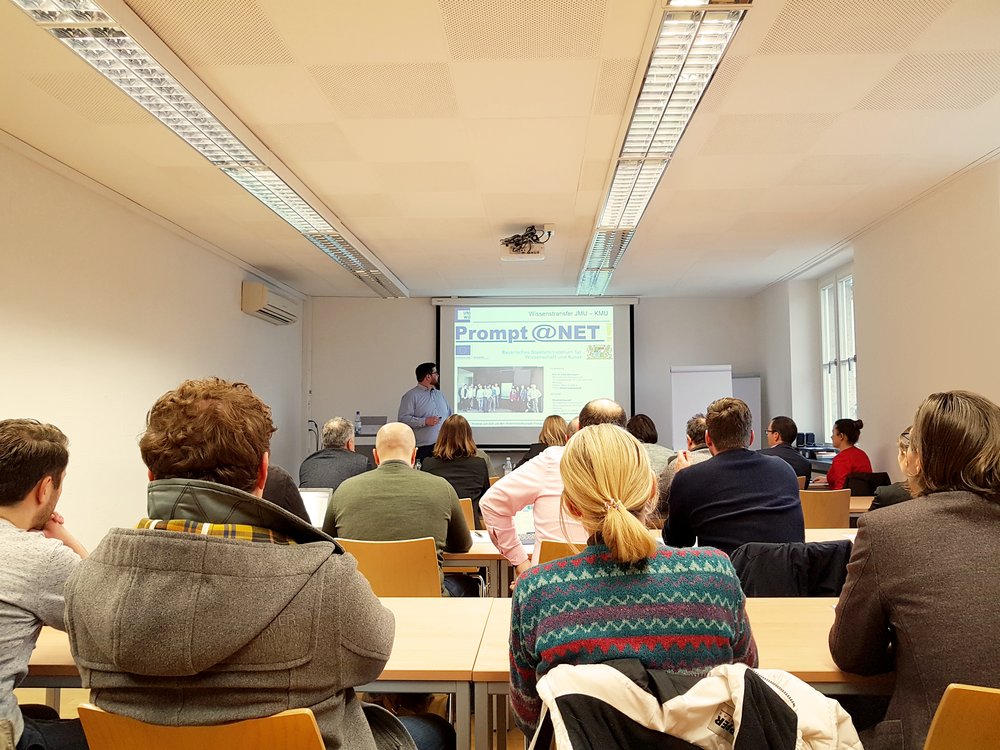
Industry 4.0 not only involves better networking between machines and machines, but also between companies. Participants will learn about possible applications, implementation and the latest research findings on e-business standards that companies can use to digitally network with each other, for example to exchange business documents such as electronic invoices.
From very practical questions, we move on to the link between philosophy and computer science. Topics that are not unfamiliar, but seem unfamiliar in everyday business life: "Can ethics be programmed?" is one of these questions, which is becoming increasingly relevant with the progress of AI and Industry 4.0. In a short presentation and a joint discussion, companies will be sensitised to the topic and receive the latest findings from other disciplines.
Subnetwork | |
Speakers | Daniel Neuß, Stanislav Pilischenko |
Date | 25.01.2019, 10:00-12:00, followed by a closing event |
Venue | SFT Lounge, Hubland North Campus, Josef-Martin-Weg 54/2, 97074 Würzburg |
The compact series "Uni-Lern-Labor - Theory & Practice" on the topic of "Gender-specific differences in the rare disease facioscapulohumeral muscular dystrophy" (FSHD) took place for the first time at the University of Würzburg's Biocentre.
FSHD is the third most common hereditary muscular dystrophy - one in 25,000 people in Europe is affected. The differences between the sexes in this disease are reflected in the course of the disease as well as in the therapy.
In Part I of the compact series, the participants learnt about the theoretical background of this disease: development, causes, progression and therapy, as well as the research approaches: Prof. Dr Marie-Christine Dabauvalle explained which questions can be answered with which methods and how gender-specific differences can be investigated. Prof. Dabauvalle is Professor of Cell Biology in the Central Department of Microscopy at the Hubland University Biocentre. She is researching the cellular mechanisms of the development of this disease.
Subnetwork | |
Speakers | Prof Marie-Christine Dabauvalle |
Date | 19.01.2019, 9:00-12:00 |
Venue | A104, Biocentre |
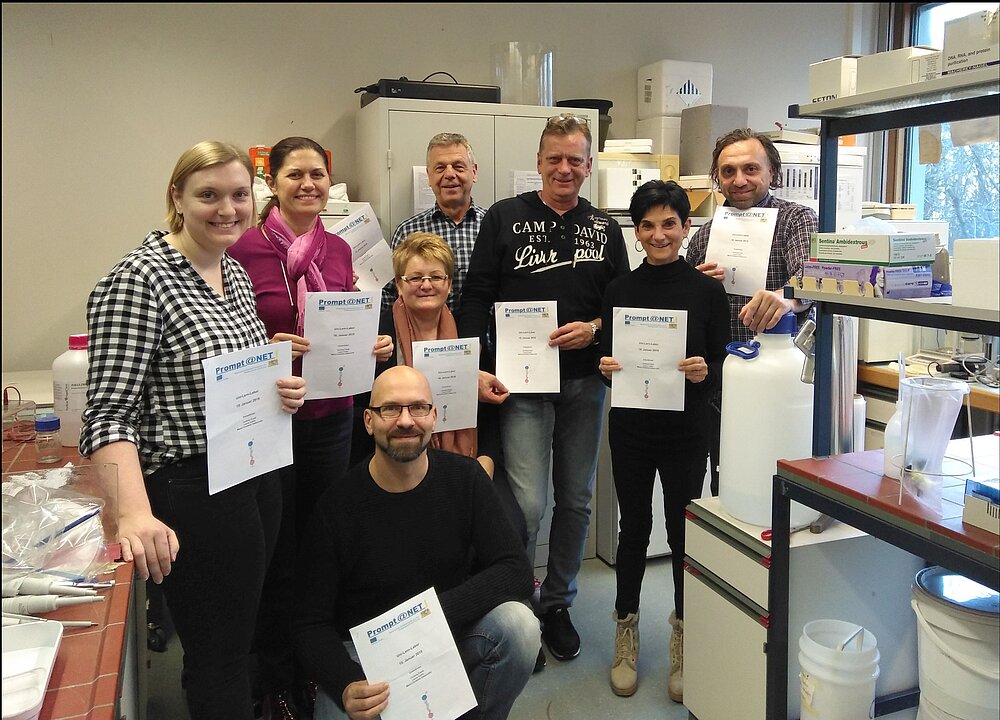
The compact series "Uni-Lern-Labor - Theory & Practice" on the topic of "Gender-specific differences in the rare disease facioscapulohumeral muscular dystrophy" (FSHD) took place for the first time at the University of Würzburg's Biocentre.
FSHD is the third most common hereditary muscular dystrophy - one in 25,000 people in Europe is affected. The differences between the sexes in this disease are reflected in the course of the disease as well as in the therapy.
The second practical part of the compact series followed in the afternoon. In Ms Dabauvalle's laboratory, the participants conducted experiments under the guidance of companies from the regional healthcare sector and learnt about important approaches and ways of thinking in research.
Subnetwork | |
Speakers | Prof Marie-Christine Dabauvalle |
Date | 19.01.2019, 13:00-17:00 |
Venue | A104, Biocentre |
At this event, you will find out how to find the right business software for your company, what alternatives there are and what you should bear in mind during the selection process. You will address the following questions: Do I need an industry solution or an all-round solution for my business? Do I want to use a cloud solution or should the software run on my computer? Is licence-free software a possible solution for me? After the official end of the event, there will be an opportunity to network and discuss individual questions.
Registration for the event:
- by informal e-mail via erp-labor@uni-wuerzburg.de
- by telephone on 0931 31 84 896 or
- by fax to 0931 31 84 89 60
Subnetwork | |
Speakers | Prof Winkelmann, Mergim Thaqi (weclapp Gmbh), and others |
Date | 15.01.2019 |
Venue | Peking Hall (02.001), Josef-Stangl-Platz 2 |
In the first discussion group of this series, representatives of the Würzburg business sciences department discussed the significance of product mentions in social media for their sales success with representatives of the Prompt@NET cooperation companies. Together, they planned the conceptualisation of further training measures for small and medium-sized enterprises and cooperation with various JMU chairs (such as Information Systems or Marketing) in this field. Among other things, the chairs have extensive experience and new findings in the procedure for programming corresponding software forecasting tools. Knowledge that should also be made available to companies in appropriate formats!
Subnetwork | |
Speakers | Dr Tanja Granzow, JMU scientist, company representatives |
Date | 21.12.2019 |
Gender medicine deals with gender-specific medical differences, such as the different symptoms of a heart attack in men and women. More research is needed in the field of gender medicine and the findings should be quickly transferred to the healthcare system. At the network meeting, co-operation partners were given an initial overview and the opportunity to network.
Sub-network | |
Speakers | Laura-Sofia Colón |
Date | 13.12.2018, 17:00 h |
Place | Seminar room 205, Gerda-Laufer-Str. 46, Hubland North Campus |
As part of the fireside evening "Individualisation digital", you will gain an insight into the knowledge transfer project Prompt@NET.
Speakers | Prof Dr Axel Winkelmann |
Date | 12.12.2018 |
Venue | Peking Hall, Josef-Stangl-Platz 2 |
Brief presentation of the project as part of the erp-podcast.de advent calendar - door 8.
Subnetwork | Digitisation |
Speakers | Prof Winkelmann, Kevin Fuchs |
Date | 08.12.2018 |
Location | www.erp-podcast.de - on the net |
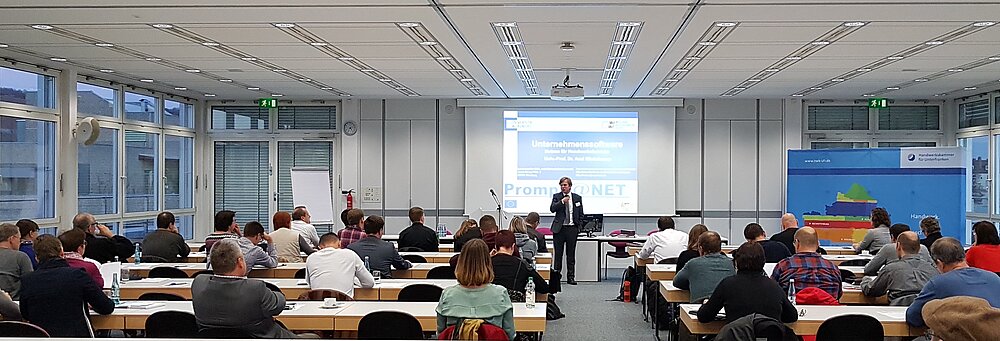
Craftsmanship meets science - qualification series for employees of medium-sized companies launched
As part of the kick-off event of a modularised qualification series free of charge for cooperation partners, small and medium-sized craft businesses received information on the potential offered by the use of modern business software, how it can be used to optimise the quality of processes and planning and how these can be financed.
The series was prompted by the observation that tradespeople are often faced with the following problem: Customers want a quotation, they have to write invoices and they want to process existing orders. This is not always easy to organise in terms of time. But there is a support solution: modern business software, such as ERP systems, for the office! Craftsman solutions in this area can make work in the office and in the field much easier for bosses and employees. Using a suitable system with appropriate templates and samples, quotations and invoices can be generated in a matter of minutes and internal processes can be continuously improved. The presentations enabled participants to recognise potential in their companies and discover individual solutions.
Other free events in the qualification series :
- Selection of business software - all-round vs. specialised systems (15.01.)
- The introduction of business software - finding partners and drafting contracts (12.02.)
- The human factor - taking employees with you during digitalisation (Prompt@NET - Living Labs, 12.03. and 02.04.2019).
Cooperation partners can register informally via erp-labor@uni-wuerzburg.de
Speakers | Prof Dr Axel Winkelmann, Anja Langenbuch (HWK Ufr), Frank Wissel (Sage Software GmbH), Annette Vierheilig (A+ GmbH Computer) |
Date | 04.12.2018, 16:00 - 19:00 hrs |
Venue | Academy for Corporate Management (House A, Room No. 30 /Penthouse) |
As part of the Mainfranken Innovation Forum, interested small and medium-sized companies from the region were able to find out more about the ESF project Prompt@NET
Subnetworks | |
Speakers | Dr Tanja Granzow |
Date | 05.11.-07.11.2018 |
Venue | Turing lecture theatre, Hubland South Campus |
How is the individual's comfort zone changing as a result of rapid technological development? And provocatively: Immortal 2045? In an initial discussion group consisting of experts from the university and small and medium-sized enterprises, joint ideas were developed for the development and utilisation of innovative products, processes or technical services.
Subnetwork | |
Speakers | Prof Dr Lukas Worschech, Prof Dr Axel Winkelmann, Prof Dr Ronald Bogaschewsky, Prof Dr Olaf Hoos, Prof Dr Frank Puppe, Prof Dr Billy Sperlich, Prof Dr Frank Schwab |
Date | 07.11.2018, 16:00-18:00 hrs |
Venue | SFT-Lounge, Josef-Martin-Weg 54/2 |
Short presentation of the project by Prof. Dr Axel Winkelmann at Digikonf.de - the first digital trade fair for business software with contributions from 20 well-known companies and around 850 visitors.
Speakers | Prof Dr Axel Winkelmann |
Date | 05.11.-07.11.2018 |
Venue |
Following the Prompt@NET kick-off event, Prof Dr Marie-Christine Dabauvalle presented her field of research, the rare disease FSHD, to the workshop participants. Afterwards, there was the opportunity to visit Prof. Dabauvalle's laboratory at the Biozentrum and gain an insight into the everyday life of a scientist. As part of Prof Schwab's workshop, the participants worked on questionnaires on exemplary topics (stress, coping, etc.) under guidance and received information on triggers in the world of work and digital media, as well as how to deal with them.
Sub-network | |
Speakers | Prof Marie-Christine Dabauvalle |
Date | 10 October 2018, 13:30 - 15:30 |
Venue | Central lecture theatre and seminar building 6 - Z6, Hubland South Campus |
Following the Prompt@NET kick-off event, a working group of companies and JMU representatives formed a World Café focussing on the following topics: Business software, digital communication and data exchange as well as potentials and challenges of digitalisation. The participants were given the opportunity to set their own thematic priorities and define possible topics for the remainder of the project.
Speakers | Kevin Fuchs, Julian Hornung, Daniel Neuß |
Date | 10 October 2018, 13:30 - 15:30 |
Venue | Central lecture theatre and seminar building 6 - Z6, Hubland South Campus |
Presentation of the knowledge transfer project "Prompt@NET" during the poster sessions of the 40th International Meeting of the German Society for Cell Biology (DGZ).
Subnetwork | |
Speakers | Corinna Frank |
Date | 17.-19.09.2018 |
Place |
Workshop on ERP implementation in collaboration with HPI Hannover. Presentation of the project as best practice for prompt, interdisciplinary knowledge transfer.
Speakers | Prof. Dr. Axel Winkelmann, HPI Hannover Competence Centre for Digital Craftsmanship |
Date | 10.09.2018 |
Venue | Large lecture theatre, Josef-Stangl-Platz |
Presentation of the knowledge transfer project "Prompt@NET" during the poster sessions of the conference "Life at the edge: The nuclear envelope in nucleocytoplasmic transport and genome organisation" of the German Society for Cell Biology (DGZ).
Subnetwork | |
Speakers | Corinna Frank |
Date | 25.-28.07.2018 |
20 representatives of small and medium-sized enterprises learned from Prof. Dr Axel Winkelmann and two software manufacturers specialising in small and medium-sized enterprises how small companies and craft businesses can maintain their competitiveness in the networked world. The focus was on how companies can create a centralised data foundation and smooth processes and connect web shops and e-marketplaces to their company software.
Speakers | Prof Dr Axel Winkelmann, Ralf Schliephake (enfore AG), Mergim Thaqi (weclapp GmbH) |
Date | 10.07.2018 |
Venue | New University - Lecture theatre 317 |
Facts about the European Social Fund. The European Social Fund (ESF) provides funding for education, training and qualification programmes to improve the employment opportunities of people in Europe. In the higher education sector, funding is focussed on improving networking between business and science.