Network visualisation, social robots / social agents and modelling of complex systems
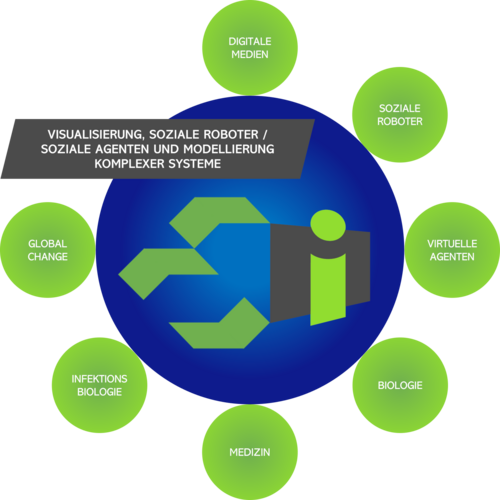
Head: Prof Thomas Dandekar and Prof Birgit Lugrin
The network "Visualisation, social robots / social agents and modelling of complex systems" deals with a wide range of topics related to digitalisation. The focus is on the digitalisation of social interactions through social agents, image analysis and data analysis. We are happy to adapt to your specific digital problem in your company and offer advice on topics such as
- Statistical data analysis
- Digitalisation and AI
- Social interactions through digitalisation
- Use of social robots at reception
- Integration of virtual agents on websites
- Image analysis and analysis of various biomedical data)
- Modelling and analysis of complex systems (biomedical and others)
- general courses on digital transformation and digital experimentation (e.g. storage media, digitalisation, communication, AI, image analysis, Industry 4.0).
The economy can benefit enormously from digitalisation - it just needs to know how! After all, the best technical achievements are useless unless they can be made effectively accessible to companies.
We offer individual consultations as well as workshops and presentations. In the past, we have already organised numerous successful events with cooperation partners from various sectors, such as
- Deployments of a social robot in hotels and doctors' surgeries at reception
- Fireside evenings and demo sessions with social robots and virtual agents
- Customised statistical and bioinformatics support
- Analysis of complex systems and detailed biomedical advice
- DataCrunch Cup and programming courses
- Lecture series, currently: "Digitalisation in the pandemic"
As the name of the project suggests, the aim is to experiment digitally with data, with questions about digitalisation and with novel technologies. Participants can receive individual advice, statistics and complex systems are explained (e.g. biomedicine from memory to genetics to infections, ecosystems or complex image data, but also especially your very specific, applied question). Participants can also try out whether the use of a new technology or the digitalisation of certain areas would be suitable and sensible for their business without having to invest straight away. Active dialogue between the participating companies is also encouraged (workshops, DataCrunch Cup, etc.).
Are you interested in becoming a co-operation partner? Our contact persons Elena Bencurova, PhD (elena.bencurova@uni-wuerzburg.de) and Martina Lein, M.Sc. (martina.lein@uni-wuerzburg.de) will be happy to answer any questions you may have.
Network manager Prof Dr med Thomas Dandekar
Prof. Dr Thomas Dandekar heads Network 1, which combines bioinformatics with image analysis and the modelling of complex systems. Based on bioinformatics, he supports the network and the Centre for Digital Experimentation with top-class expertise.
His computer science and digitalisation experience relates in particular to the analysis of large volumes of biomedical data, but we also develop our own software and use image analysis and artificial intelligence methods.
Prof Dandekar also has many years of expertise in biology (infection biology, phylogeny, neurobiology, immunobiology) but also in medicine (cancer research, cardiovascular diseases, immunology, liver diseases). He is also a specialist in biochemistry, has a habilitation in biochemistry and was an examiner for this speciality at the North Baden Medical Association.
Based on this broad knowledge base, Mr Dandekar is happy to address your specific digital problem in your company (statistical consulting, digital and AI consulting and image analysis) and also offers general courses on digital transformation and digital experimentation (storage media, digitalisation, communication, AI, image analysis, Industry 4.0). He is particularly fascinated by all the cross-connections between computer science, biology and medicine and is also enthusiastic about all the opportunities for collaboration within the company network.
Network manager Prof Dr Birgit Lugrin
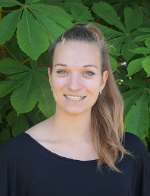
Birgit Lugrin has held the Professorship of Computer Science (Media and Computing) at the Chair of Computer Science IX (Human-Computer Interaction) at the Institute of Computer Science since the summer semester of 2015 and heads the Media and Computing group. Previously, she was at the University of Augsburg, where she completed her doctorate on the topic of "Cultural Diversity for Virtual Characters" and subsequently worked as an academic counsellor. Birgit Lugrin holds a B.Sc. and M.Sc. degree in Computer Science.
Birgit Lugrin's research is interdisciplinary and focusses on the implementation of intelligent interactive systems. As these are designed for intuitive use by human users, she combines methods and knowledge from human-computer interaction, artificial intelligence, psychology and cognitive science.
In particular, it deals with intelligent virtual agents and social robots, but also with mobile applications and intelligent environments. Following the guiding principle of "Designing for Diversity", these are tailored to the different needs and abilities of different user groups.
The application of their research topics, such as the potential of using social robots in elderly care, pedagogical agents to support lifelong learning, or the integration of cultural behaviours in virtual worlds, are of high social relevance in the ongoing technological change.
Birgit Lugrin is head of the network "Visualisation, social robots / social agents and modelling of complex systems". Through her interdisciplinary research both in the field of intelligent virtual agents and in the field of social robots, she brings extensive expertise to the project.
Dr Elena Bencúrová, Deputy Network Manager
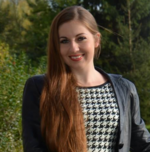
Dr Elena Bencúrová is a research associate at the Chair of Bioinformatics.
Her main focus is on synthetic biology and microbiology. She also conducts research in the field of natural data storage (DNA storage) and natural polymer research (nanocellulose).
Research assistants in the Image Analysis, Visualisation and Modelling of Complex Systems network
Dr Markus Ankenbrand
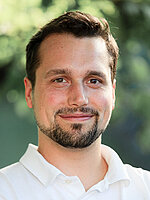
Dr Markus Ankenbrand is a research associate at the Center for Computational and Theoretical Biology (CCTB).
He studied biology and computer science at the University of Würzburg and completed his doctorate at the Graduate School of Life Sciences. He is particularly interested in using bioinformatics methods to get more out of complex data. This includes the development of methods and programs for aggregation, processing and visualisation in a wide range of disciplines, including genetics, evolutionary biology, ecology and medical imaging.
His current focus is on the interpretability of machine learning models. In addition to his technical expertise, he brings his passion for teaching to the ZDEX project.
Fabian Bötzl
I am a biologist specialising in agroecology and biodiversity research.
In my work, I mainly focus on the effects of various agri-environmental measures (flowering areas) on biodiversity and ecosystem functions (such as pollination or natural pest control). An important question here is how agri-environmental measures need to be designed in order to support maximum biodiversity.
Robin Dirk
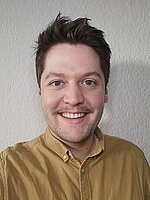
Robin Dirk is a research associate at the Center for Computational and Theoretical Biology (CCTB).
He completed his bachelor's and master's degree in biology with a focus on bioinformatics at the University of Würzburg. He is particularly interested in the development and application of machine learning methods to biomedical data.
Melissa Donnermann (M. Sc.)
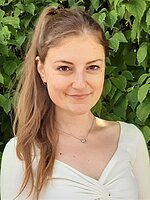
Melissa completed her Bachelor's and Master's degree in Media Communication in Würzburg, and the research field of social robotics was already the focus of her Bachelor's and Master's thesis. Since April 2019, she has been working at the Chair of Media Informatics, where she researches social robots in the teaching/learning context, specifically their use at universities. Melissa therefore supports the ZDEX project with her experience in the practical use of robots and their programming. She is also the contact person for our cooperation partners and is involved in the organisation of our events.
Prof Dr Sabine Fischer
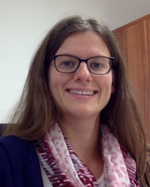
Prof. Dr Sabine Fischer is Professor of Supramolecular and Cellular Simulations at the Center for Computational and Theoretical Biology (CCTB).
She studied mathematics in Würzburg and obtained her doctorate in Nottingham (UK). She then carried out research at the Institute of Genetics at the University of Cambridge (UK) and at the Göthe University in Frankfurt am Main. Before accepting a professorship at the University of Würzburg, she worked as a development engineer at a Frankfurt-based company.
Today, she and her working group are researching image-based mathematical modelling of multicellular systems in biomedical research. The focus is on the question of how cells interact in a tissue, in particular the influence of the cellular neighbourhood on the behaviour of a single cell. The expertise of her research group includes methods of agent-based modelling, statistics, image processing, machine learning and three-dimensional visualisation.
Elisabeth Ganal (B. A.)
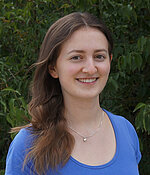
Elisabeth completed her Bachelor's degree in Media and Education Management at the University of Education Weingarten (PHW). She is currently completing her Master's degree in Human-Computer Interaction at the University of Würzburg and has been working as a research assistant at the Chair of Media Informatics since July 2020. She supports the ZDEX project with her expertise in human-computer interaction and also deals with the topics of mixed reality, intelligent virtual environments and agents.
Nicolas Hagedorn
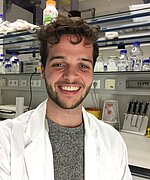
Nicolas Hagedorn has been a doctoral student at the Department of Cell and Developmental Biology since August 2020. He is working with Leishmania, a single-celled parasite that uses macrophages as host cells in humans.
In his work, he is decoding the proteome of the infection process using protein mass spectrometry. Potential virulence factors are to be identified in protein databases with the help of computer-aided research and then analysed using molecular biology and biochemistry
PD Dr Andrea Holzschuh
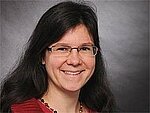
Expertise: ecology, species and nature conservation, agroecology, sports ecology, agri-environmental measures, organic farming, seed mixtures, pollination services, wild bees
Sebastian König
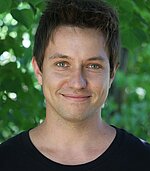
Sebastian König is a PhD student at the Department of Animal Ecology and Tropical Biology. He is investigating the influence of climatic factors on plant-herbivore interactions.
In his work, feeding relationships between herbivorous insects and their food plants along climatic gradients as well as associated microbiomes are recorded using DNA metabarcoding of faecal samples. His interests include food webs, diversity patterns along environmental gradients, landscape ecology, species conservation, ecological niches, faunistics and taxonomy of Orthoptera, and ecosystem functions.
Prof Dr Philip Kollmannsberger
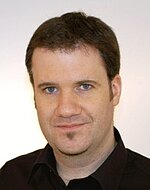
Prof Dr Philip Kollmannsberger is Junior Professor of Computational Image Analysis at the Center for Computational and Theoretical Biology (CCTB).
After completing his doctorate in physics at FAU Erlangen, he conducted research at the Max Planck Institute of Colloids and Interfaces in Golm and at ETH Zurich before accepting a W1 professorship in Würzburg in 2016. With his research group, he is developing new AI-based methods for analysing high-resolution light and electron microscopic image data. He is also interested in the imaging, quantification and modelling of complex biological systems, such as cellular networks.
Prof Dr Arthur Korte
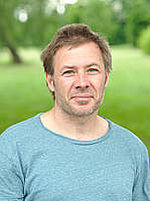
Prof. Dr Arthur Korte is Junior Professor of Evolutionary Genomics at the Center for Computational and Theoretical Biology (CCTB).
He studied biology at the University of Freiburg and received his doctorate from the Institute of Botany at the Technical University of Munich in 2009, after which he conducted research at the Technical University of Munich and the Gregor Mendel Institute of Molecular Plant Biology in Vienna.
Since 2015, he and his research group have been investigating the relationship between genotype, phenotype and environment. The aim is to identify genomic regions that are important for the adaptation of plants to different environmental conditions. Increasingly, machine learning methods are also being used to discover patterns in complex systems.
Prof Dr Jochen Krauß
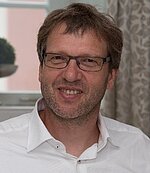
Expertise: ecology, species and nature conservation, landscape ecology, agri-environmental measures, butterflies, agricultural grasses, insects, endophytes
Martina Lein (M. Sc.)
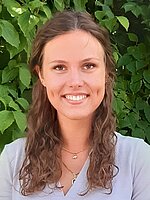
Martina has been working as a research assistant at the Chair of Media Informatics since June 2020, where she is involved in the ESF-ZDEX project. Martina completed her Bachelor's and Master's degree in Media Communication at the Julius-Maximilians-Universität Würzburg. In her Bachelor's and Master's thesis, she focussed on social robots. In the ZDEX project, she is the contact person for the cooperation partners, organises our events and contributes her experience in the research field of social robotics to the project.
David Obremski (M. Sc.)
David completed his Bachelor's degree in Human-Computer Systems and his Master's degree in Human-Computer Interaction in Würzburg. He is currently working as a doctoral student at the Chair of Media Informatics and is also studying jazz piano at the University of Music Würzburg. His research focusses on intelligent virtual agents and their use in cultural scenarios. In particular, he deals with the generation of language, gestures and appearance of virtual cultural agents and the effect of these parameters on the human counterpart. In the ZDEX project, David provides support in the areas of intelligent virtual agents and virtual environments. Due to his research focus, he is also the contact person for virtual agents that are to be implemented with a specific cultural background.

Prof Dr Juliano Sarmento-Cabral
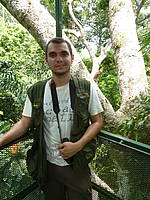
Prof. Dr Juliano Sarmento-Cabral is Assistant Professor of Ecosystem Modelling at the Center for Computational and Theoretical Biology (CCTB).
He studied biology in Recife, Brazil, with an exchange programme in the USA, and completed his doctorate in Potsdam. Since completing his doctorate, he has been involved in research and teaching in Brazil, South Africa, Panama, Kenya, Italy, China and Germany. His scientific interests are very broad and include the fields of eco-evolutionary feedbacks, ecological niche, metabolic theories, population and community dynamics, landscape ecology, tropical biology, macroecology, macroevolution, biogeography, conservation and sustainability.
He is particularly interested in the synthesis of all these fields through the study of biodiversity and its dynamics across all scales and levels of ecological organisation. His research is not limited to natural biodiversity dynamics but also explores the influence of land use and climate change.
Dr Philipp Schaper
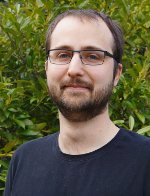
Philipp completed his bachelor's degree in psychology at the TU Braunschweig and worked there as a student assistant at the Chair of Work and Organisational Psychology. He completed a consecutive Master of Science in Psychology at the University of Wuppertal. During this time, he worked as a research assistant at the Chairs of Methodology and Developmental Psychology and the Institute for Educational Research.
In his dissertation, completed in 2018, he focussed on errors in prospective memory.
In 2020, he completed his double degree with a bachelor's degree in computer science.
From 2013 to 2018, Philipp worked as a research assistant at the Chair of Psychological Ergonomics. Since 1 April 2018, he has been working at the Chair of Media Informatics.
His research interests include prospective memory, commission errors, usability and technology-enhanced learning.
Sophia Steinhäußer (M. Sc.)
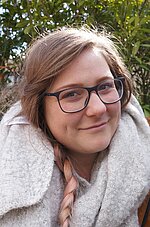
Sophia studied Media Communication in Würzburg and graduated in 2020 with a Master of Science degree with a focus on immersive games. Since December 2019, Sophia has been working as a research assistant at the Chair of Media Informatics, where she researches emotions and the experience of presence in robotic storytelling and virtual worlds. Sophia supports the ESF-ZDEX project (Centre for Digital Experimentation 4.0) with her expertise in human-robot interaction and her knowledge of programming various robots.