

Slammer:innen 2023

Presented by Johannes Keppner, presenter at Radio Gong
What was it about the Science Slam format that particularly piqued your interest – and led you to get involved with us for several years now?
Every year, the exciting question with the Science Slam is whether the speakers can successfully bridge the gap between knowledge transfer and entertainment – and they usually manage it brilliantly!
Science and humour – how do they go together for you?
Brilliantly! We all enjoy entertaining input and speakers who can present themselves and their field of research with a touch of humour. The format makes science accessible, and that dash of humour ensures we don’t forget our newly acquired knowledge straight away!????
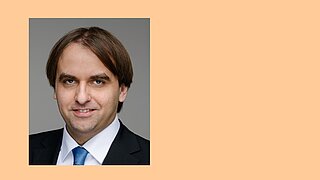
The evening will be opened by Prof. Dr Daniel Kulesz of THWS, winner of the last Science Slam

Moritz X. Michael, JMU Dentistry alumnus
Slam title: An Oral Sermon
What do you like about the Science Slam format?
An intelligent, inquisitive audience meets scientists with a thirst to share their knowledge and a flair for entertainment. It’s the perfect evening!
What will you be talking about?
About all sorts of things in the mouth, around the mouth and concerning the mouth! In any case, I’ll try to make as many useful everyday connections as possible – after all, you can teach an old mouth new tricks!
What has been the best experience so far during your time at uni?
Actually, graduation. Studying dentistry is – quite fittingly – no walk in the park.
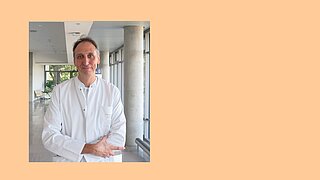
Prof. Dr Alexander Meining, Consultant in Internal Medicine/Gastroenterology, UKW Würzburg
Slam title: On the trail of the culprit – a gastroenterological whodunit
What do you like about the Science Slam format?
Conveying knowledge in an entertaining way to an interested non-specialist audience is a real challenge. It’s a fine line, but one that, when mastered, can be highly amusing.
What will you be talking about?
As a crime writer and gastroenterologist, I’ll try to combine both worlds. The crime scene will be a bit unusual – I can promise you that much already.
What has been the best experience so far during your ‘university days’?
When it comes to my ‘time at uni’ as a whole, I’d say that my time teaching has given me far more enjoyable experiences than my time studying.

Prof. Dr Jens Hirt, Professor of Brand and Media Management
Slam title: Appearance and Reality. What we show and what we want to perceive.
What do you like about the Science Slam format?
Talking about things that inspire you should be a blessing. But the comedian Jerry Seinfeld said:“Public speaking is considered the greatest fear. Number two is death. That would mean that most people at a funeral would rather be in the coffin than give the eulogy.” Unfortunately, there’s some truth in that. At the same time, the great thing about speaking is that you keep getting better at it. How could I say ‘no’ to a format where you can try your hand at it so brilliantly?
What will you be speaking about?
As the format is new to me, I’ll be sticking to my comfort zone for the topic: I’ll be talking about marketing and the medium of ‘image’. About how images move us as people. And how we can use them to move people.
What has been the best experience so far during your time at uni?
There have been many – that’s (part of) why you study, after all. A few highlights: the ‘Middle Ages’ introductory lecture brilliantly demonstrated how that era relates to the present day. Or passing my intermediate exam at the second attempt (Latin) with flying colours, after I’d completely barricaded myself in my flat for four weeks to study. The university boxing championships in Potsdam with our uni team.
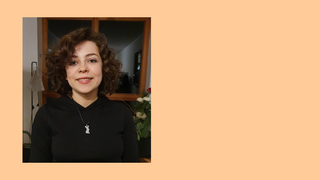
Leonie Weindl
Slam title: As long as Little Albert is okay – the role of eye-tracking in fear conditioning and generalisation
What do you like about the Science Slam format?
I love it when people are really fired up about their topic – when they talk about it with passion and really get into it. I feel that the Science Slam format is particularly good at conveying that passion.
What will you be talking about?
I’ll be talking about fear conditioning and generalisation, and how these can be measured using eye-tracking.
What has been your best experience so far during your time at university?
I find it difficult to name one specific experience. But what I’m constantly reminded of, especially when I speak to people who aren’t studying in Germany, is how privileged we are to be able to study tuition-free. I try to keep that in mind.
Oh, and of course it’s always particularly lovely for me to sit with friends in the canteen after a lecture or seminar and have a chat.

Leonie Keupp
Slam title: tba
What do you like about the Science Slam format?
I think it’s great that science is presented in a creative and humorous way. The slammers have to convey their topic in a short space of time in a way that’s both entertaining and easy to understand. The audience can look forward to a colourful evening, during which they can also do some good with their donations.
What will you be talking about?
I’ve been campaigning for environmental and climate protection for years and am lucky enough to now be able to do so professionally. Unfortunately, climate protection usually has negative connotations: it often involves disasters, species extinction or disruptive activism. However, I want to explore whether humour can also have a place in all of this.
What has been your best experience so far during your time at uni?
I think of all the lovely conversations in the canteen, the theatre performances, or the sunsets viewed from the library. What still makes me laugh the most is how I explained to my philosophy professor during my oral exam why – according to Bergson’s theory – he should give me an A. (I did, after all, get a 1.7)
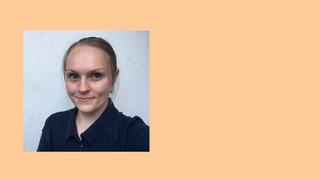
Veronika Perschin
Slam title: Something to do with worms
What do you like about the Science Slam format?
If you ask someone (me) how much they can still remember a week after a slam or after a lecture without taking notes, the amount they can recall is comparable. That makes science slams a very efficient and, what’s more, entertaining lecture. On the other hand, the slam challenges me as a scientist to break my research down to the bare essentials so that it becomes comprehensible at all. Because let’s be honest: sometimes I don’t even understand what my colleagues next door are researching, even though I’m ‘in the field’. Perhaps we should introduce this within our own department too…
What will you be talking about?
I’ll be talking about why and how we can use tiny, cute, unassuming little worms (C. elegans) to research very human problems and diseases.
What has been your best experience so far during your time at university?
I’ve been taking part in the Science Slam every year for the last seven years and really look forward to it every time. I also really enjoy my work and my colleagues in the Central Department of Microscopy; I’ve had so many wonderful experiences there and will miss the time I spend there when I eventually leave.
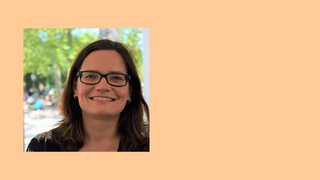
Prof. Dr Kristin Weber, School of Computer Science and Business Informatics, THWS
Slam – Title: People and Information Security
What do you like about the Science Slam format?
The Science Slam offers a great opportunity to get a large and interested audience from outside the field excited about your own research. In an entertaining way and in a short space of time, the audience gets an overview of the various topics being researched in the region.
What will you be talking about?
Passwords! But not just that… I want to explain why it isn’t our fault that we often don’t behave in an ‘information-secure’ way. It’s down to the rules, which aren’t made for us.
What has been the best experience so far during your time at university?
The camaraderie among my fellow students was the best part. We got up to a lot of mischief during lectures, but we also always studied hard together and supported one another.
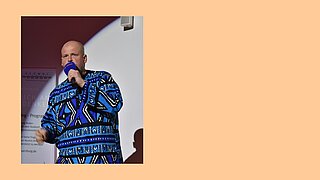
Prof. Dr Ivan Yamshchikov, School of Computer Science and Business Informatics, THWS
Slam title: AI and Creativity
What do you like about the Science Slam format?
I think the fundamental difference between a scientist and a shaman is that the scientist tries to spread knowledge rather than keeping it solely amongst the ‘chosen few’. The Science Slam is a great opportunity to tell people about the things that interest me.
What will you be talking about?
I’ll be talking about AI and creativity. What does it mean to be creative? How do we build creative computer systems?
What has been the best experience so far during your time at university?
I’ve loved THWS ever since my first trial lecture. It took place in one of the lecture theatres in the SHL building. The view was impressive. I remember thinking: ‘I’d love to teach here!’ And now I give lectures every Friday in a room right next to the one where my trial lecture took place.