

Slammer:innen 2022

The evening will be opened by Dr Sebastian Markert, winner of the 2021 Science Slam.

Professor Dr Johannes Heger, Department of Religious Education, JMU Würzburg
Slam title: Religious education – an academic discipline like Ringo Starr?!
What do you like about the Science Slam format?
It is not uncommon for scientists to complicate simple topics through digressions, convoluted jargon or absurdly deep thematic explorations. Occasionally, these scientific tools and techniques rob topics of their beauty and appeal, rather than enhancing them. In the echo chambers of academic discourse, however, such tragic processes do not receive the feedback they deserve. What fascinates me about the Science Slam is that its format counteracts the dangers described and, at the same time, brings exciting topics out of the echo chambers and onto the public stage. Well done!
What will you be talking about?
In my talk, I will introduce my subject, religious education. I will explain why this theological discipline has a lot in common with Ringo Starr in three respects.
What has been your best experience so far during your time at university?
I had the most laughs right at the start of my first semester. A lecturer in religious education put up a list at the department showing who had (not) passed the introductory course. Whilst all my fellow students found out their results as soon as they looked at the notice, a slip of paper with my full (!) name was displayed, instructing me to report to the department. Of course, I was sure to be the butt of everyone’s jokes. But it turned out in the end that I hadn’t failed, but had been asked if I’d like to become a student assistant at the department.

Philipp Stollenmayer, Faculty of Design at THWS
Slam title: Context is King
What do you like about the Science Slam format?
I have a short attention span. I really like the fact that at a Science Slam you can be treated to a feast of knowledge, just like at a tapas buffet.
What will you be talking about?
Throughout my studies and in life, I’ve repeatedly stumbled across just how great the discrepancy is between content and medium, as if the two existed separately from one another. It’s fun to blur that boundary, and if you delve deep enough, it can change your entire world view.
What has been your best experience so far during your time at uni?
That was actually just getting accepted right at the start. I never wanted to study anything other than design, and I probably would never have been able to really let my creativity run wild in other courses.

Paula Weber, PhD student in physics at JMU Würzburg
Slam title: Of Dots and Stripes
What do you like about the Science Slam format?
It’s an entertaining way to share knowledge without putting pressure on the audience. The topics are incredibly diverse and thought-provoking. Even supposedly difficult subjects can be explained this way. This is something close to my heart because I often find that people are ‘afraid’ of the complexity of physics. Here, I want to show that you don’t have to be a genius to understand physics talks. For my talk, for example, all you need is the ability to recognise patterns.
What will you be talking about?
About patterns in my life and in my research. And about the laziness of nature.
What has been the best experience so far during your time at university?
Fortunately, it’s difficult to pinpoint a single best experience. I’d sum up several experiences as: when experiments have been successful and I’m celebrating the new findings with friends and colleagues.

Dr Julien Bobineau, Romance Studies, postdoctoral researcher at the Institute of Modern Languages, JMU Würzburg
Title: Wars, crises, disasters? How colonial perceptions of Africa shape our everyday lives – and what Horst Seehofer has to do with it
What do you like about the Science Slam format?
I find the concise yet entertaining nature of the Science Slam format particularly interesting. Attendees are presented with research topics they’d previously likely never heard of in an engaging way and gain fascinating insights into many different fields – all in the space of a single evening!
What will you be talking about?
My topic revolves around colonial stereotypes and the influence of these ‘exoticising’ images of Africa on our everyday lives in Germany. I aim to demonstrate that practices for classifying people, which date back to the colonial era, are still reflected today in racism and forms of discrimination.
What has been your best experience so far during your time at university?
During my almost 16 years at JMU Würzburg, I’ve had so many wonderful experiences. But the best experience was definitely defending my PhD thesis in 2017. It is a truly incomparable feeling to be able to conclude a major academic project with a defence and then to know: I am now a real academic.

Moritz X. Michael, JMU School of Dentistry alumnus
Slam title: An Oral Sermon
What’s so appealing about the Science Slam?
An intelligent, inquisitive audience meets scientists with a thirst to share their knowledge and a flair for entertainment. That sounds like the perfect evening!
What will you be talking about?
About all sorts of things in the mouth, around the mouth and concerning the mouth! In any case, I’ll try to make as many useful everyday connections as possible – after all, you can teach an old mouth new tricks!
What has been the best experience so far during your time at uni?
Actually, graduation. Studying dentistry is – quite fittingly – no walk in the park.

Professor Dr Heiko Paeth, Department of Geography, JMU Würzburg
Slam title: Climate change up close
What do you like about the Science Slam format?
No idea, I’ve never done one before. One of the reasons I’m doing it is so I can answer that question.
What will you be talking about?
It’s about the effects of climate change on our doorstep and the consequences we have to expect. Climate protection isn’t altruism towards people in the Global South or on small island nations, but pure self-preservation.
What has been the best experience so far during your time at uni?
Probably the Federal Constitutional Court’s ruling in March 2021 on the obligation to protect the climate.
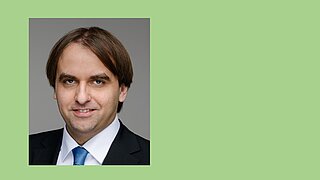
Prof. Dr Daniel Kulesz, Faculty of Computer Science and Business Informatics, THWS Würzburg
Slam title: "End-User Software Engineering"
What do you like about the Science Slam format?
I’ll be happy to answer that question after the Science Slam, as this is my first time. I’d often toyed with the idea before, but in the end I always had to give it a miss due to scheduling conflicts or other commitments.
What will you be talking about?
Definitely something to do with software engineering and related nerdy topics. I’ll try to explain this to non-techies who don’t start counting from zero.
What has been the best experience so far during your time at uni?
There have been too many to pick a single best one. It’s certainly not without reason that many people regard university as the best time of their lives!
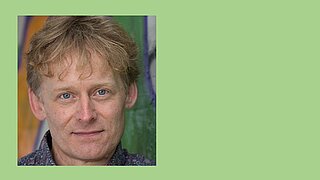
Professor Dr Nepomuk Riva, Department of Ethnomusicology, Julius Maximilian University of Würzburg
Slam title: “Is life an eternal circle?” – Critical Disney studies in ethnomusicology
What do you like about the Science Slam format?
Always staying close to people and their living environments – that is the credo of ethnomusicology! Whether through participant observation in field research or when communicating our knowledge. And if there are so many music competitions, why not take part in a science competition for a change?
What will you be talking about?
Disney’s “The Lion King” is the world’s most successful musical of all time. However, it raises a number of questions: What kind of image of Africa is presented here, where the continent is devoid of people? Why are predominantly Black performers cast, only to then play animals on stage? What does the music by Elton John and Hans Zimmer actually have to do with Africa? Using the play as a starting point, we can highlight fundamental themes that the field of ethnomusicology has been exploring over the last few decades.
What has been your best experience so far during your time at university?
I always particularly enjoy seminars where I work on research projects with students. Whether we’re examining sound archives together, conducting fieldwork at cultural events, or making ethnographic films. Having worked in television for many years myself, I’m convinced that we can only understand theories through practical experimentation.