

Slammer 2015
Prof. Bernd Ankenbrand
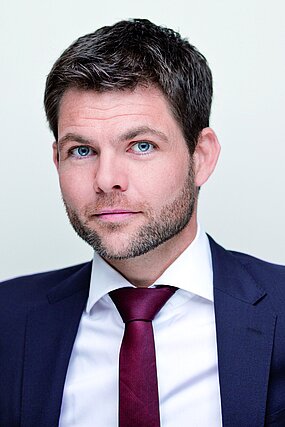
What made you decide to take part in the Science Slam?
Between you and me: it was a spontaneous gut decision. But if you like, as a proper business professor, I can rationalise my motivation after the event and provide you with a few clear motivational metrics – though only to two decimal places.
What do you think is the biggest challenge?
“A challenge” – what a lovely euphemism. I’m already sweating blood and water.
What is the best thing about your subject?
My subject? As a financial scientist who explores meaning, trust, risk and other supposed irrationalities using behavioural economics and systems theory tools, I sit between many different disciplines, all of which I find fascinating. Beauty lies in the diversity of reality.
Stephan Peters
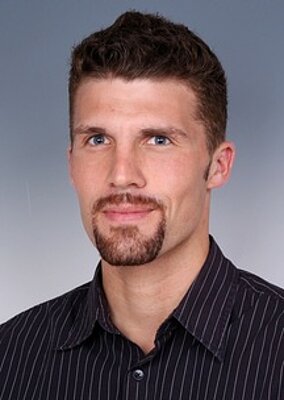
What motivates you to take part in a slam?
Science is hard to explain? Nonsense! Why not just have a casual chat about it and find a creative, memorable way to present it? Perhaps then the "Science" Slam won’t just attract scientists.
A question about the challenge:
Presenting a complex topic in a creative, funny, understandable, accessible and logical way in 6 minutes. What a challenge!
The best thing about my subject:
The best thing about my subject is often also the hardest: everyone has an opinion on it and everyone has something to say about it.
Doris Aschenbrenner
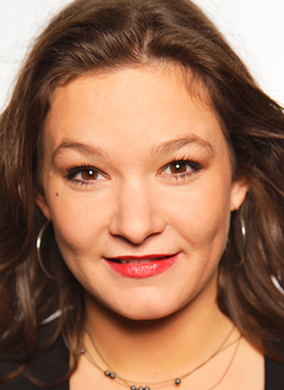
Ms Aschenbrenner, what motivated you to take part in the Science Slam?
I think the concept of Science Slams is brilliant and have already taken part in several. Our scientific work is (largely) funded by the general public, and I therefore see it as a great responsibility to communicate the results in an easily understandable way to a broad audience – Science Slams are an entertaining and amusing way of doing this.
What do you think is the biggest challenge?
The subject matter is very complex, so you can usually only convey a tiny fraction of it and have to make sure you start with the basics. Unfortunately, you only have such a short time! I think that’s the biggest challenge: “Packing as much content as possible into as little time as possible, but in a way that everyone can understand.”
What’s the best thing about your subject?
Oh dear. I’ve actually always wanted to do something with robots. Blame it on too much science fiction in my childhood ;) I just find it really exciting and challenging .
And with the digital transformation sweeping through society as a whole, so much is changing – as a computer scientist, I can assess and support this in a completely different way, and I’m very grateful for that.
Prof. Peter Pospiech

Prof. Pospiech, what motivated you to take part in the Science Slam?
I love being on stage and have always tried to make my field of expertise interesting even for the layman – or the first-year student – through clear and engaging presentation. So: Let’s slam!
What do you think is the biggest challenge?
The biggest challenge will be to score points against the younger competitors: I’ll obviously have to come up with something for that ;-).
What is thebest thing about your specialism?
The best thing about my specialism is the combination of craftsmanship and medicine, and the opportunity to make people happy again – and able to bite properly – through dental prosthetics.
Prof. Gunther Schunk
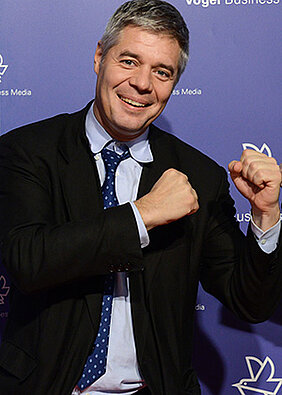
Mr Schunk, what motivated you to take part in the Science Slam?
I’m drawn to the format because it presents knowledge and insights in a fresh way. And the slam concept isn’t limited to poetry.
What do you think is the biggest challenge?
Breaking down scientific concepts to a comprehensible level within a limited time, and then presenting the whole thing in an entertaining and engaging way – that’s pretty much the exact opposite of traditional academic lectures.
What is the best thing about your subject?
Linguistics deals with nothing less than communication, which – in the literal sense – is on everyone’s lips. We are living in the most communicative age in human history, in the midst of the fourth language revolution. By now, virtually every aspect of life has been affected by it, and its future development is partly based on this. And the very best thing: communication, or language as we know it, is constantly and unpredictably reinventing itself.
Dr Konrad Förstner
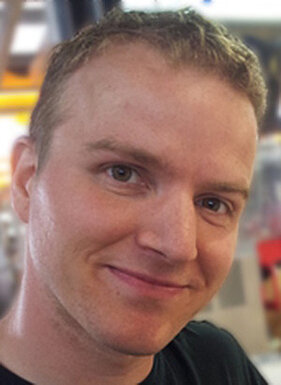
Mr Förstner, what motivated you to take part in theScience Slam?
I attended a Science Slam in Darmstadt as a member of the audience and watched a few videos online. I found it very entertaining and had wanted to take part in one myself for a long time.
I think it’s important that we scientists make our work more accessible and understandable to the general public, and a Science Slam is an excellent format for that.
I hope we can make science a bit sexier this way and replace the image of the old, grey-haired man in a white coat tinkering away in a lonely little room with a more realistic view. We need more enthusiastic people in research – after all, we are saving the world. :)
What do you think is the biggest challenge? If I can get just one audience member excited about my work, my mission is accomplished. But it won’t be easy to strike the right balance between clarity, necessary depth and engaging entertainment.
What will you be talking about?
It’s not exactly easy for me to present my research topic, as I’m involved in so many different projects as a bioinformatician. But I think that’s precisely what I’ll try to convey, and I’ll present the core ideas and tasks of my work.
If time allows, I will also touch briefly on “Open Science”, which is very close to my heart. This is about increasing accessibility, transparency and reproducibility in the scientific process.
Professor Klaus Brehm
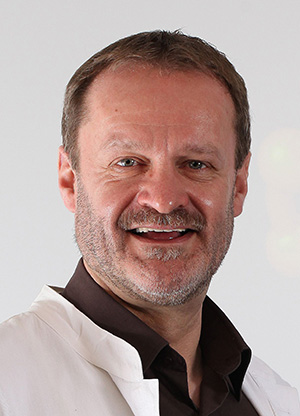
Professor Brehm, what motivated you to take part in the Science Slam?
Theatre and comedy are among my hobbies. This gives me the chance to combine my hobby with my profession.
What do you think is the biggest challenge?
Certainly not the time limit, but finding entertaining jokes in cell biology.
What is the best thing about your subject?
You get to travel a lot.
Andy Sauerwein
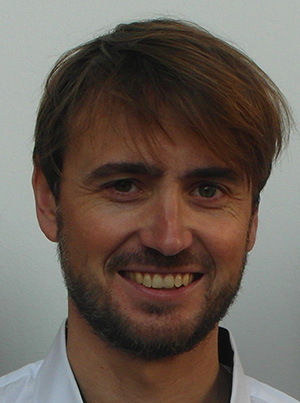
Mr Sauerwein, what made you decide to take part in the Science Slam?
I was forced to.
What do you think is the biggest challenge?
I’m not allowed to throw chalk.
What will you be talking about?
Planned obsolescence – what is it and do I have it too?
Johannes Keppner
Mr Keppner, what do you like about science slams?
It’s a bit mean to ask that question just before my debut, but it’s the perfect opportunity to give free rein to the entertainer that many speakers and lecturers have in them anyway.
If you had the choice – would you rather slam on the subject of German studies or host the slam?
With a German studies academic, the audience’s expectations are certainly high regarding the choice of words. Perhaps it’s a good thing that I’m hosting and don’t have to slam
What humorous, ‘academic’ memory do you have?
A Kafka lecture that followed the exact opposite principles of a Science Slam inspired us, almost by force of circumstance, to organise a parallel event with the motto “Coffee instead of Kafka”. It turned out to be quite entertaining, but we did actually discuss the subject matter as well.
I had the feeling that people took more away from a cup of coffee here than from the 90-minute lecture. And personally, I benefited particularly from our “counter-event”: that’s where I met my wife.