Science Slam 2023
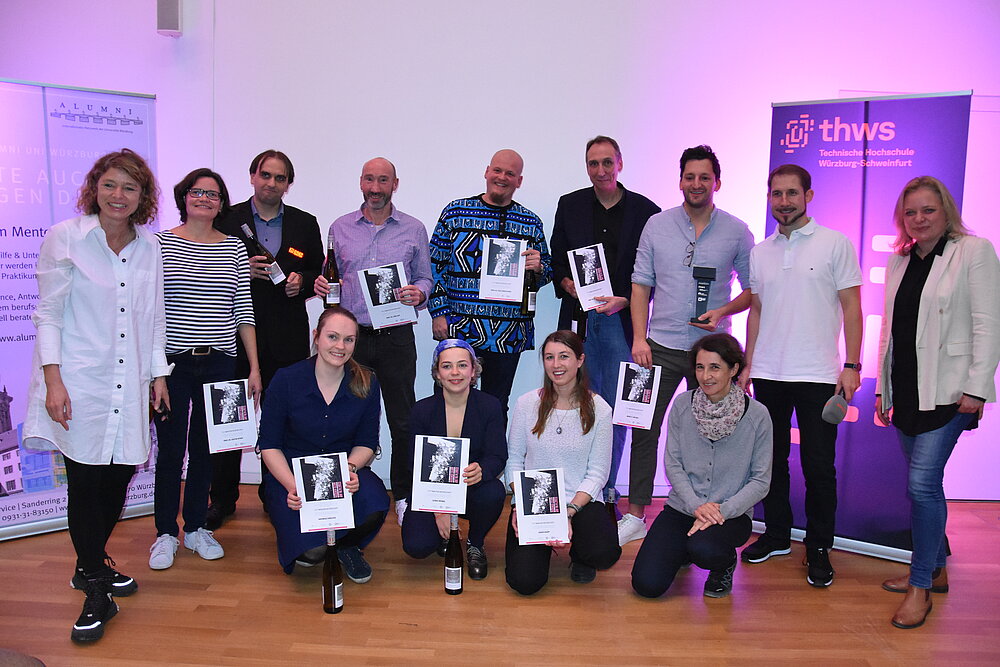
We would like to thank all the participants, audience members and co-organisers!!!
The evening was opened by Johannes Koeppner and Michaele Thiel. Following a brief welcome by Angela Kreipl, a member of the University Communications Department at THWS, the Science Slam was introduced by last year’s winner, Prof. Dr Daniel Kulesz. The slammers then took to the stage. The order was determined by a draw held beforehand. After eight wonderful presentations, the winner was chosen by the audience of over 800 people.
The event was a collaboration between the Alumni Office, the THWS and the City of Würzburg.
Winner of the 2023 Science Slam: Moritz X. Michael, JMU dentistry alumnus
For more information, see the press release below!!!
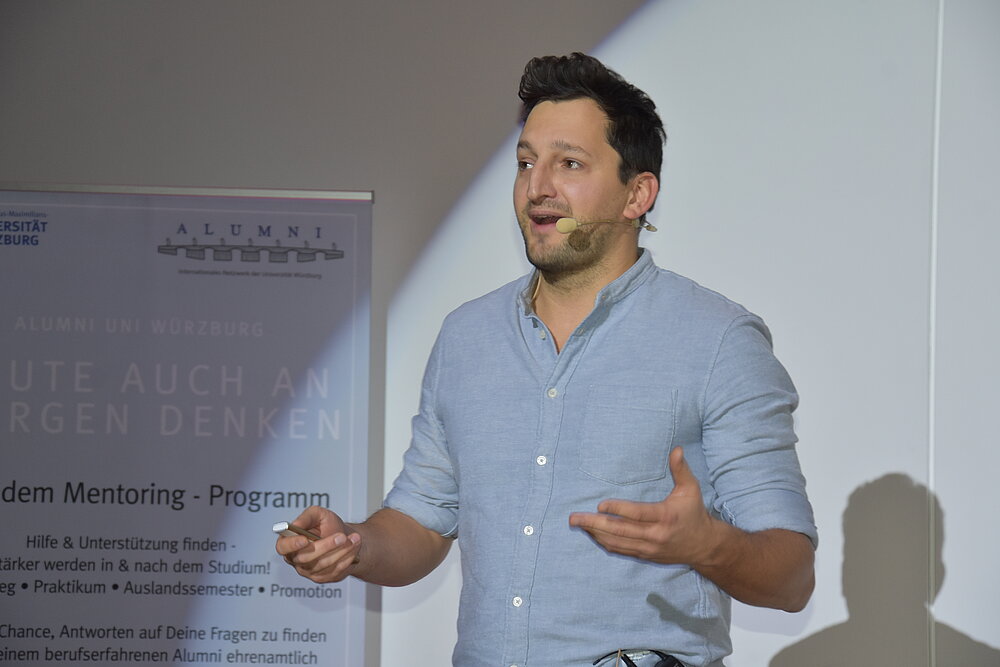
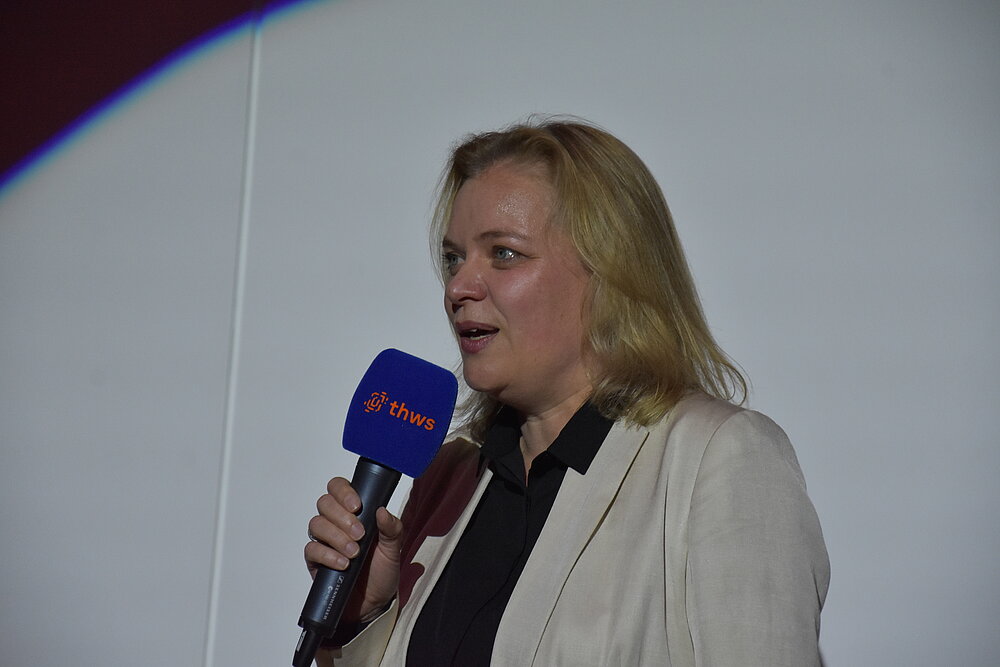
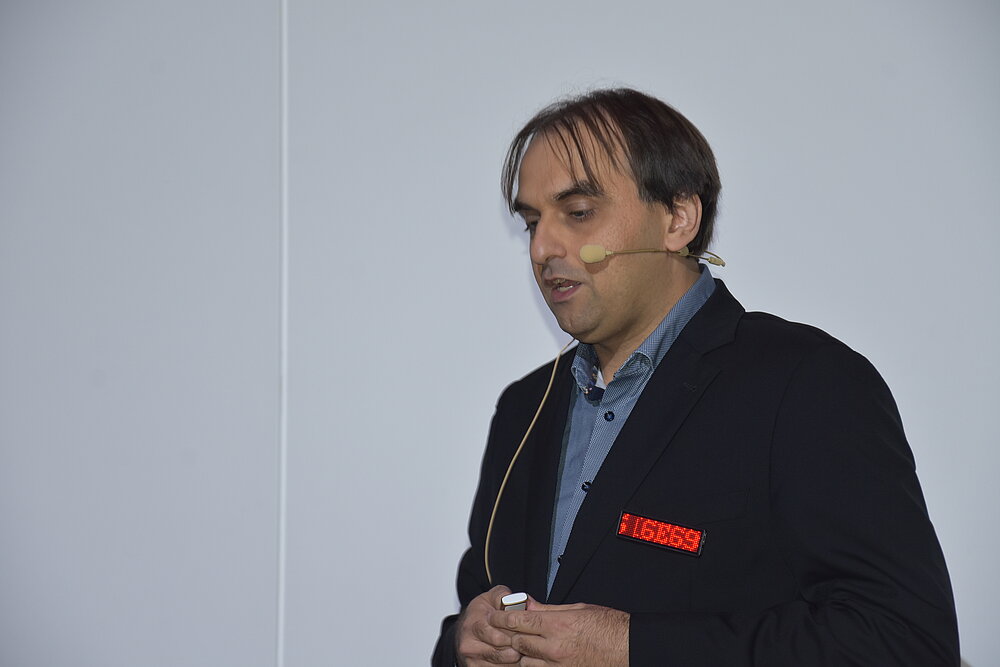
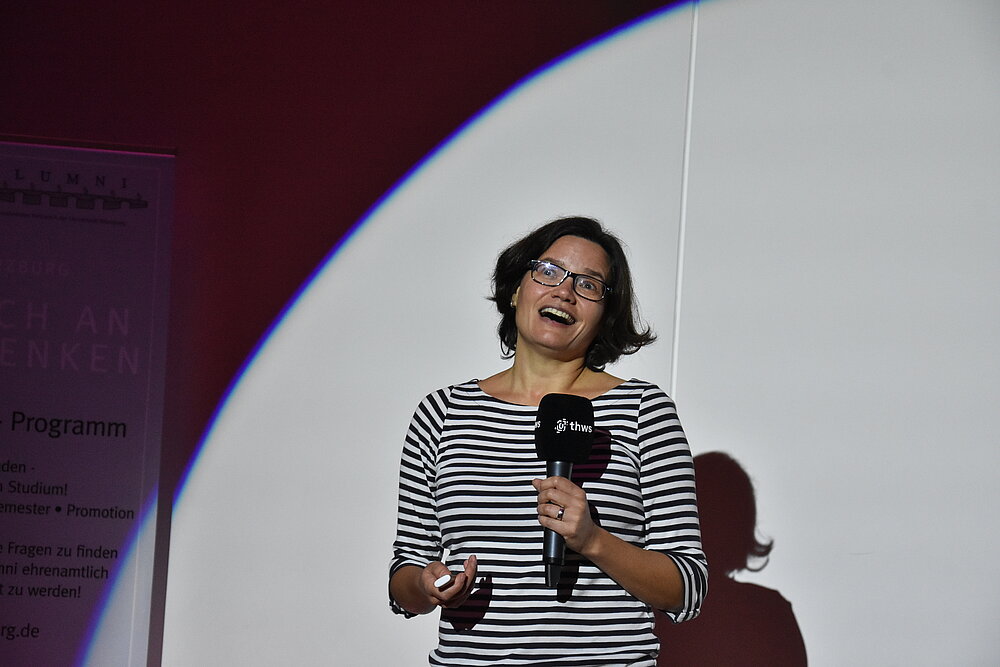
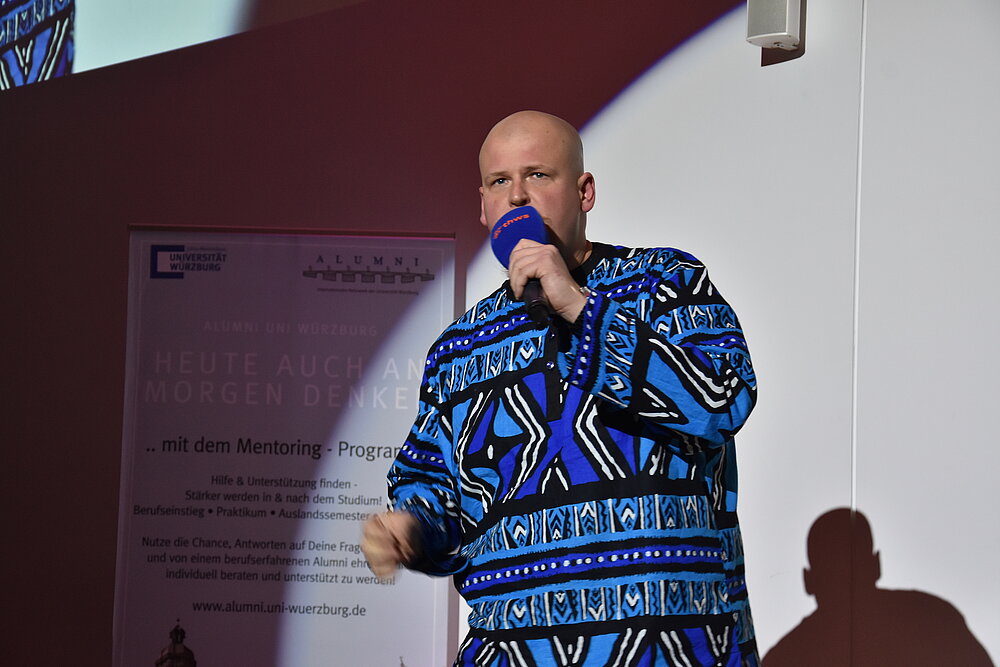
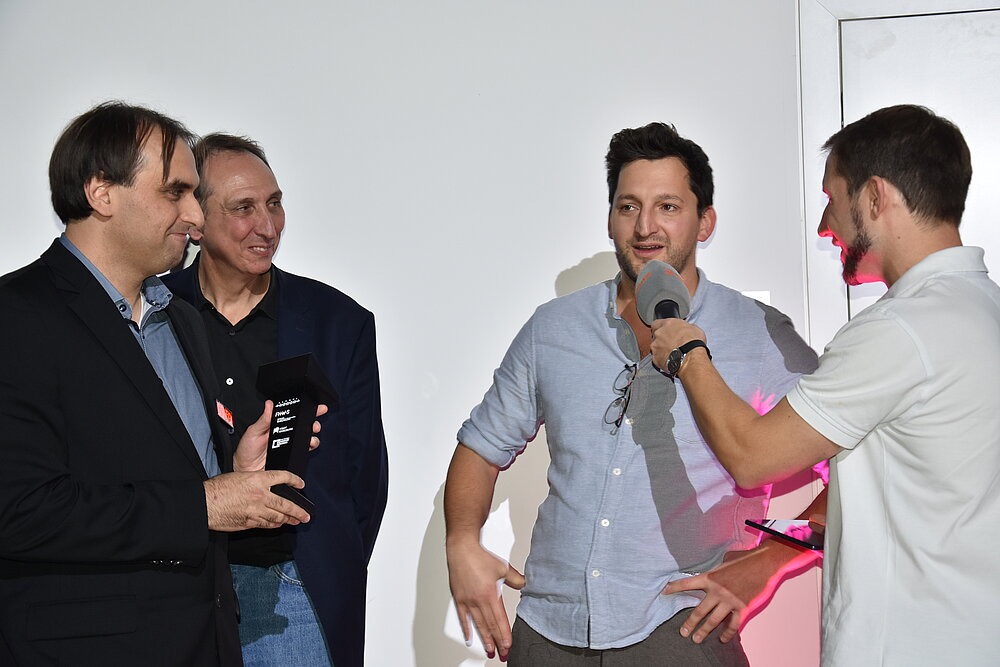
Was it a Greek surname that clinched victory at the 2023 Würzburg Science Slam? Or was it actually an inflammatory condition of the mouth known as periodontitis? To be precise, it was the dentist and university alumnus Moritz X. Michael who took home the trophy for his “oral sermon” on oral and dental hygiene.
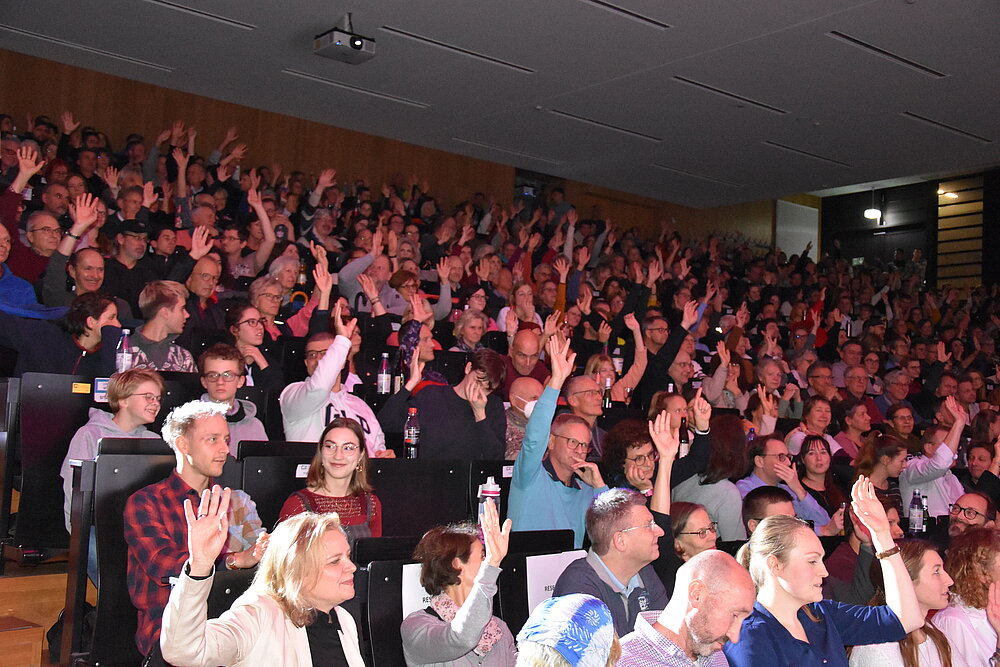
A total of eight slammers took to the stage on 10 November 2023 in the largest lecture theatre of the Z6 building at Julius Maximilian University (JMU) in Würzburg for the “7x7 Minutes of Science” battle, thrilling the 800-strong audience.
Among the audience were “repeat offenders” Nadine Preissler and Hilde Anderson, who were not attending the Science Slam for the first time and were once again expecting an entertaining evening. Some were also there to support their friends. Such as management consultant Dominik Faust and teacher Stefan Bellmann, who had come to see Professor Jens Hirt.
Last year’s winner opened the slam
Matthias and Alenka Potrc from Slovenia found last year’s winner just as interesting as the event itself: “This broadens our horizons, which is why we’re back again.”
They had learnt from last year’s winner, Professor Daniel Kulesz from the University of Applied Sciences Würzburg-Schweinfurt (THWS), that the word ‘consultant’ is a combination of the terms ‘cheat’ and ‘betray’. For this reason, he argued, the end-users of software are the better testers and developers. Kulesz opened the Science Slam with his talk from the previous year.
Is a problem a problem ..?
Professor Kristin Weber from the Faculty of Computer Science and Business Informatics at THWS also addressed the end-user. Kerstin Weber modelled her introduction to the slam on Taylor Swift.
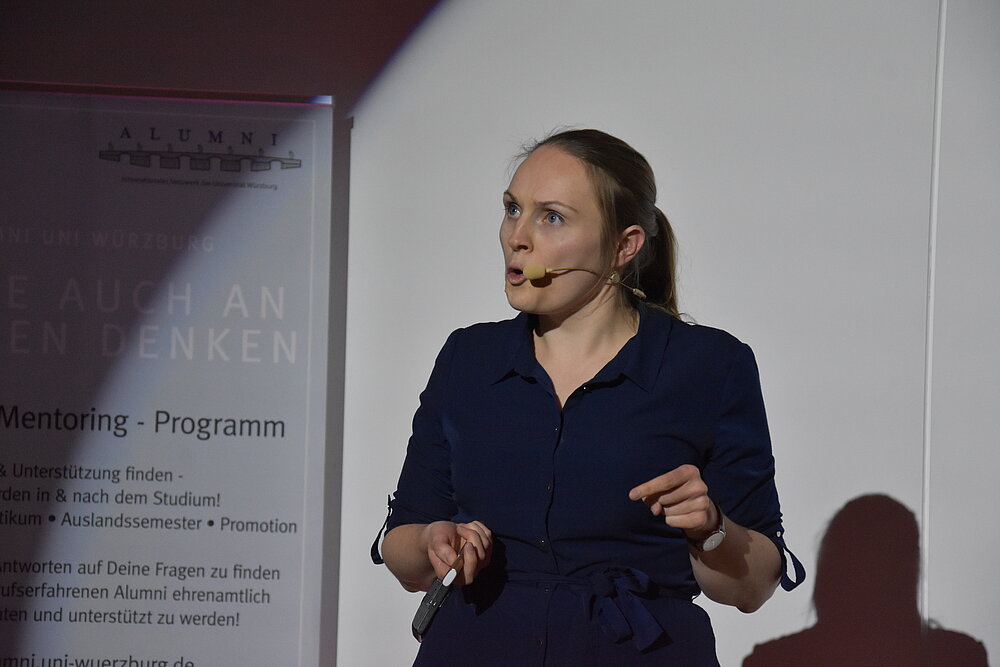
In short, she explained in her slam why people are not the problem in information security. She argued that the rules are the problem, as they are so complicated that people simply cannot follow them. These complicated rules do not lead to greater security, but to less. Her appeal: to create security measures for and with – and not against – people.
Don’t be afraid of fear
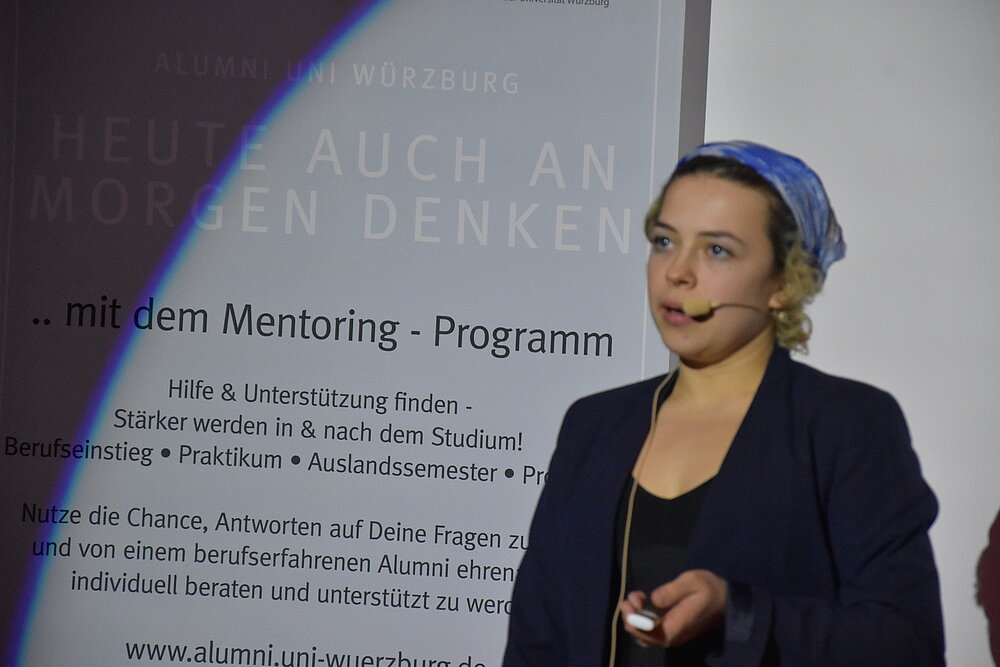
In the next slam, psychology student Leonie Weindl tackled the topic of fear. In her piece “The main thing is that Little Albert is okay”, she explained, in as humorous a way as possible, how fear conditioning works. Her final piece of advice was not to be afraid of fear.
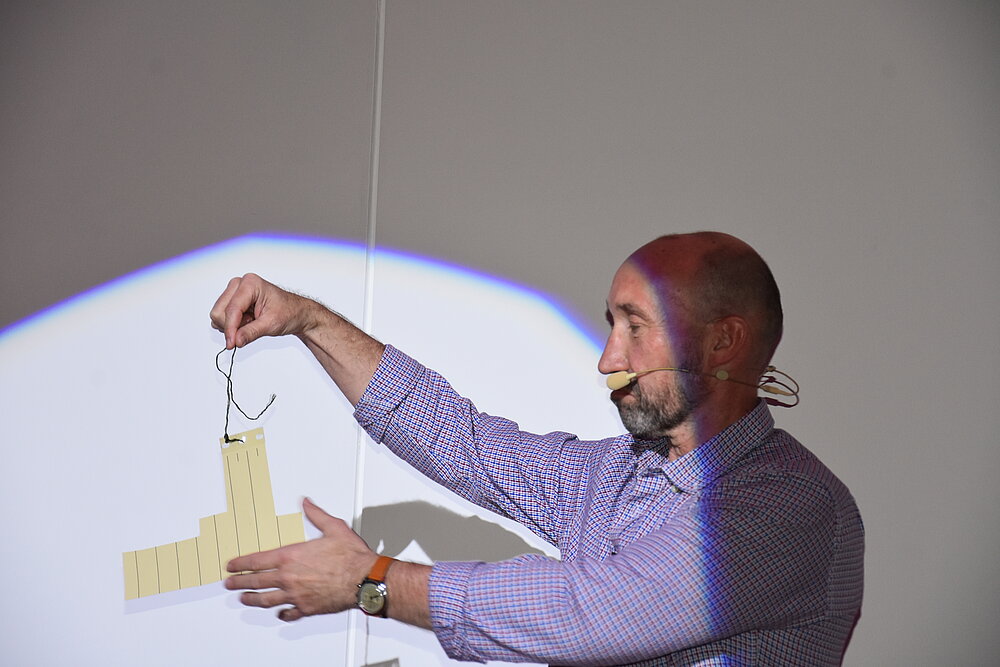
Because, despite all the conditioning, fear is ultimately just a product of the brain, Jens Hirt, Professor of Brand and Media Management, then showed the audience in the slam “Appearance or Reality. What we show and what we want to perceive”, using an intercultural ecological project as an example, that once you’ve seen an elephant, it always remains an elephant. In this way, he gave the audience a better understanding of the underlying mechanisms of their own thinking.
Climate crisis and searching in the rectum
Leonie Keupp performed a slam on humour in the context of the climate crisis: “At least self-irony can’t do any harm; if we’ve already suffered enough damage, we might as well load ourselves up with mockery.”
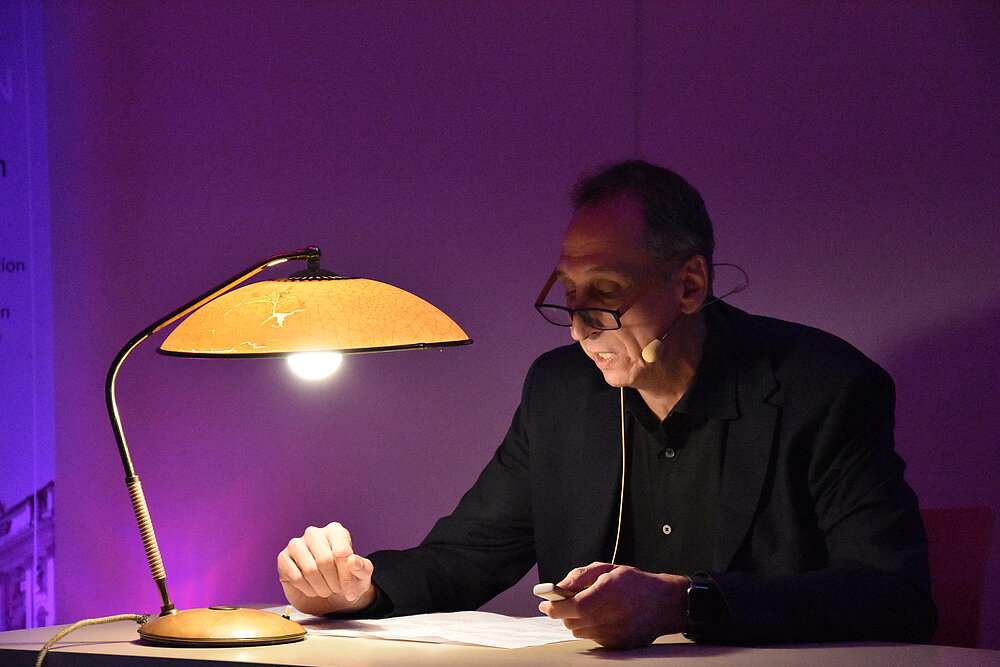
Against a serious backdrop, Professor Alexander Meining, a gastroenterologist and crime writer, spoke under the reading lamp about the search for the villain – in patients’ rectums. He concluded with a warning: “Don’t forget your bowel cancer screening!”
Worms and creative AI
With this topic, it wasn’t a mental leap for the audience to think of the worms that JMU PhD student Veronika Perschin was trying to get them excited about. After all, her worms thrive on gut bacteria, “but are harmless overall”. And actually quite cute, at least judging by the “oohs” and “aahs” from the audience. All the more sad, then, that the PhD student is ultimately waiting for her worms to die.
Afterwards, Professor Ivan Yamshchikov from the Faculty of Computer Science and Business Informatics at THWS gave the audience a glimpse of his AI’s creativity.
Decision by the clap-o-meter
With so many interesting ideas on offer, it was difficult even for the ‘clap-o-meter’ to determine the best entry in the end – the winner of the Science Slam is decided by the volume of the applause. But the audience agreed on one thing: “We’ll be back!”
Proceeds for Germany Scholarships
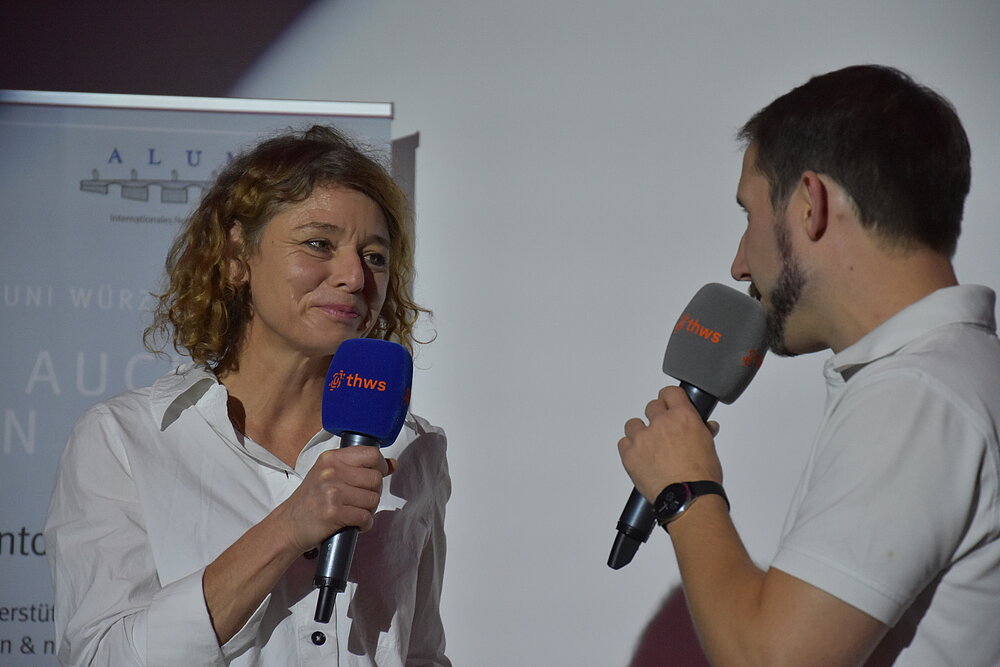
The Würzburg Science Slam is organised by the University’s Alumni Office in collaboration with the Technical University of Würzburg-Schweinfurt (THWS) and the City of Würzburg. The proceeds from the evening are earmarked for JMU’s Germany Scholarship programme. This programme supports talented students who are socially engaged alongside their studies. The programme is hosted by JMU alumnus Johannes Keppner, presenter at Radio Gong Würzburg.