
Slammer: innen 2026
Dr Daniela Tausch
Psychotherapist
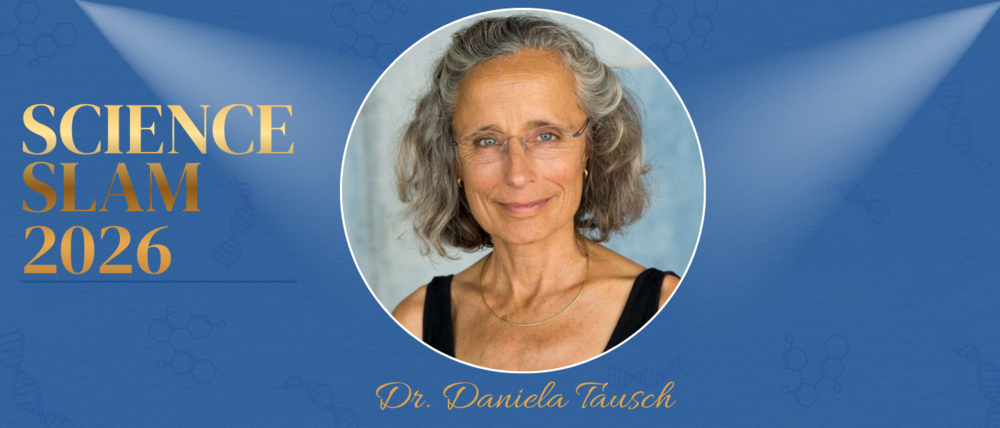
Slam title: Pardon? On the knowledge and experience of not understanding
What do you like about the Science Slam format?
I’ve already attended many alumni Science Slams as a member of the audience and particularly appreciate the mix of knowledge, entertainment and direct interaction with the audience. The format is entertaining, informative, humorous – and never boring. I like the open, curious and appreciative atmosphere that Johannes Keppner and Michaela Thiel create. Even two years ago, I thought: the topic of hearing loss belongs on this stage. After the 2025 Science Slam, I knew: now I’m ready to tackle this topic myself.
What will you be talking about?
I’ll be talking about hearing loss, misunderstandings, tinnitus and cochlear implants – in a humorous, personal and scientifically accessible way. In doing so, I’ll show that hearing is about much more than just volume: it arises from the interplay between the ear, the brain, technology and everyday life. The message at the end is this: hearing loss can be funny, but it’s also exhausting, fascinating and sometimes a real mental challenge.
What particularly fascinates you about this topic?
I’m fascinated by how closely hearing and the brain work together – and by just how much modern technology can achieve when natural hearing can no longer be taken for granted.
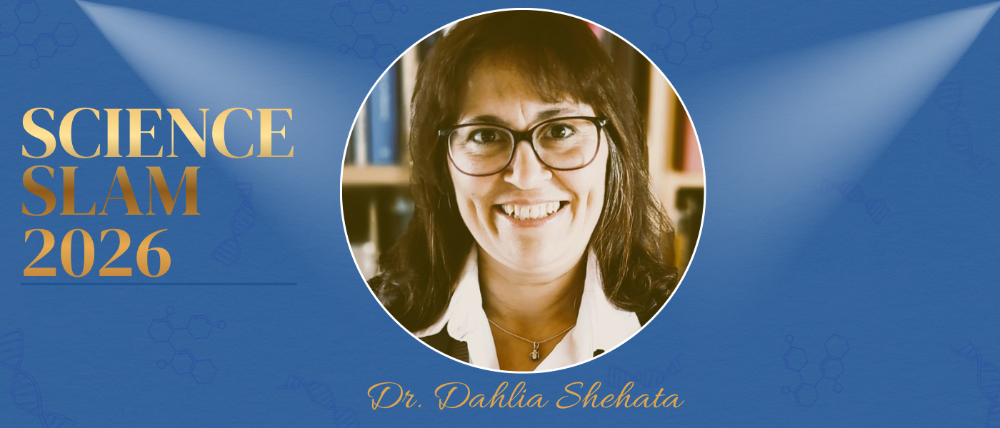
Dr Dahlia Shehata
Chair of Ancient Near Eastern Cultures
What do you like about the Science Slam format?
I love getting an audience from outside my field interested in and excited about my own research, whether on the radio, through videos or on television. I see the Science Slam as a challenge to present my research questions in a way that is brief, concise yet engaging. And, of course, I’m keen to see if I can really capture the audience’s imagination.
What will you be talking about?
From clay to sound! I’ll demonstrate how deciphering cuneiform texts written on clay tabletsbrings the sounds of 4,000-year-old music from ancient Mesopotamia back to life.
What excites you most about your topic?
That element of surprise, just like unwrapping a present: When I decipher texts and musical notation written in cuneiform and, at the end of this arduous process, hear the sounds of the past, I’m surprised by the result – a music that feels familiar and can still move us modern Europeans, even after so many millennia of silence.
Jessica Kümmel
Research into chronic inflammatory bowel diseases and treatment options using CAR Tregs
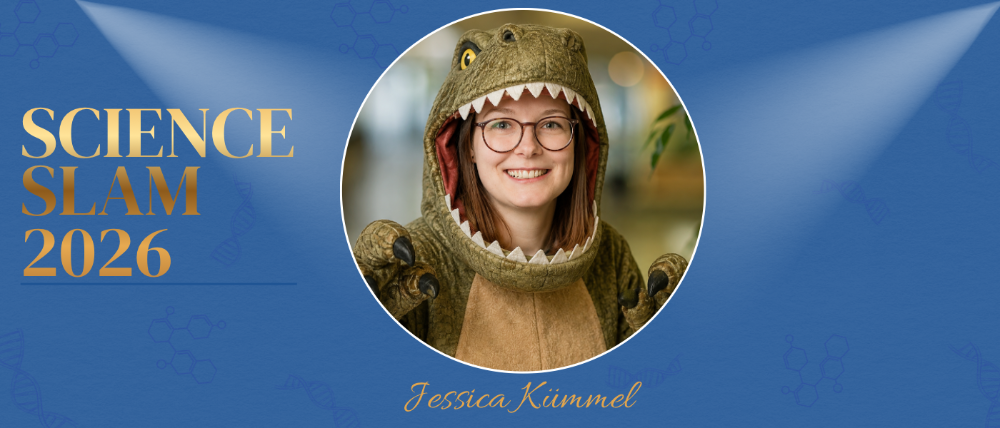
Slam title: “When a T-Rex drives a sports car: a treatment for chronic inflammatory bowel disease”
What do you like about the Science Slam format?
A Science Slam offers the opportunity to explain a complex topic in a way that everyone can understand. By presenting the research topic in an entertaining way, the audience is drawn in and thus won over to a new subject.
I’m particularly excited by the challenge of presenting our research topic in a way that generates enthusiasm even outside the scientific community and sticks in people’s minds.
What will you be talking about?
In my Science Slam, I would like, on the one hand, to explain chronic inflammatory bowel diseases such as Crohn’s disease and ulcerative colitis, and to illustrate how the immune system in the gut becomes unbalanced as a result. Secondly, I’d like to introduce targeted regulatory T cells (CAR Tregs) as a potential treatment option and highlight the hurdles and obstacles that such a research topic entails.
What particularly excites you about this topic?
What particularly fascinates me about my research topic is that it combines basic research with a concrete clinical application. It brings together several disciplines at once, such as immunobiology, genetic engineering, cell therapy and clinical practice. I also find it fascinating that the body’s own cells can be used for therapy by ‘reprogramming’ them. And last but not least, there’s an element of detective work involved: you have to work out which construct and which variant works best.