Idea Pool for Good Teaching at JMU
The selected examples found in the “Idea Pool for Good Teaching at JMU” section represent ideas and suggestions for good teaching practices at the University of Würzburg.
This selection does not claim to be comprehensive or to be reflective of the value of the concepts.
All of the university’s active teaching staff are invited to provide examples of any good teaching and learning concepts that have not yet been covered here. Many thanks!
E-Mail contact: lehre(at)uni-wuerzburg.de
JIM stands for “JMU intensifies MINT”. Since the winter semester of 2012/13, new students in mathematics, computer science, and physics have been receiving even more support at the University of Würzburg: experienced students are available to assist them as “explanatory helpers”. In the future, there will also be special online exercises available to improve students’ own facilitation of their studies.
JIM rounds out the University of Würzburg’s support services in the MINT disciplines. Since 2011, coordinated MINT pre-courses have been offered in order to better prepare new university students for the start of their studies. During the non-lecture period, special MINT tutorials are available to students who have to repeat examinations.

The study workshop – a sub-project of the KOMPASS program – serves as an advisement and assistance center for first-year students who would like help with writing scientific papers, who want advice on efficient self-instruction, or who want to enhance the appeal of their presentations.
Currently, nine specially trained students offer a variety of workshops on specific topics at the beginning of each semester. KOMPASS mentors are then available to students for six months to provide personal support, including assistance in writing a bachelor thesis.
The Study Workshop has been recognized as an example of good practice in study and teaching by the Hochschulrektorenkonferenz.
The University of Würzburg works together with the University of Lyon to offer a German-French double degree: Students spend their first four semesters in Germany and complete the normal bachelor's program. They then move to Lyon, where they complete another four semesters. All study achievements are recognized for credit at both institutions, and after the 6th semester students receive the Bachelor (Sc.) degree from the University of Würzburg.
After an internship, they return to Germany for another three semesters, where they complete their studies with a Master of Science (M.Sc.) degree. In addition to the German master's degree, students receive the French "Diplôme d'Ingénieur Chimiste".
In the winter semester 2005/06, the University of Würzburg launched an elite European space research program: the Spacemaster program brings together students from all over the world to obtain a master's degree in space research and space technology. The University of Würzburg is significantly involved in the program’s implementation, while the program itself is studied internationally.
The so-called Pico-Satellite "UWE" (University of Würzburg Experimental Satellites), a miniaturization technology project that also serves the practical training of the students, is part of a pioneering research effort: Ten master and bachelor students of aerospace technology make up the core team of UWE. The picosatellite series offers them a unique opportunity: They can build their own satellites in the test laboratory and then actually try them out in space. As soon as UWE-3 is in orbit, the scientific measurements, which are to be further optimized, will begin.
“Global Systems and Intercultural Competence” (GSiK) is a joint project of ten institutions from six faculties of the University of Würzburg that is unique in Germany. Since 2008, GSiK has been offering a complex and scientifically based range of courses for the acquisition of intercultural competence. This ability is of great importance for students of all subjects in their future careers.
Globalization and internationalization have pluralized our world culturally. We not only live in a multicultural society, our working world is also internationalized – which is why intercultural competence is a key skill.
Every course of this inter-faculty teaching program is open to students of all subjects.
The latest methods and research results in the field of infection biology are the focus of the Faculty of Biology’s international summer school program “Modern Methods in Infection Biology”, which has taken place once a year since 2012. It is open to advanced bachelor and master students and doctoral students from Würzburg, as well as students from elsewhere in Germany and around the world. During the four-day summer school, lecturers from the University of Würzburg’s present current techniques from areas such as microscopy and systems biology or drug screening at the Biocenter. The full-day events and the accompanying cultural program offer international participants the ideal opportunity to establish contacts with research centers and to network with colleagues.
The summer school has been recognized as an example of good practice in study and teaching by the Hochschulrektorenkonferenz.

The Professional School of Education (PSE) offers students support in preparing for a stay abroad as part of their studies.
PSE provides information and support for students searching for an internship and in questions about (teaching) study programs abroad, as well as assistance with funding and support programs such as Erasmus+, DAAD programs, the Fulbright Program, and others.
PSE also offers advisement on questions regarding applications for foreign language assistance through the Pädagogischer Austauschdienst (PAD) or at German schools abroad.

The NMUN – National Model United Nations – is the world’s largest simulation of a United Nations conference. Every year, more than 5,000 university students from around the world meet in New York City. Each participating university takes on the role of one of the 193 UN member states or non-governmental organizations (NGOs) in the various committees at this conference, trying to best represent the interests of the countries/NGO[LM1] s. Here, the goal of the committees is to think their way into the perspective of the respective country and act in a way that the real delegates would.
In this authentic UN simulation the students, who are chosen to participate via two-stage selection process, become acquainted with the system of the United Nations: in the official language of English, they improve their rhetoric, give speeches, debate, and learn to make compromises and resolve conflicts. In order to best meet the challenges of this project, students intensively prepare for the NMUN in an interdisciplinary group, with participants from the university’s diverse range of study programs. The University of Würzburg has participated in the NMUN since 2003.
Due to demographic change, in the future people will work later into their lives. Their knowledge must remain continuously up to date, as relevant new findings will no longer be brought into companies by new employees, as was previously the case. Both trends – the increase in available knowledge as well as the demand for continuously well-educated employees – are addressed by the Center for Continuing Education at the University of Würzburg.
The Center for Continuing Education makes the knowledge of the university’s faculties available beyond the basic courses of study. It enables individuals to learn at an advanced level throughout their lives and provides companies with the knowledge they need to remain successful and globally competitive in the future.
The CCE combines academic instruction with practical orientation at the highest professional levels. In its mission statement, the academy professes its commitment not only to internationalization and practical relevance, but also to new teaching formats based on reflection, interaction, and practical application. A didactically balanced educational concept should ensure a high degree of learning success. The use of modern information media and eLearning elements reduces the effort required by participants in continuing education programs.
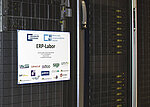
Practically oriented teaching: In a laboratory for business management software, students at the University of Würzburg get to know a wide variety of ERP systems, both from market leaders as well as niche providers. The term Enterprise Resource Planning (ERP) stands for the planning and control of a company’s resources. Since 2013, students of business informatics at the University of Würzburg have been able to familiarize themselves with such systems in an ERP laboratory: Professor Axel Winkelmann, Chair of Business Administration and Business Informatics at the University of Würzburg, points out that JMU’s ERP laboratory is the largest of its kind in Germany, comprising 18 different ERP systems.
The laboratory serves the chair as a foundation for teaching, research, and the transfer of theoretical knowledge to practice. It enables students to gain intensive practical experience in the operation, adaptation, and selection of ERP systems. This knowledge will later benefit them in their careers in IT management, management consultancies, or technology companies. In the ERP laboratory, in courses focused on the practical application of knowledge, bachelor and master students are instructed in a problem-oriented context.

Since 2006, bee expert Prof. Dr. Jürgen Tautz has been developing HOneyBee Online Studies (HOBOS) as a new, interactive school concept. HOBOS’ initial preliminary phase began June 1, 2009. During its pilot stage, HOBOS enabled a selection of school classes from nine countries to probe a real honeybee hive via the internet.
Participating countries are Germany, USA, China, Luxembourg, Northern Ireland, Italy, South Africa, Switzerland, and Jordan. The project, which is based out of the Biocenter of the University of Würzburg, has received multiple awards.
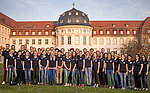
New certification regulations have led medical studies to focus more strongly on the training of practical skills. The SkillsLab was founded in [LM1] Würzburg in 2004 through a student initiative and with the support of dedicated clinicians. In 2009, it was expanded to become the Würzburg Teaching Clinic.
The courses offered by the Würzburg Teaching Clinic are based on the current medical studies curriculum at the Würzburg Medical Faculty and are closely linked to the courses offered at the other clinics.
In addition, optional courses such as the PJ Preparatory Course, in-depth examination courses, or sonography courses enrich the scope of the program.
The basic idea is to facilitate learning in a realistically simulated clinical situation, from the atmosphere of a hospital room in a ward to an intensive care room to a fully equipped operating theater.
The working environment, featuring phantoms and simulators, enables the training of practical skills under standardized conditions. There is no limit to the number of repetitions of a given scenario, and errors do not have any real-world consequences.
New forms of teaching and learning such as eLearning, objective structured clinical examinations (OSCE), electronic examination evaluation, teaching with the help of actor-patients, and problem-oriented learning in small groups are increasingly often integrated into the educational program for Würzburg medical students.
The Teaching and Learning Garden (Lehr-Lern-Garten or LLG) is possible through the cooperation of the Biology Didactics Expert Group and the Botanical Garden of the University of Würzburg. In cooperation with Biology Didactics, courses are provided for teachers as well as students of teacher education programs focusing on natural sciences, geography, and many other disciplines.
The central goal of the Teaching and Learning Garden is to give teachers and bachelor students the opportunity to gain practical teaching experience. In doing so, the university is able to network intensively with the various types of educational institutions in the region.
The LLG was selected as an example of good practice in study and teaching by the Hochschulrektorenkonferenz.
The Bavarian State Ministry of the Environment and Consumer Protection has awarded the LLG with the “Umweltbildung.Bayern” seal of quality .
The teaching study workshop is a program of the Institute for Special Education at the University of Würzburg. It is designed to be interdisciplinary and is therefore an institution for all students of special education and for students of primary and secondary school teacher education. The study workshop is intended to enable students to analyze and structure learning processes. Required knowledge on learning materials and software is presented and reflected upon in the study workshop. The workshop takes the form of seminars as well as an open program consisting of a library with set hours of operation.
The teaching study workshop is an instrument for linking theory and practice. The materials used stimulate theoretical reflection about their application in teaching. The workshop is also closely linked to teaching seminars in the field of special education. With regard to internships, the teaching workshop enables students of special education to connect its learning materials to a practical school context.
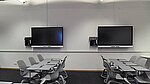
“Media Education & Educational Technology LAB” or MEET for short: this is the name of the teaching and research laboratory built up by Professor Silke Grafe, holder of the Chair of School Education. The use of digital media in school teaching is one of her primary focuses in research and teaching.
The school and media pedagogical laboratory for research and teaching at the University of Würzburg is dedicated to addressing questions of teaching and learning with and via digital media – both in schools and other teaching contexts as well as in teacher training from an educational, technical, interdisciplinary and internationally comparative perspective.
Support of students’ competences in a world highly influenced by digitization and mediatization is based on an action- and development-oriented approach. The promotion of media pedagogy skills plays a special role in this context.
The goal of the didactical approach “Mentoring-to-Teach” at the Chair of Adult Education is establishment of a strong link between theory and practice.
The two-semester program begins by teaching students didactic basics within the framework of a seminar. The bridge to the professional world is built when students sit in on the events of lecturers (= mentors) from the field of continuing education with whom they have previously and independently established contact. In the following semester, in a second seminar, the acquired theoretical knowledge is compared with their experiences of educational practice and conclusions are drawn and recorded in a reflective report.
“Mentoring-to-Teach” was selected as an example of good practice by the Hochschulrektorenkonferenz.

The Mathematics, Information Technology, and Natural Sciences Teaching Center is a research and teaching network drawing on teaching methodologies from the fields of biology, chemistry, geography, computer science, mathematics, and physics. By employing both joint teaching concepts and subject-specific pedagogical research, the M!ND-Center provides high-quality teacher training in the MINT fields at the University of Würzburg.
Within the University, the M!ND-Center forms the interface between research (both academic and subject-specific pedagogical) and teaching. The firm anchoring of subject-specific teaching in the individual faculties ensures the close relationship between teaching training and the individual disciplines. The exchange between didactical and academic experts makes it possible to optimally coordinate teaching content. In addition, M!ND also provides a framework for subject-based teaching research, resulting in – among other benefits – the continuous optimization of the courses offered.
The main teaching program of the M!ND Center is the Teaching and Learning Laboratory LLL: It is part of the intersection of M!ND with the “Kooperationspartner Schule”. In the LLL seminar, students design and reconstruct the learning environments of pupils according to curriculum-relevant subject areas. Then, on several “implementation days”, they supervise experimenting pupils at learning environment locations that they have created featuring the relevant subject matter. This practical phase of the seminar offers students the opportunity to transfer subject-based teaching knowledge to professional routines of action.
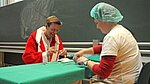
The surgery professor Christoph-Thomas Germer wants to pass on his passion for the surgical field to students. To accomplish this, he holds innovative courses with uncommon approaches, including live broadcasts from the operating theater and diagnostic quizzes on the course homepage.
The name of the surgery professor’s Christmas lecture is “Beat Germer”, and it has obtained legendary status among the students: Here, students have the opportunity to compete against their professor and prove themselves in front of their peers in a large lecture hall.
The lecture “Beat Germer” was selected as an example of good practice in study and teaching by the Hochschulrektorenkonferenz.
The “Projektiade” competition takes place in the course “Professional Project Management in Practice” by Professor Harald Wehnes (Chair of Computer Science III). In this competition, students are able to complete goals through interdisciplinary teamwork and professional project management.
The task of the competition is to found innovative internet companies – from initial conception to the finished website. To achieve this, students are to employ the methods and techniques of professional project management. At the end of the semester, the best projects are awarded the “Projekta 2012” – a small statue reminiscent of the Venus de Milo.
The BA program “Museology and Material Culture” is the first university program of its kind in Germany. A key feature of this course of study is its strong practical relevance at all levels of education.
The various facets of museum work are not merely dealt with in a theoretical-abstract manner, but also based on concrete individual cases that build a reference to real, everyday museum life. The latter takes the form of one-day and multi-day excursions in Germany and abroad, as well as units of instruction in local and regional museums. In addition, museum staff and freelancers working in this sector are regularly included in the study program through guest lectures, teaching assignments, and workshops. Internships and exhibition projects in cooperation with external partners are also part of the curriculum.
All students must complete a one-year exhibition project and a ten-week internship. In addition, students can complete a further eight weeks of internships that contribute to the completion of their degree. In this way, students gain a wealth of practical knowledge and experience, and are able to actively apply what they have learned while establishing valuable networks that will ease their later transition from academic into professional life.