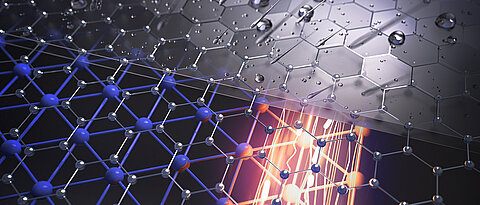
Breakthrough in materials research: A team from the Würzburg-Dresden Cluster of Excellence ct.qmat has developed an innovative protective film for 2D quantum materials that could play a key role in shaping the future of electronics.
more
Breakthrough in materials research: A team from the Würzburg-Dresden Cluster of Excellence ct.qmat has developed an innovative protective film for 2D quantum materials that could play a key role in shaping the future of electronics.
more
One step further: One JMU research project on nucleic acid research and technologies has qualified for the next round in the competition for the prestigious research grant.
more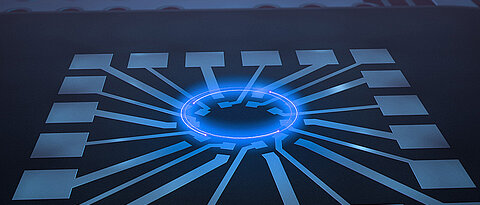
A significant breakthrough has been achieved by quantum physicists from Dresden and Würzburg. They’ve created a semiconductor device where exceptional robustness and sensitivity are ensured by a quantum phenomenon.
more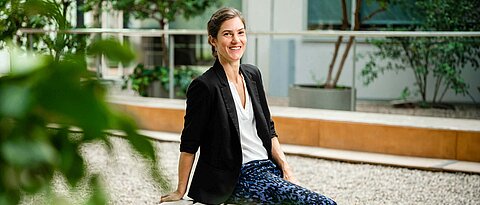
Physicist Elena Hassinger has been awarded an ERC Consolidator Grant for her research on superconductors. Hassinger is part of the Würzburg-Dresden Cluster of Excellence ct.qmat.
more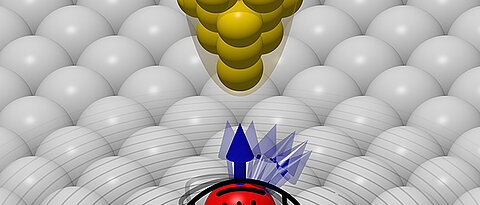
For the first time, experimental physicists from the Würzburg-Dresden Cluster of Excellence ct.qmat have demonstrated a new quantum effect aptly named the “spinaron.”
more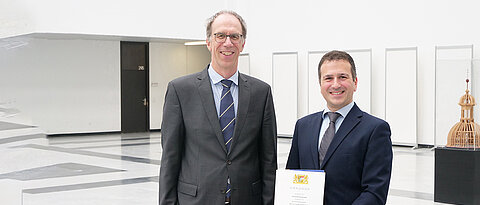
Giorgio Sangiovanni is an expert in the computer-aided calculation of quantum materials. He heads a new chair in physics that is funded by the Bavarian Ministry of Science with 1.5 million euros.
more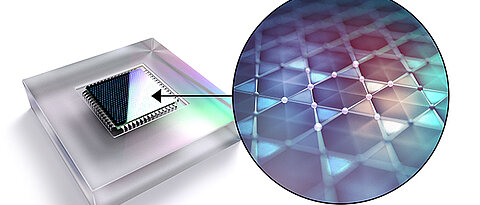
A team of five, headed by quantum physicist Professor Ronny Thomale of the Würzburg-Dresden Cluster of Excellence ct.qmat, secured second place in the international IBM Quantum Open Science Prize.
more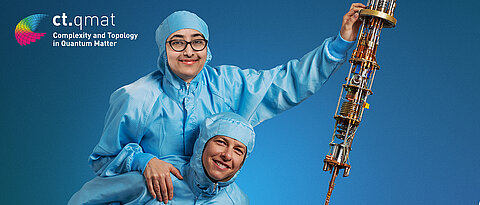
Female physicists from all over the world will meet for a three-day workshop of the Grete Hermann Network starting Monday, July 31 at the University of Würzburg.
more
An international team of scientists has succeeded in experimentally confirming a characteristic of topological materials. The Universities of Würzburg and the Dresden with their Cluster of Excellence ct.qmat were involved.
more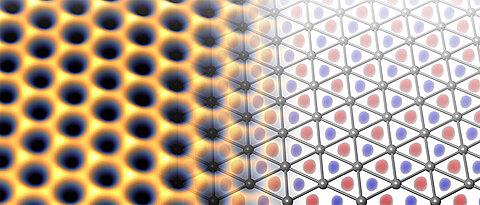
The Collaborative Research Centre ToCoTronics in condensed matter physics will be extended for four more years. The German Research Foundation is funding it with 12 million euros.
more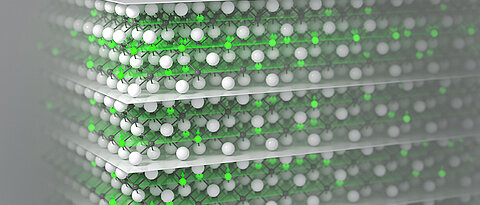
Researchers from the Cluster of Excellence ct.qmat have achieved a significant milestone in the pursuit of energy-efficient quantum technologies by designing a ferromagnetic topological insulator.
more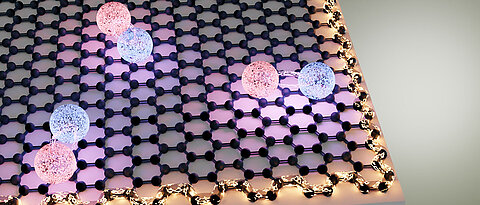
Within the framework of the Würzburg-Dresden Cluster of Excellence ct.qmat, excitons were generated in a topological insulator for the first time. A breakthrough in quantum research, based on material design from Würzburg.
more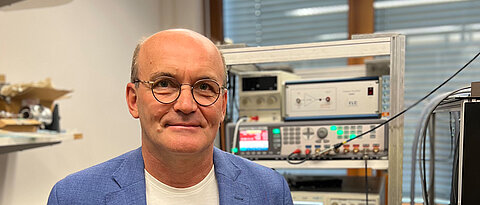
With 2.5 million euros from the European Research Council, Professor Vladimir Dyakonov will be able to pursue the development of a novel quantum sensor: The physicist was awarded an ERC Advanced Grant.
more
Three awards in one sweep: the mobile game app Kitty Q and its follow-up project QUANTube from the Würzburg-Dresden Cluster of Excellence ct.qmat received three awards in one day.
more
The Free State of Bavaria is funding a new research project on quantum sensors with three million euros. Among other things, it aims to further improve molecular and medical imaging.
more