

From Space to the Nuclear Power Plant
12/02/2025Before nuclear power plants are dismantled, it is checked whether the parts of the building to be dismantled are free of radioactivity. A research team is working on a new measuring method to detect radiation efficiently.
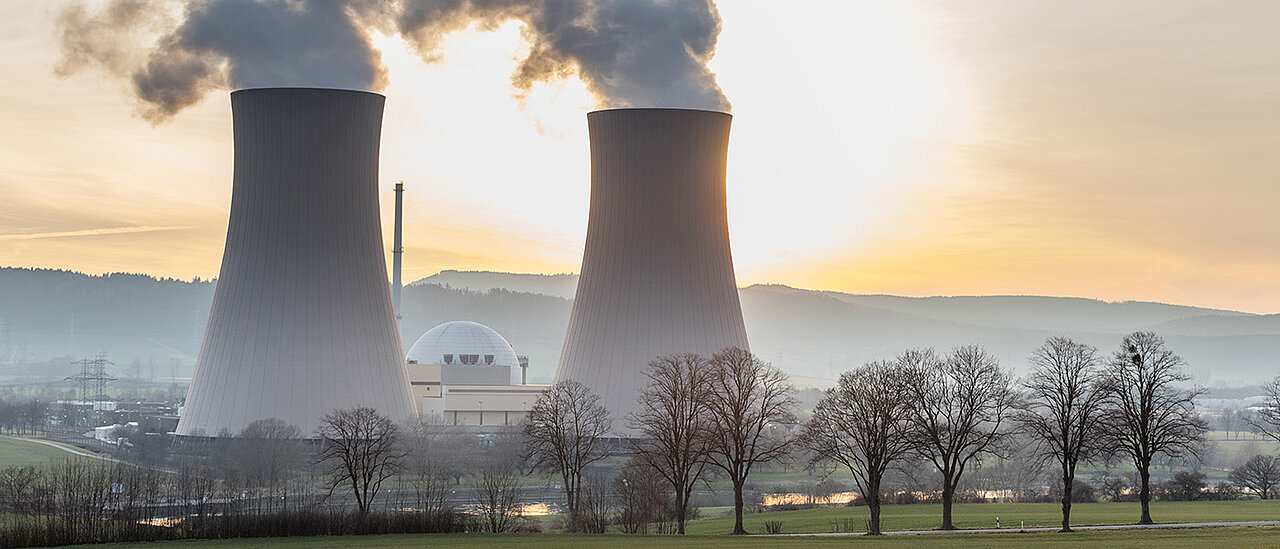
There are two thuds, then the two cooling towers of the nuclear power plant in the Bavarian municipality of Gundremmingen collapse. On 25 October 2025, the two 160-metre-high towers in the Swabian district of Günzburg were blown up - a spectacle that attracted many onlookers. Before nuclear power plants can be dismantled, radiation measurements must be carried out inside the buildings, especially near the reactors, in order to detect any radioactivity that may have been absorbed by the building fabric.
For this step, a research team is now working on a new method of measurement in a joint project. It is using a measurement technique that has so far mainly been used in satellites to detect radioactive elements in space and is using it to develop cameras for use in power plants.
A team led by Dr. Thomas Siegert, an expert in nuclear physics in space from the Chair of Astronomy at Julius-Maximilians-Universität Würzburg (JMU), is involved in the project. The JMU sub-project focussing on software development is being funded by the German Federal Ministry of Research, Technology and Space (BMFTR) with over 350,000 euros.
Scintillation Detectors - Utilising an Old Method More Efficiently
Until now, expensive semiconductor detectors have been used to measure radioactive residues. These are typically only used to measure a few square metres per room within an hour and then move on to the next measuring point. "If you imagine this for an entire room and then for a whole hall-sized facility, you realise how inefficient and time-consuming this method is," says Siegert. The devices also have to be constantly cooled to minus 200 degrees Celsius with liquid nitrogen.
Scintillation detectors are to be used for the new method. Installed in a camera, these are intended to show all the places from which radioactivity emanates over a period of several hours in rooms of different sizes. "These cameras are made of several scintillation crystals that light up when, for example, gamma radiation from a radioactive decay hits them. If this causes more than one crystal to light up, i.e. if it scatters from one detector to another, the direction and energy of the radiation can be determined," explains the astrophysicist.
The angle of entry and all other measured deflection angles between the crystals therefore determine which potentially radioactive material is involved and where it can be found. "Particles of the same element always have the same energy, which means they can be clearly assigned," continues the JMU researcher. At the end of the measurement and with the help of the computing power of supercomputers, the camera outputs a detailed 3D image of the room, on which all areas contaminated with radiation light up. This means that uncontaminated and contaminated material can be specifically and reliably distinguished and broken down.
Artificial Intelligence Filters Background Noise
The Würzburg team is developing the camera analysis software in collaboration with Professor Uwe Gerd Oberlack and other researchers at Mainz University. Both groups are also involved in the National Aeronautics and Space Administration 's (NASA) new gamma-ray space telescope COSI.
The team plans to use artificial intelligence (AI), among other things, for the software. "Very weak natural radioactive radiation exists everywhere on Earth. It varies in intensity depending on the location. It can interfere with the measurements as background noise," says Siegert. The AI could help to distinguish this natural radiation background from the contaminated areas and thus increase the accuracy of the process.
About the Joint Project
The joint project scintLaCHARM is entitled "Lokalisierung und Charakterisierung von radioaktivem Material mit modernen bildgebenden und spektrometrischen Verfahren der Szintillationsmesstechnik". It is funded by the BMFTR in the funding program FORKA with almost two million euros (funding code: 15S9455 A-E).
Five project partners are involved:
- Brenk Systemplanung GmbH, Aachen
- Fraunhofer Institute for Technological Trend Analysis (INT), Euskirchen
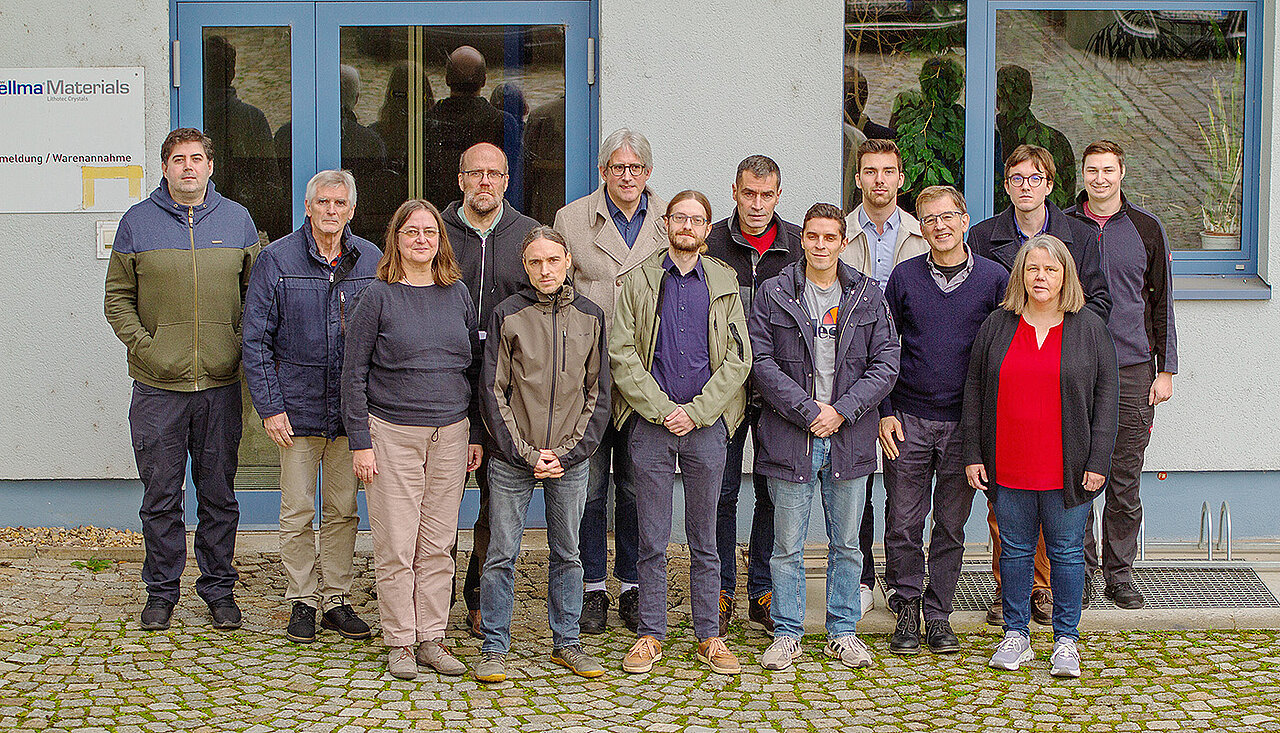
- Hellma Materials GmbH, Jena
- Johannes Gutenberg University Mainz
- Julius-Maximilians-Universität Würzburg
Dr. Sibylle Petrak from Hellma Materials GmbH is the project manager and is responsible for crystal production and the manufacture of the camera prototypes. Experts such as Dr. Stefan Wörlen from Brenk Systemplanung GmbH are responsible for the dismantling of nuclear power plants. Sebastian Chmel, Professor of Physics and Metrology, is involved at INT. He specialises in the reliable identification of radioactive substances.
Contact
Dr. Thomas Siegert, Chair of Astronomy, T. +49 931 31-81691, thomas.siegert@uni-wuerzburg.de
Additional images