
New portal provides space for debate on colonial street names
01/13/2026Should colonial street names in German cities be changed? If so, what are the trends? Citizens can take part in these debates. A new portal provides the digital space for this.
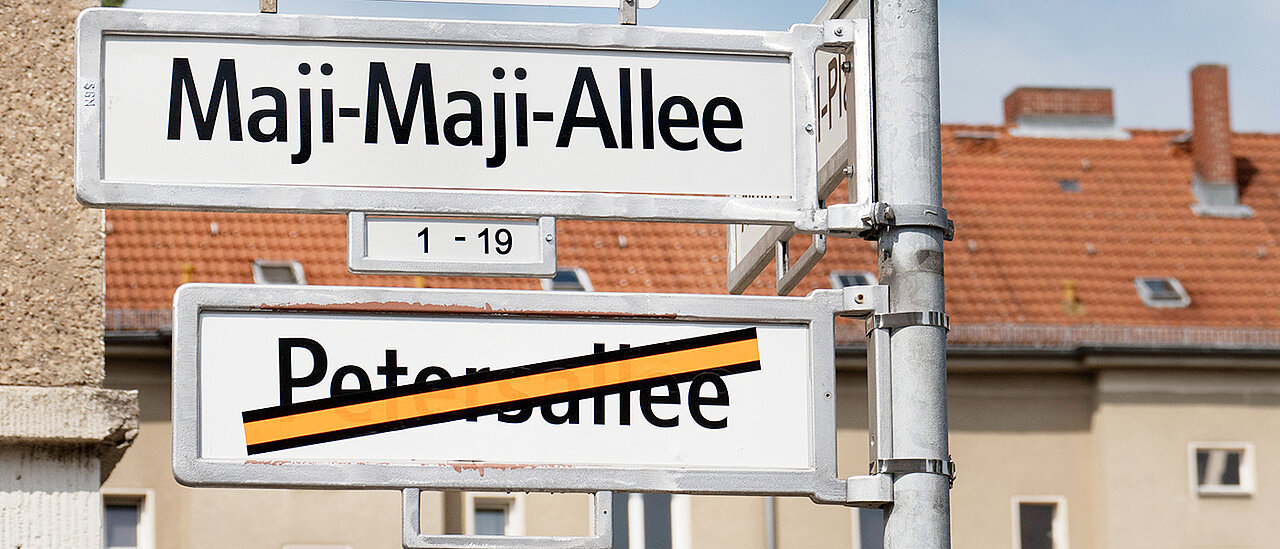
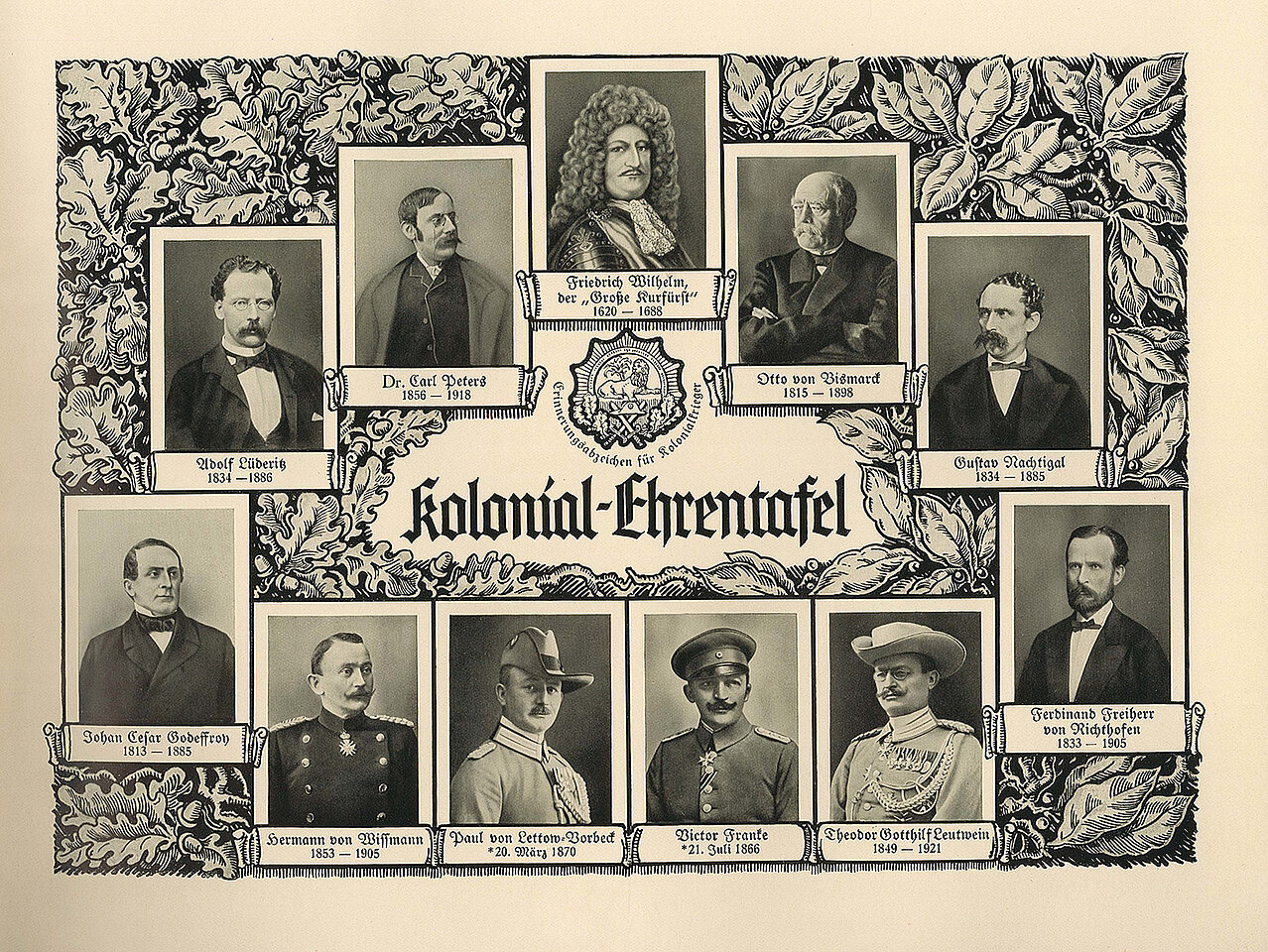
To this day, numerous streets in Germany bear the names of people or events that are closely linked to colonial history. For example, the colonialists Adolf Lüderitz (1834-1886) and Carl Peters (1856-1918) are frequently mentioned. Petersallee in Berlin-Wedding existed until 23 August 2024, the day commemorating the slave trade and its abolition. Since then, part of the street has been called Anna-Mungunda-Allee and another part Maji-Maji-Allee.
In many places, such renaming discourses are underway or have already been completed, in some places they are just getting startet. Dr. Verena Ebert, a researcher at the Chair of German Linguistics at Julius-Maximilians-Universität Würzburg, is responsible for documenting the current and historical ways of dealing with the colonial past. To this end, she is providing an internet portal that analyses the discourse on colonial street names from the end of the Second World War to the present day across different locations. The data is based on 500 colonial street names from 100 cities between the beginning of the German colonial era in 1884 and the end of the Third Reich in 1945.
A platform with extensive citizen participation
An important part of the project is to actively involve citizens in the development of the text-image database. Interested parties have recently been able to contribute to the portal: Which colonial street names are important to them in coming to terms with Germany's colonial past? How should they be dealt with? They can also contribute examples from the past.
"We are interested in what forms of dealing with the colonial culture of remembrance the participants consider successful or unsuccessful," says project manager Ebert. In future, an interactive map of past and present negotiation processes will be available.
"The exciting thing about this form of citizen science is that we don't know in advance which stakeholder groups from the population will get involved," continues the linguist. This is because the portal is aimed at a broad and diverse audience that goes beyond the scientific public and includes the various urban societies, from civil society initiatives to local residents.
Visitors to the website can also enter complex search queries. For example, it is possible to display an overview of all the ways in which historical streets have been named in honour of a specific colonialist since 1945.
No interference in ongoing debates
Local authorities can also contribute to the discussion and benefit from it: The portal is a repository of academic information and public opinion. "Documented debates from other cities can serve as a guide for local authorities when dealing with street names in colonial contexts," explains Ebert.
Intervening in active debates is not on the project's agenda: "We ourselves are not interested in adequately commemorating colonialism," explains the researcher. Rather, the aim is to highlight the competing judgements from the perspective of linguistics.
Renaming colonial street names since the Second World War
Dr. Verena Ebert has already analysed the trends in renaming in the Federal Republic of Germany (FRG) and the German Democratic Republic (GDR) in a previous project funded by the German Research Foundation (DFG). "In the GDR, colonial street names were very quickly eradicated by the socialist regime. In West Germany, the debates only began in the 1980s," says the linguist.
Only in recent years has there been a tendency to send out signals critical of colonialism and to name streets after anti-colonial and anti-racist resistance fighters, for example. Like the former Petersallee in Berlin: Anna Mungunda (1932-1959) fought against apartheid in Namibia. "Maji-Maji" was a battle cry in the resistance against the German colonial power in what was then German East Africa (today Tanzania, Burundi, Rwanda and parts of Mozambique). During this conflict from 1905 to 1907, Carl Peters, among others, took part in colonial crimes.
Funding and technical realisation
The DFG is funding the project "Informieren, Dokumentieren, Beraten: Integrierte Namen-, Text- und Bilddatenbank über den Umgang mit kolonialen Straßennamen seit 1945 bis heute" with just under 360,000 euros. The project will run for two years. Cooperation partner and responsible for the technical implementation of the portal is the Centre for Philology and Digitality (ZPD) with project staff Corinna Keupp and Janik Haitz.
Contact
Contact the project management by e-mail via zpd-umgang-kolstrn@uni-wuerzburg.de
Verena Ebert's dissertation on colonial street names is available as an open access PDF (In German) from the University Library.
Additional images