
News from cancer research at the health talk
01/13/2026What recent advances have been made in the diagnosis and treatment of tumour diseases? What are the prospects for the future? Experts from the University Hospital of Würzburg will answer questions like these on 24 January 2026.
Cancer medicine is undergoing a historic transformation: personalised therapies, modern immunotherapies and high-precision molecular diagnostics are opening up opportunities for healing and long-term survival that were unthinkable just a few years ago. The University Hospital of Würzburg (UKW) will provide information about these developments, their prospects and their significance for patients at the first health talk "Neues aus der Krebsforschung: Fortschritte und Perspektiven".
The free information event will take place on Saturday, 24 January 2026, from 10.00 am to 11.30 am in Lecture Hall 1 of the Centre for Internal Medicine (ZIM) of the UKW on Oberdürrbacher Straße. The health talk is a co-operation between the UKW and the Main-Post. It will be held in German.
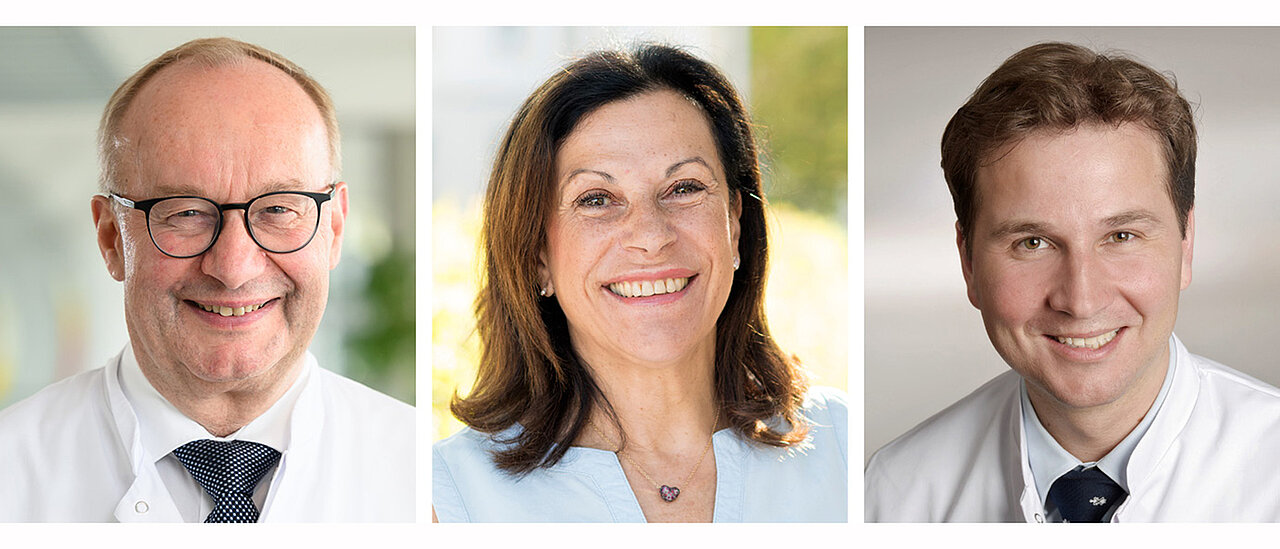
The speakers will be available to the audience for questions and discussion: Professor Hermann Einsele, Director of the Medical Clinic and Polyclinic II at the UKW and spokesperson for the National Centre for Tumour Diseases (NCT WERA), Professor Andreas Beilhack from the Centre for Experimental Molecular Medicine at the University of Würzburg and Gabriele Nelkenstock, Chairwoman of the Board of Trustees of the "Forschung hilft" foundation.
Paradigm shift in cancer therapy
"We are not currently experiencing gradual progress, but a real paradigm shift in cancer medicine," says Einsele. Modern molecular diagnostics now enable therapies that specifically target genetic changes in tumour cells. Surgical and radiotherapeutic treatments have become much more targeted and have fewer side effects. At the same time, immunotherapy has fundamentally expanded the treatment spectrum.
The successes in diseases that were previously very difficult to treat are particularly impressive. "In the case of multiple myeloma, life expectancy in 2006 was still a maximum of four years. Today, many of our patients achieve disease-free survival times of more than 17 years. This is one of the greatest success stories of modern medicine," emphasises Einsele.
Treatment approaches for solid tumours have also developed further: "In patients with malignant melanoma, also known as black skin cancer, we have been able to improve treatment so dramatically through targeted therapies that today many patients remain tumour-free in the long term - in some cases permanently," explains Einsele. The professor continues: "Even cancer patients with liver metastases from an intestinal tumour, who were long considered virtually untreatable, now have a realistic chance of long-term survival with combined systemic therapy plus surgery."
Cancer research at the highest international level
Roland Schmitt-Raiser, Head of Content Management at Main-Post, will moderate the panel discussion. This will also show that Würzburg University Medicine is working at a top international level in cancer research and is making important contributions to improving diagnostics and therapy. According to Andreas Beilhack, many of these advances would not be possible without 'Forschung hilft'. The foundation for the promotion of cancer research at the UKW supports innovative ideas and, above all, young scientific talent at an early stage. For example, particularly sensitive tests have been developed that can recognise individual cancer cells among up to 100 million healthy cells.
"A decisive advance for the treatment of blood cancer patients," emphasises Beilhack, "the development of novel three-dimensional tumour models also began with local funding and has been further advanced by the UKW together with the other five Bavarian university hospitals since January 2026 as part of a translation group of the Bavarian Centre for Cancer Research." According to him, the funding from the local foundation also led to the development of a new class of immunotherapeutics that activate the body's own defence system directly in the tumour environment.
"These examples show impressively that the 'Forschung hilft' foundation has become an important catalyst for progress - with direct benefits for those affected and a lasting contribution to strengthening cancer research locally and beyond," says Gabriele Nelkenstock. Many thanks go to the 'Help in the fight against cancer' association, which established the foundation in 2017.
Registration and further information
Further information and a registration link can be found on the UKW website under the heading "Events". Participation is free of charge.