
Southern German centre for innovative imaging to be established in Würzburg
01/20/2026The DFG is funding the establishment of a new centre for magnetic particle imaging at the University of Würzburg with 3.1 million euros. The aim is to make the new technology ready for clinical application.
Magnetic particle imaging (MPI) is a promising new method that allows magnetic nanoparticles in the body to be visualised in real time, with high resolution and quantitatively. It makes visible where these so-called markers are located in the body and how they move - completely without X-rays or other ionising radiation.
These properties make MPI particularly interesting for medical applications, for example in cardiovascular diagnostics, image-guided interventions or tracking cells, for example in cancer or immunological research.
Human applications difficult so far
Imaging with magnetic particles has already delivered promising results in preclinical research. Nevertheless, the step towards application in humans remains difficult. One of the main reasons for this is the lack of a research infrastructure that enables precisely this transition.
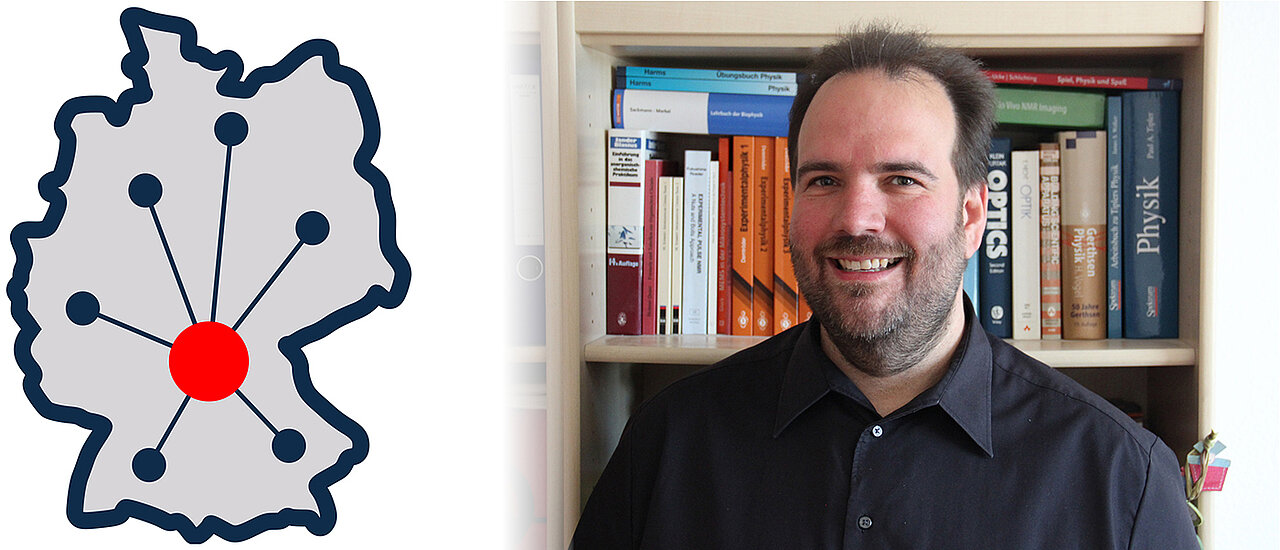
This is now set to change: The South German Centre for Magnetic Particle Imaging (SMPI), a unique research location in Germany, is being established at the University of Würzburg.
The German Research Foundation (DFG) has granted an interdisciplinary team led by physics professor Volker Behr 3.1 million euros as part of its large-scale equipment initiative. The centre is expected to go into operation in 2027.
The South German MPI Centre (SMPI)
Volker Behr is the spokesperson for the new centre: "At JMU, we will create a central platform for translational MPI research - in other words, for research that specifically follows the path from basic development to medical application in humans."
The SMPI will cover the entire development chain of magnetic particle imaging: from the characterisation of new magnetic markers to methodological developments and imaging of larger objects - and, in the future, humans.
Three systems for the path to clinical application
In order to cover the entire development process of magnetic particle imaging, the centre will be equipped with three complementary MPI systems:
1. a large, innovative MPI research system
An MPI system specially developed for the SMPI will enable investigations on larger objects and close the existing gap between laboratory research and human applications. The system is not a clinically usable device. Rather, it serves as an experimental research platform for fundamental technical, physical and biological questions. The knowledge gained is crucial in order to realistically assess the requirements that future MPI systems must fulfil for routine human applications.
2. an MPI spectroscopy platform for marker research
A specially designed MPI spectroscopy platform enables the precise investigation of novel magnetic nanoparticles that are used as markers for MPI. Properties such as signal behaviour, sensitivity and stability can be measured here under controlled conditions. These basic measurements are essential for improving new markers and reliably assessing their suitability for later imaging applications.
3. a preclinical MPI system for method development
Another preclinical MPI system is used for the systematic development and testing of new imaging methods. It is connected to the other two devices via a common software basis - this allows methods to be transferred and compared directly between the systems. This facilitates the transition from theoretical concepts and laboratory tests to realistic application scenarios.
Timetable for setting up the centre
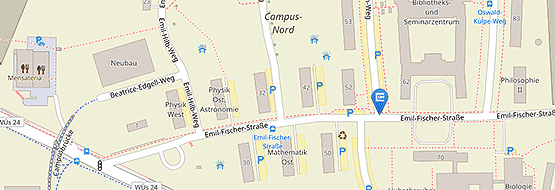
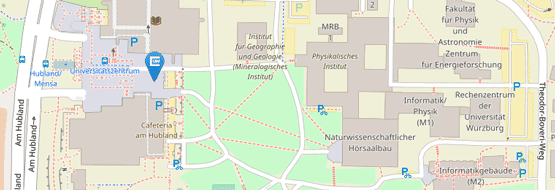
The three new systems will be installed in an existing research building at the Institute of Physics on Hubland Campus South. Initial preparations are underway and the two smaller devices should be ready for use by the end of 2026. The large MPI system, which is being newly developed and whose centrepiece has the dimensions of a medium-sized freezer, is expected to be ready in the course of 2027.
Strong network of physics and medicine
The SMPI is embedded in an interdisciplinary research environment of physics and medicine. Those involved include:
- Chair of Experimental Physics 5, University of Würzburg: Prof. Dr Volker Behr, Prof. Dr Peter Jakob, Dr Patrick Vogel
- Institute for Diagnostic and Interventional Radiology, University Hospital Würzburg: Prof Dr Thorsten Bley, Dr Viktor Hartung
- Institute for Diagnostic and Interventional Neuroradiology, University Hospital Würzburg: Prof. Dr Mirko Pham
- Medical Clinic I, University Hospital Würzburg: Prof. Dr Dr Wolfgang Bauer
The great supra-regional interest was already evident during the application process: Numerous institutions from all over southern Germany and beyond are supporting the project with planned co-operation projects: These include the university hospitals in Erlangen, Heidelberg and the German Cancer Research Centre (DKFZ) in Heidelberg as well as universities and non-university research centres in Aachen, Bayreuth, Gatersleben, Karlsruhe and Würzburg.
Contact
Prof Dr Volker Behr, University of Würzburg, Chair of Experimental Physics 5, T +49 931 31-85766, volker.behr@uni-wuerzburg.de