
CampusBank: Biotope and information network for Hubland North
Update from CampusBank: The benches on Hubland North are ready!
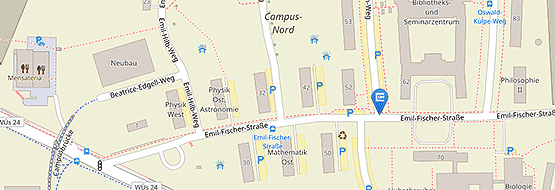
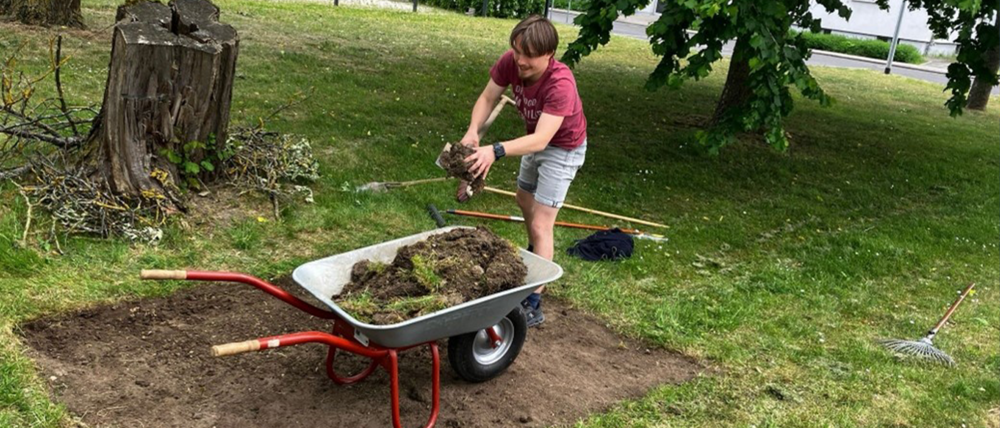
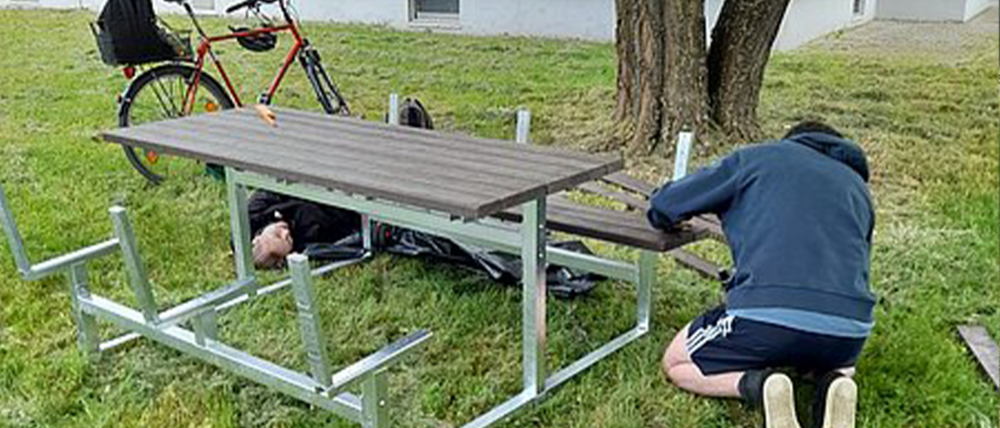
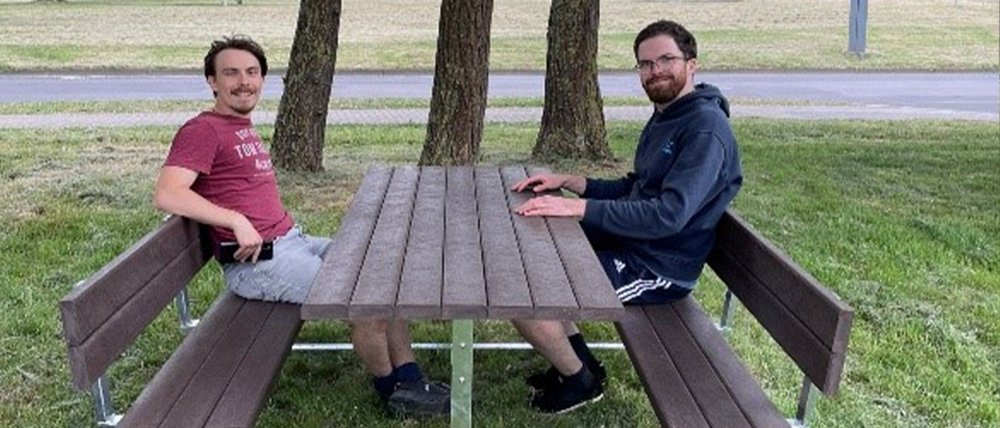
Since 16 May 2025, the progress of the project can now also be observed at Hubland Campus North: On this day, the first CampusBenches were installed at the Hubland North Campus (Emil-Fischer-Straße). The attached pictures show how the benches were installed on site.
Benches for lingering meet sustainability
A particular focus of the project is to make environmental protection tangible and understandable for everyone. For this reason, attractively designed information boards will be installed directly on the benches in the near future. These will clearly explain how deadwood, for example, actively contributes to the promotion of biodiversity. In this way, knowledge about sustainability will be communicated directly at the place where it happens. In addition, signposts at the new seating areas will point the way to the nearby CampusGarden 2.0 - a flagship student project at Julius-Maximilians-Universität Würzburg.
It took some time and energy to install and assemble the benches, but it was also a lot of fun. At the end of the project, the result was a success. A third bench will be installed in the CampusGarten itself in the near future.
With the CampusBank transformation experiment, the campus will not only be further promoted in its role of social exchange, but will also become a place where environmental protection can be actively shaped and observed.
Further information and photo impressions can be found on this website.
General information
The CampusBank transformation experiment aims to combine students' direct desire for seating with ecological sustainability.
To counteract the lack of seating, so-called 'CampusBenches' will be set up at Hubland North. Students, university staff and other people who spend time at Hubland Nord can work, study or simply relax on these benches. Small biotopes, so-called 'Wuselflächen', will be installed around the benches, which have already been set up by the Living Campus initiative at other locations on the university campus. These serve as stepping stone biotopes for a variety of species and thus promote biodiversity. The project will also be organised in collaboration with the L(i)ebenswerter Campus transformation experiment, which is also being carried out by the Living Campus initiative.
The aim of this approach is to combine everyday lingering on the Hubland with environmental protection, as the scurrying areas not only stand on their own, but are also provided with signs in an appealing design. This will give visitors to the benches the opportunity to understand how the scurrying areas create a habitat for species, as it is not always intuitive to recognise how dead wood, piles of stones and the like promote biodiversity.
In addition, signposts to the CampusGarten at Hubland North will be attached to the benches. This is a JMU student showcase project in the field of sustainability, the aim of which is to draw attention to the location.
The transformation experiment is being coordinated by members of the University of Würzburg's Department of Ecology and Sustainability (RefÖko). The expertise and commitment of this student initiative will be used to directly address the needs of students and support the university in the area of sustainability and also in improving the quality of life on campus.
To summarise, the project brings the following benefits:
- Creation of outdoor seating and working areas
- Species protection through stepping stone biotopes (scurrying areas)
- Didactic environmental protection through information signs with an appealing design
- Attention for the large-scale CampusGarten project