
Digital innovations that continue to grow
07/28/2026For four years, WueDive has provided a space for experimentation in university teaching at the University of Würzburg. The project has now come to an end, but its key initiatives continue and will have a lasting impact in the future.
What happens when university teaching is deliberately given scope to experiment? This was the question WueDive set out to answer. The project at the University of Würzburg was launched in 2021 – as one of the first projects in Germany to be made possible by the "Stiftung Innovation in der Hochschullehre" (Foundation for Innovation in University Teaching). The funding came to an end at the end of 2025.
During this time, over 300 participants from all faculties and the central departments of the University of Würzburg contributed creative ideas for forward-looking digital teaching.
“Guided by the principle ‘From teaching, for teaching’, we have supported teaching development projects centred on the themes of ‘simulation’ and ‘artificial intelligence’,” explains project coordinator Berkan Yildiz. “This has led to new creative and interdisciplinary solutions emerging from everyday teaching practice, ranging from virtual learning environments to AI reflection coaches.”
One example is the Chair of Clinical Psychology and Psychotherapy: there, students now practise therapeutic conversations using AI-supported VR simulations, test different strategies and reflect on their actions using data-driven analysis, in order to deepen their practice-oriented learning in a targeted manner.
Media practice at the ZBL
The culture of collaborative learning and creation inspired by WueDive is now being carried forward by the Centre for Teaching and Learning (ZBL).
For example, Cathrin Paulsen is looking forward to seeing the‘Toolbox’continue to grow – a project into which a great deal of time and attention to detail has gone. “The Toolbox is an internal, participatory platform on WueCampus. There, lecturers can find tried-and-tested methods, resources, best practices and teaching-and-learning concepts from a wide range of academic disciplines,” explains Paulsen. She emphasises: “Thanks in particular to contributions from the teaching community itself, a growing network of practical knowledge and inspiration is emerging.” The content is now also available in English.
An extensive equipment hire service is another outcome of the WueDive project. From podcast kits and VR headsets to video equipment, lecturers and students can now borrow technology free of charge via a booking portal to try out and further develop digital scenarios. In future, a video and podcast studio will also be available at the ZBL.
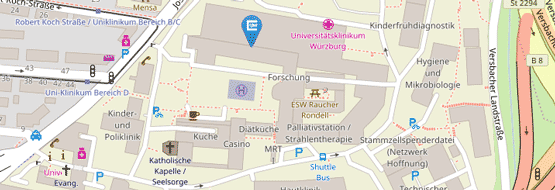
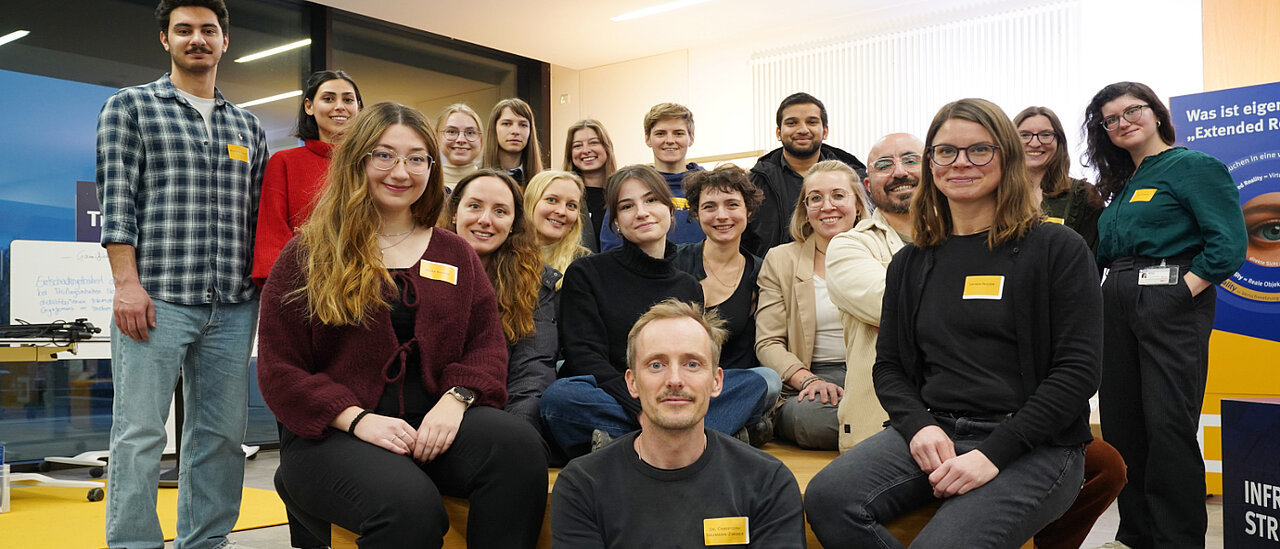
Right next to the equipment hire facility, at Josef-Martin-Weg 54/1 on the Hubland Nord campus, the creative and media space‘Treffpunkt 108’complements the facilities on offer at the ZBL. “We want to be the productive living room on campus,” says Dr Christoph Naumann-Zimmer, describing the idea behind the concept: “When fitting out the space, we made sure it encourages creative and experimental work – whether analogue, hybrid or using digital tools. All university members can book the room free of charge.”
In addition to consolidating the project’s outcomes – the Toolbox, equipment hire and Treffpunkt 108 – the ZBL’s further training and advisory services will also be continued and expanded in the ‘Medienpraxis’.
And what about the faculties?
“Teaching must constantly change because students are constantly changing”: this is how Professor Jorit Wintjes describes his motivation for undertaking a teaching project with WueDive. It is one of over 60 WueDive sub-projects in which digitally supported teaching and learning formats were tested, designed and further developed. The projects brought lecturers and students together, fostered skills and created new connections between different university groups.
Dr Daniel Gromer from the Chair of Clinical Psychology and Psychotherapy highlights WueDive’s working culture as particularly positive. It was the “low-threshold and straightforward support” that ultimately tipped the balance, enabling him and his team to simply go ahead and try out a project idea they had for improving psychotherapy training.
When selecting the sub-projects, consideration was given not only to the diverse applications across subjects and existing teaching formats but also to pedagogical and didactic modelling, in order to enable the sustainable integration of digital elements into everyday teaching.
A final online publication (PDF) provides an overview of the diversity of the WueDive sub-projects and highlights the didactic questions, objectives and digital approaches that link them. Together with the toolbox, it makes the experiences and good practices developed during the project permanently accessible and usable for the teaching community.
Links