
Two new sermons by St Augustine discovered
06/02/2026In a Latin manuscript from a monastery in Poland, a Latin scholar from Würzburg has found two new sermons by the Doctor of the Church, St Augustine. He is currently working with an edition company on the first edition.
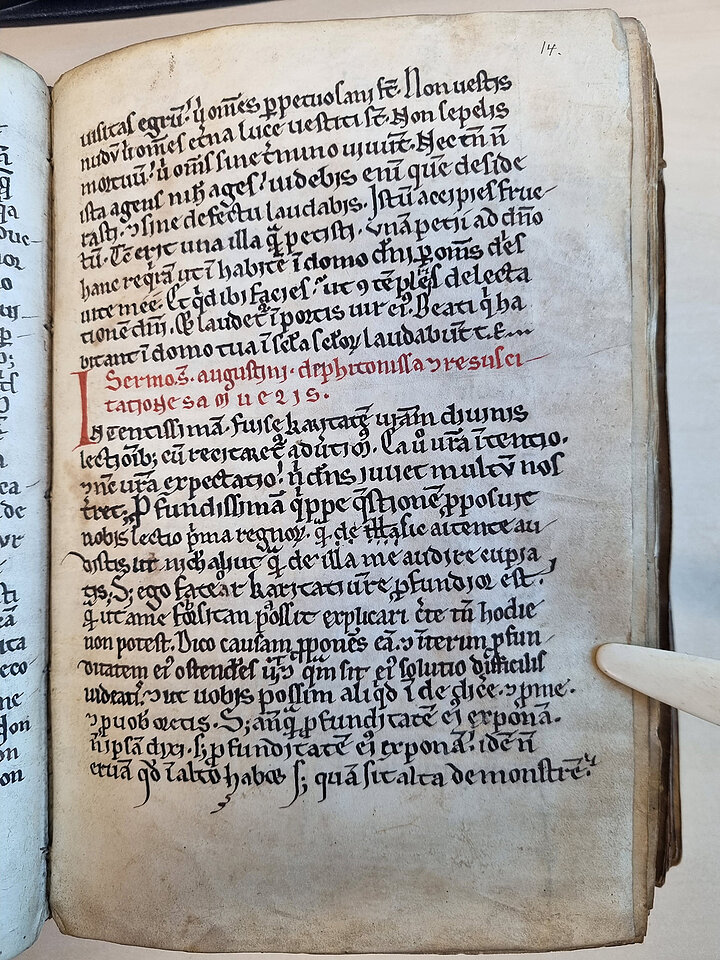
One day in 2024, the telephone of Professor Christian Tornau, a Latin scholar at the University of Würzburg, rings: an employee of the Bad Doberan Monastery Association in Mecklenburg-Western Pomerania asks him to decipher a manuscript from the 12th century that originally belonged to Bad Doberan Abbey but is now kept in its daughter monastery in Pelplin, Poland. The manuscript contains six sermons by the Christian church scholar Augustine of Hippo (354-430).
What initially looks like a normal philological assignment turns into a discovery: "Two of the six sermons are previously undiscovered writings by Augustine," says Professor Tornau, delighted with the unexpected find. He is currently working with Professor Dorothea Weber and Dr Clemens Weidmann from the edition company CSEL (Corpus Scriptorum Ecclesiasticorum Latinorum) on an edition of the two Latin sermons.
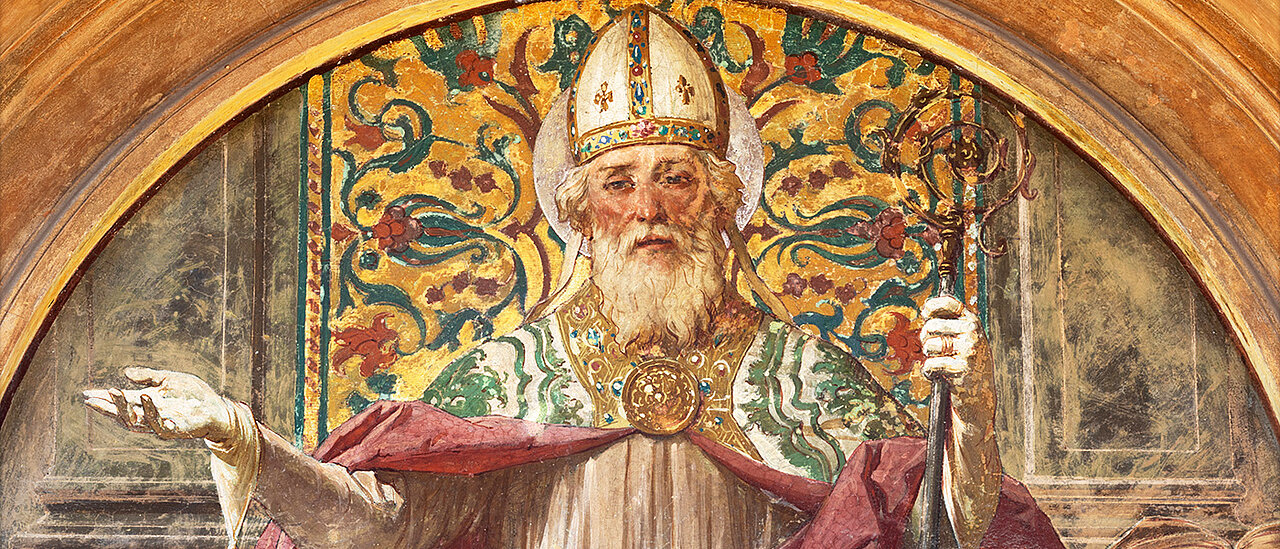
St Augustine was Bishop of Hippo Regius in what is now Algeria and is considered one of the most important church fathers. As the philosophically and theologically most influential thinker of Latin Christianity, he had a decisive influence on Western philosophy, the doctrine of grace and the understanding of the church and faith.
A witch, an incantation and God
The newly discovered sermons deal with the Old Testament story of the Witch of Endor from the First Book of Samuel. "Saul believes himself to be in a hopeless situation shortly before a battle against the Philistines. God does not listen to his prayers. He turns to a witch," explains Tornau. At Saul's request, she conjures up the supposed spirit of the deceased prophet Samuel, who predicts his death in battle.
The story raises a theological question: "Why can a necromancer summon the spirit of a prophet? This in turn opens up the theodicy problem: how can an omnipotent God allow this or is he not really omnipotent?" says the Latin scholar. There are two interpretations in theology: Either it must be a deception on the part of the witch, or God allowed the incantation to warn Saul of certain death.
The sermons play with these interpretations. "The first was preached during the Sunday service and ends with the theodicy question and the interpretations. It was not until the second sermon on the following Wednesday that the options were weighed up," says Tornau. The church audience was therefore given a certain amount of freedom to form their own thoughts on the biblical passage.
Typical Augustine
According to the Würzburg scholar, this didactic and rhetorical approach is typical of Augustine: presenting options for interpretation, omitting a final judgement and allowing the audience to think for themselves. "The style, humour and content also clearly indicate that the sermons in the manuscripts were actually written by Augustine," says Tornau.
There have already been cases in which supposed Augustine writings turned out to be forgeries. The Latin studies professor therefore proceeded with caution: He analysed the text together with expert Clemens Weidmann, carried out meticulous research and organised a summer school in Vienna in autumn 2025. Twenty other Latin scholars attended to discuss and verify the authenticity of the text. In the end, everyone agreed: the sermons are genuine.
Two sermons complement extensive body of writings
Reconstructing the transmission history of the sermons proved to be a challenge. "Firstly, the creation of such a manuscript in the 12th century is unusual. A copy at the beginning of the 8th or 9th century would be more typical," says Latinist Tornau. He therefore considers it very likely that the manuscript is based on a previous version from Amelungsborn Abbey in Lower Saxony.
"An old catalogue from the monastery mentions a text with the same headings and the same sequence of contents as our manuscript. It could have served as a model," explains the researcher. Tornau cannot confirm this assumption one hundred per cent, as the entire library collection of the Amelungsborn monastery was burnt during the Thirty Years' War (1618-1648).
The first edition will examine the tradition and categorise the content and authenticity of the sermons. "This is not a sensational find like the 30 writings of St Augustine that were discovered in Mainz in 1990. But we are supplementing Augustine's extensive body of writings with two further exciting texts in a critical edition," summarises Tornau. The edition is expected to be published by CSEL at the end of 2026.
Contact
Prof Dr Christian Tornau, Professorship of Classical Philology, T +49 931 31-88419, christian.tornau@uni-wuerzburg.de
Additional images