
Mobility, sharing & digitalisation
02/24/2026Further developing university mobility, using office and laboratory furniture sustainably: These and other student transformation experiments have been launched at the WueLAB sustainability lab.
Having good mobility options in the city and on campus is important for the students and employees of Julius-Maximilians-Universität Würzburg (JMU). On the one hand, the large campus at Hubland is very extensive, and on the other hand, the university's other locations are spread throughout the city.
Developing university mobility together with all stakeholders in line with demand: This is the aim of the "Mobility Forum", which was founded by the Mobility Department of the student's representation. All three universities in Würzburg are represented in the forum. It aims to create an open platform on which various initiatives, projects and impulses on the topic of "mobility" can flow together. The forum also endeavours to establish close contacts with relevant decision-makers in the city, society and the economy.
Mobility as a transformation experiment
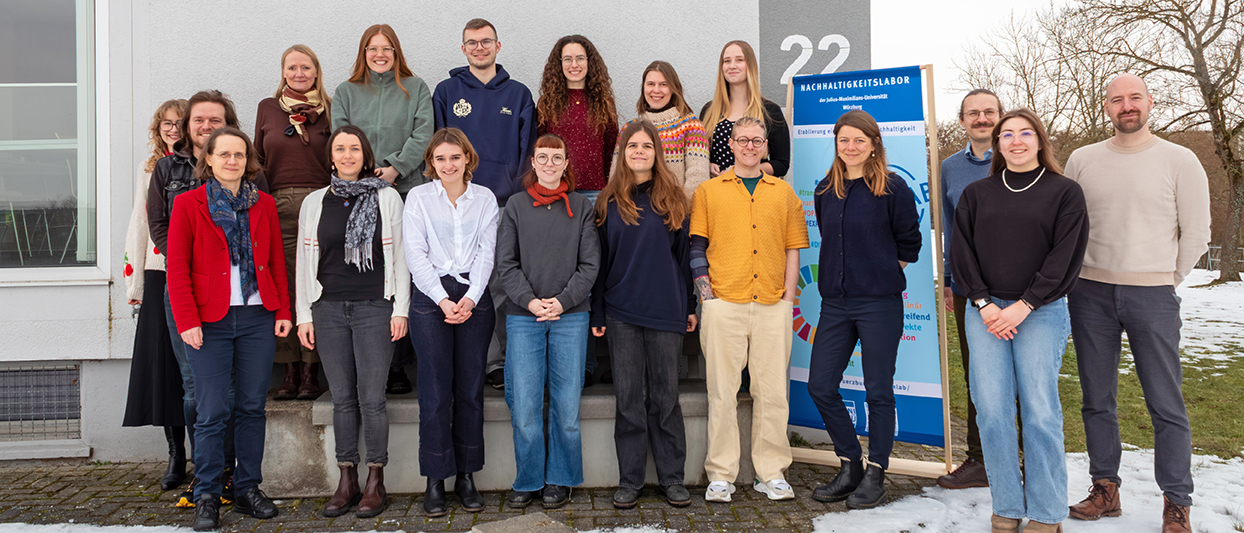
With the idea for the "Mobility Forum", a team led by philosophy and teacher training student Henry Mörtl was included in the series of transformation experiments that are being conducted at the university under the umbrella of the WueLAB sustainability laboratory. JMU set up the WueLAB in 2021 with the aim of promoting and consolidating a culture of sustainability at the university. There are currently 16 active experiments; three have been completed. The WueLAB team supports the experiments administratively, organisationally and financially and also provides scientific advice.
Five of the 16 transformation experiments are under student management. The experiments give students the opportunity to help shape science-based practical and structural changes at the university and beyond. The WueLAB accompanies them in this process. Together with the extensive networking behind the experiments, students find unique opportunities here: They come into contact with students from other disciplines, different status groups at the university as well as with stakeholders in the city and society.
Having an impact on society
The transformation experiments clearly show that JMU is committed to transdisciplinary and cross-status group action: Students, researchers, administrative staff and other university employees are to become active together in the projects and also interact with stakeholders outside the university.
"With the transformation experiments at WueLAB, we want our university to provide more significant impetus for social transformation processes," says Professor of Mathematics Anja Schlömerkemper. The WueLAB spokesperson is also JMU Vice President for Equal Opportunities, Career Planning and Sustainability.
Campus furniture
Another new student transformation experiment: "CampusMöbel - a digital furniture utilisation chain". Its aim is to make the handling of furniture resources within the University of Würzburg more sustainable, efficient and transparent. "We want to create a web-based platform that makes inventories visible, links supply and demand and makes it easy to pass on furniture. University employees should be able to easily pass on office and laboratory furniture that they no longer need," says the team. In this way, furniture is given a second life and does not have to be bought new or thrown away. This conserves resources and reduces new purchases - an important step towards greater sustainability at JMU. The "Campus Furniture" web platform is designed to make the entire process clear and user-friendly for everyone involved.
Pussel: complex research papers, simply structured
In another transformation experiment, student Lewe Lorenzen is working on the "Pussel App". This AI-supported reading aid uses a large language model to prepare scientific papers in a modular and comprehensible way in order to facilitate access to specialist literature for as many people as possible. The target group includes students and researchers, but also journalists.
The Pussel project is accompanied by a student thesis. Lewe Lorenzen came up with the idea as part of his Master's degree in Human-Computer Interaction at the Chair of Psychological Ergonomics. His colleague Dr Stephan Huber is supporting the project.
W(u)eShare: sharing and swapping
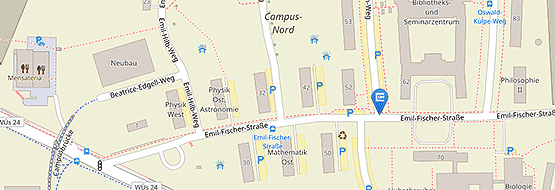
The student transformation experiment W(u)eShare addresses the desire for more social exchange among students and staff at the university. To this end, the first swap cupboard was installed in front of Building 22 on the North Campus. It was donated by the City of Würzburg's environmental centre, the university's technical services helped to set it up and Timo Stiller, a student of social science sustainability research and project coordinator of "W(u)eShare", fitted it with shelves and equipped it with the first swap items donated by the Würzburg Future House. A further hire cupboard for sports and play equipment for use on campus is being planned.
In the spirit of the "shared economy", W(u)eShare aims to try out new, sustainable consumption practices that are characterised by the shared use of objects. There are several opportunities for sharing and swapping at WueLAB. Members of the university can hand in office plants or obtain new specimens at a plant exchange shelf. The "Anton" cargo bike can also be borrowed from the sustainability lab.