
Chiselled in stone - composed of pixels
05/19/2026Modern 2D technology targets ancient 3D images: Photo exhibition "Sculpture in focus. Archaeological research projects on ancient Ostia (Italy) and Apollonia (Albania)" at the Martin von Wagner Museum.
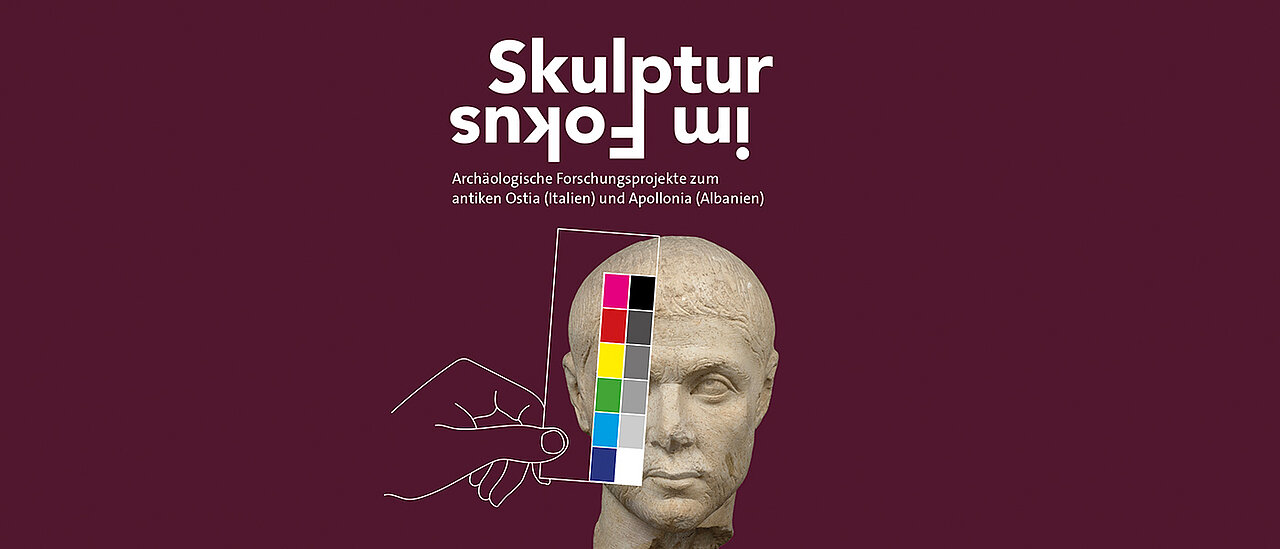
In the photo exhibition, two projects funded by the German Research Foundation (DFG) on sculptures from Greco-Roman antiquity, which are based at the Julius-Maximilians-Universität Würzburg (JMU), provide information about their ongoing work.
The project in Ostia, the port city of Rome, which is based at the Chair of Classical Archaeology, is primarily concerned with researching the sculptural furnishings of late antique residential buildings as an expression of the pictorial programmes of this epoch at the end of antiquity.
In Apollonia (Albania), on the other hand, a project of the Würzburg antiquities collection, the focus is on the long-term development of the stone monuments, the special nature of which results from the city's geographical location at a cultural interface between the eastern and western hemispheres of the Mediterranean world.
Both projects are linked not only by the material type of their objects, but also by the demand for basic research, which in practice involves extensive photographic campaigns to catalogue the historical objects in the relevant museums and repositories.
Sculptures were not only used as jewellery
A representative selection of these photos can now be seen, which, among other things, testify to the great aesthetic appeal of the ancient sculptures. At the time of their creation and use, however, they served not only to decorate urban spaces, but also to communicate the values of their patrons, producers and recipients in a variety of ways.
The material properties and the high level of craftsmanship on which the sculptures are based have inscribed lasting meanings into this medium, which can be largely deciphered using archaeological methods.
Exhibition provides access to the meaning of the works
The primary aim of the exhibition is therefore to provide visitors with access to the former levels of meaning of the sculptures from different perspectives.
Central research questions are crucial here: What material qualities and technical features are expressed in the sculptures? What biographies have the objects undergone? To what extent do they refer to role models and reinterpretations in terms of cultural appropriation? And in what context were they used to suggest specific effects and interpretations via their conditioned perception?
How the past comes alive
On another level, the exhibition reflects on the various media of modern reproduction of ancient sculptures and their specific potential for research: drawings, plaster casts and 3D simulations not only provide variety in the various sections, but also illustrate the advantages and disadvantages compared to scientific photography.
The superiority of the (digital) photograph - which becomes particularly clear in this synopsis - ultimately lies in its economy as a working tool: with a high density of information and authenticity of perception, it can be captured and shared quickly and remains flexible in its use.
The exhibition is accompanied by a book, which can also be ordered by post for ten euros plus postage.
Exhibition runs for a good two months
The exhibition will open on Wednesday, 20 May 2026, at 6:15 pm in the Toscanasaal of the Residenz. The opening event can be streamed live on YouTube .
The exhibition will then be on display in the Small Gallery of the Martin von Wagner Museum until 31 July 2026.