
International Perspectives on Messianism
11/03/2026The Käte Hamburger Center for Studies in Messianism is launching its research programme. Anyone interested is invited to the ceremony with the first visiting researchers in the Audimax on 23 November.
From Javier Milei and Jair Bolsonaro, through Mahatma Gandhi and the Dalai Lama, to Ukrainian culture of remembrance and modern conspiracy narratives: Messianic figures, narratives and their social impact are the focus of the Käte Hamburger Center for Studies in Messianism (CEMES) at the Julius-Maximilians-Universität Würzburg. From November, the newly established research centre will welcome its first group of international visiting scholars, who will work together in Würzburg for a year.
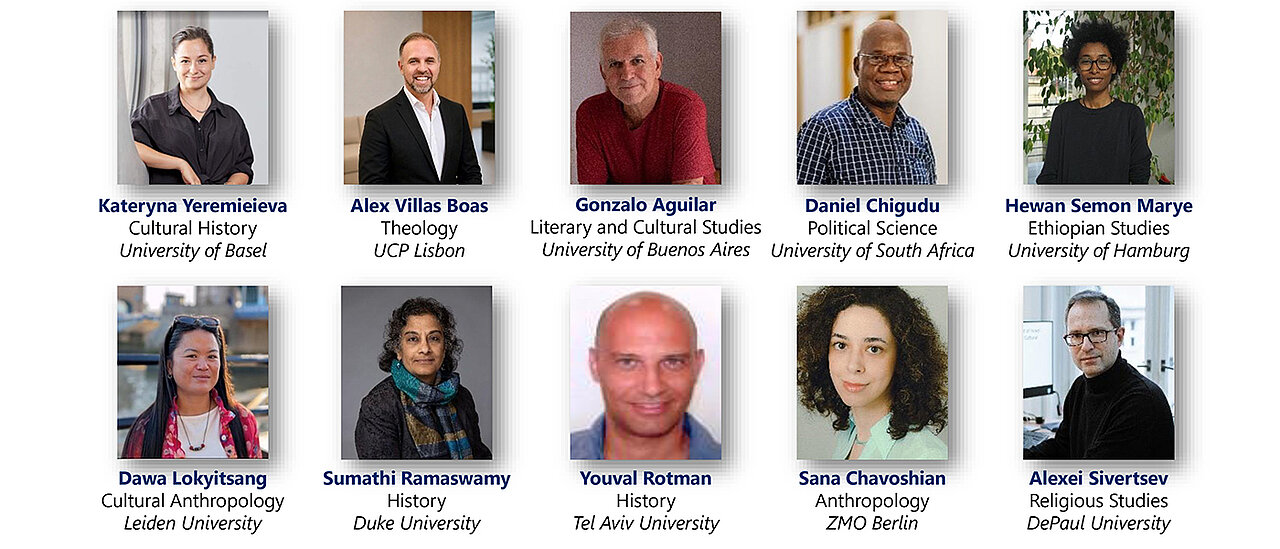
The ten researchers, hailing from four continents, represent disciplines such as cultural anthropology, history, political science, literary studies and theology. Their projects span from late antiquity to contemporary geopolitics.
“We are proud to bring together such a diverse group in Würzburg,” explain Professor Barbara Schmitz and Professor Christian Wehr, the directors of CEMES. “The projects demonstrate that messianic narratives are by no means merely historical phenomena. They continue to shape political discourses, crises and cultural identities around the globe to this day.”
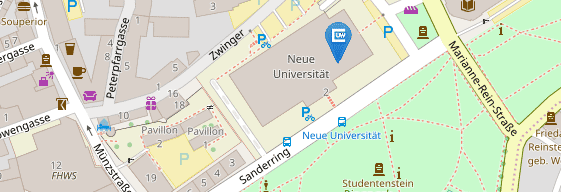
The official launch of the research programme will be marked by the centre’s ceremonial opening on Monday, 23 November 2026. The keynote lecture, entitled ‘The Messianic Moment in William Kentridge’s More Sweetly Play the Dance’, will be delivered by the internationally renowned cultural theorist Professor Homi K. Bhabha (Harvard University). The event is open to the public and will take place at 6.00 pm in the university’s main lecture theatre at Sanderring 2. All interested members of the public, students and researchers are warmly invited.
An overview of the first group
- Professor Gonzalo Aguilar (Literature and Cultural Studies, Universidad de Buenos Aires): Examines the historical roots of messianic narratives in Latin America and their connection to contemporary political populism, using the examples of Javier Milei and Jair Bolsonaro.
- Dr Dawa Lokyitsang (Cultural Anthropology, International Institute for Asian Studies, Leiden): She analyses the geopolitical and religious tensions surrounding the question of who has the authority to appoint the next Dalai Lama.
- Professor Sumathi Ramaswamy (History, Duke University): She examines the socio-economic dimension of Gandhi’s politics and demonstrates how spiritual ideas are linked to social justice and economic order.
- Professor Alex Villas Boas (Theology, Universidade Católica Portuguesa, Lisbon): Using Napoleon Bonaparte as a case study, he explores the emergence of political messianism through a pseudo-religious portrayal of himself as the Chosen One.
- Professor Youval Rotman (Jewish History, Tel Aviv University): At the intersection of late antiquity and psychology, examines how the historical transition to monotheism shaped the concept of an ‘inner Messiah’.
- Professor Hewan Semon Marye (History, University of Hamburg): Using a 15th-century apocalyptic text, she examines the connection between messianic prophecy, Emperor Tewodros and Ethiopia as the chosen land.
- Professor Daniel Chigudu (Political Science, University of South Africa): Examines messianic authority and succession crises in southern Africa, and explores how political systems deal with the death of influential liberation figures.
- Dr Kateryna Yeremieieva (History, University of Basel): Investigates how the Ukrainian national poet Taras Shevchenko is being reimagined as a modern ‘Messiah’ in the current war through the use of AI and social media.
- Professor Alexei Sivertsev (Religious Studies, DePaul University): Draws attention to an often-overlooked maternal dimension of messianism and explores Hebrew textual traditions surrounding the figure of Hephzibah.
- Dr Sana Chavoshian (Anthropology, ZMO Leibniz Centre for the Modern Orient, Berlin): She analyses postcolonial and conspiracy-mythical notions of an ‘alien Messiah’ in the context of war scenarios in the Gulf region.
Contacting the Fellows
During their stay in Würzburg, the researchers will present their work in public lectures and discussion forums. In addition, meetings and collaborations with institutions and partners from Würzburg and the wider region are planned. The diverse range of topics covered by the visiting researchers offers numerous points of connection for current news coverage.
If you are interested in specific topics or would like to arrange a discussion, CEMES will be happy to put you in touch via cemes-communication@uni-wuerzburg.de
The Käte Hamburger Center for Studies in Messianism (CEMES) conducts academic research into messianic figures and narratives throughout human history. It was established at the Julius-Maximilians-Universität Würzburg on 1 April 2026. Each year, the Centre invites ten outstanding international researchers to Würzburg to conduct joint research on the topic of messianism. Furthermore, the Centre aims to engage with schools and other educational institutions and to contribute to political education and awareness-raising, as well as to the promotion of democracy. The Federal Ministry of Research, Technology and Space (BMFTR) is providing funding of around 7.7 million euros to the research group for the first four years.