
For a competence-based selection process for trainee midwives
09/01/2026Mira Pflanz has completed the first PhD in Health Sciences at the University Medicine Würzburg. The researcher is investigating what a selection process for the dual degree programme in Midwifery might look like.
The difference between a Doctor of Medicine (med.) and a Doctor of Medical Sciences ( rer. medic.) may not be apparent at first glance. However, it is crucial: the former title is awarded to graduates of human medicine upon successful completion of their doctoral studies. The latter is awarded in medical-related disciplines such as nursing sciences or medical education.
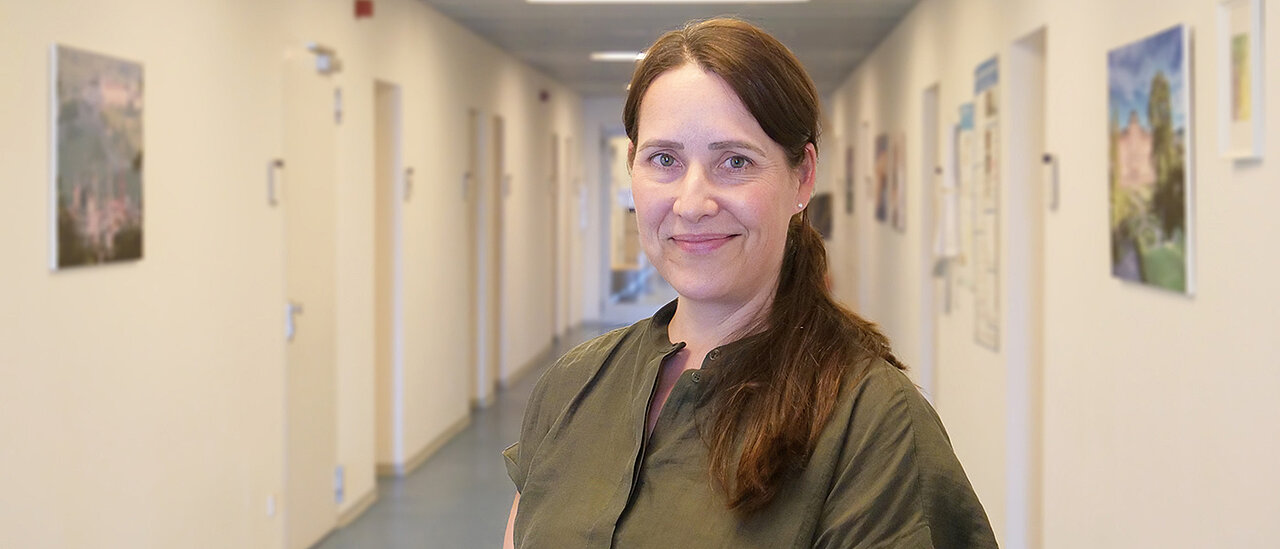
The Faculty of Medicine at Julius-Maximilians-Universität Würzburg (JMU) awarded its first Dr. rer. medic. in July 2026. The recipient was midwife and vocational trainer Mira Pflanz. She completed her doctoral research under Professor Sarah König at the JMU Institute for Medical Education and Training Research. Pflanz herself works at the Institute for Midwifery Science on the associated bachelor’s degree programme, which has been running since the 2022/2023 winter semester and which she helped to establish.
Midwives need communication and social skills
Research and teaching are closely intertwined in Mira Pflanz’s work: in her doctoral thesis, she examined how best to select students during the application process for the dual degree programme in Midwifery Science. “The traditional approach of deciding who gets a place at university based solely on A-level results is rather limited. After all, students are active both at university and in the workplace,” says the researcher. In addition to cognitive abilities, communication and social skills are particularly important, as midwives support pregnant women and their families before, during and after childbirth.
So who is suited to this role? To answer this question, Pflanz evaluated a concept originating in Canada: the Multiple Mini-Interview (MMI). The idea behind it is that applicants take part in several interviews, each lasting five minutes. At each station, there is a new task; each time, a different person sits opposite them – a midwife, a doctor or a researcher.
“For this ‘speed dating’, we have established standardised criteria aligned with competency profiles to enable a balanced comparison. At the stations, we assess: Is the person empathetic and motivated? Are they capable of self-reflection and conflict resolution?” says Pflanz, giving a few examples. At two interview stations, applicants have to do more than just answer questions. There, for example, they can demonstrate in simulated situations how they react to a person or a challenge.
Training competent midwives
Mira Pflanz used the first applicants for the degree programme as test subjects for her study. The result: “The procedure was feasible and psychometrically reliable. Participants found it fair, and it was widely accepted,” says Pflanz. She emphasises, however, that the group at the time was very homogeneous. Future studies would therefore require more diverse groups to ensure greater statistical validity.
Further developing the MMI: this is what Mira Pflanz is currently working on in her research and teaching. “At the end of the interviews, each applicant receives an MMI score, which forms the basis for admission. What we are now looking into is whether, and to what extent, this score can predict how successful the degree programme, the practical training and possibly even the applicant’s future career path will be.”
The researcher is aware that the MMI is not a panacea for the application process. “But it is definitely a good complement to the grade point average. After all, families benefit most when the midwife is suitable both personally and academically.”
About Mira Pflanz
Born and raised in Göttingen, Mira Pflanz qualified as a midwife in 1999. She then worked in a hospital in Hesse and subsequently as a freelance midwife at a birthing centre. Even back then, Pflanz was involved in teaching on the side, training nursing and emergency medical staff, amongst others.
From 2006 to 2011, she studied vocational education for healthcare professions in Fulda and Kassel. At Fulda University of Applied Sciences, Mira Pflanz helped to establish a model degree programme in midwifery – at the time, one of only three in Germany.
This was followed in 2015 by a three-year stay in the UK. There, Mira Pflanz worked for the National Health Service. In 2018, she returned to Germany but worked for the University of Southampton in England. Since 2022, she has been working in Würzburg on the Bachelor’s degree programme in Midwifery at JMU.
Contact
Dr Mira Pflanz, Institute of Midwifery Science, T +49 931 201-55234, Pflanz_M@ukw.de