
Cooperation with China: A multifaceted task
10/29/2026European universities explore how to build China expertise, strengthen institutional structures, manage risks and foster responsible, inclusive academic cooperation.

How can European universities develop the knowledge, structures and strategies they need for successful cooperation with China? This question was at the heart of the international conference “Cooperation with China: Developing Competences and Structures in European Higher Education”, held on 28 and 29 September 2026 in Würzburg.
The conference brought together researchers and practitioners from universities, higher education institutions, China-focused organisations and public-sector bodies. Across a series of expert panels, participants examined cooperation with China from different perspectives, including communication, institutional collaboration, risk management and the experiences of international students.
The conference was hosted by the sensitization programme KoWinChi, supported by the Federal Ministry of Research, Technology and Space, and the China Competence Centre at the University of Würzburg.
How Europe talks about China
The first panel, “European Messaging Towards China: Interpretations and Impact”, focused on how European perspectives and messages concerning China are communicated and understood.
Moderated by Professor Björn Alpermann of the University of Würzburg, the panel brought together Ágota Révész from Karoli Gaspar University Budapest, Amelie Richter from China.Table Media and Kristen Stessens from KU Leuven. The discussion provided universities with an opportunity to examine challenges in communicating about China while also offering insights from the media sector into the editorial processes behind the selection and presentation of reports.
Building institutional capacity
The second panel, “Managing Collaboration with China: Institutional Approaches”, turned to the practical organisation of cooperation with Chinese partners.
Moderated by Sabine Weber from Friedrich-Alexander-Universität Erlangen-Nürnberg, the panel featured Sigrun Abels from TU Berlin, Doris Fischer from the University of Würzburg and Martina von Imhoff from TU München.
The discussion highlighted the importance of institutional structures and expertise. Cooperation with China involves a range of organisational questions, including how international partnerships can be supported and how relevant knowledge can be developed within universities. Contributions from three different institutions illustrated approaches and best practices for managing cooperation with China at an organisational level.
Managing risks in academic cooperation
The third panel addressed another increasingly important aspect of international academic collaboration: risk management.
Moderated by Hannes Gohli of the University of Würzburg, “Risk Management in Academic Cooperation with China” brought together Katja Drinhausen from the Mercator Institute for China Studies and Christina Philips from the German Academic Exchange Service (DAAD), alongside a contribution from Stefan Messingschlager of Helmut Schmidt University.
The discussion highlighted the wide range of risks that universities, research institutions and public bodies need to consider when working with Chinese partners. These include technological, financial, geopolitical and interpersonal risks. The panel also considered which aspects of German academia and society may create uncertainties for Chinese students and scientists considering a stay in Europe.
Making international students feel welcome
The final panel of the first day shifted the focus to the experiences of international students. “Willkommenskultur: Making International Students Feel Welcome” examined how universities can create environments in which international students feel supported and included.
Anastasia Kostromina from the University of Würzburg moderated the discussion, with contributions from Florian Evenbye of the University of Würzburg, Aylin Chaban of Technische Hochschule Würzburg-Schweinfurt, Gang Li of FAU Erlangen-Nürnberg and Elina Krause of RWTH Aachen.
The discussion added an important human dimension to the conference. International cooperation is not limited to institutional agreements and research partnerships; it is also shaped by the everyday experiences of students studying abroad. Creating welcoming and inclusive environments is therefore an important element of successful international engagement.
Developing competencies for cooperation
On the second day, Nicolas Zippelius, member of the German Bundestag for the CDU/CSU, provided an input on the importance of sensitization programmes supported by the BMFTR, including KoWinChi, for developing China competence. In a subsequent question-and-answer session, he also addressed the planned national platforms for research security and China competence.
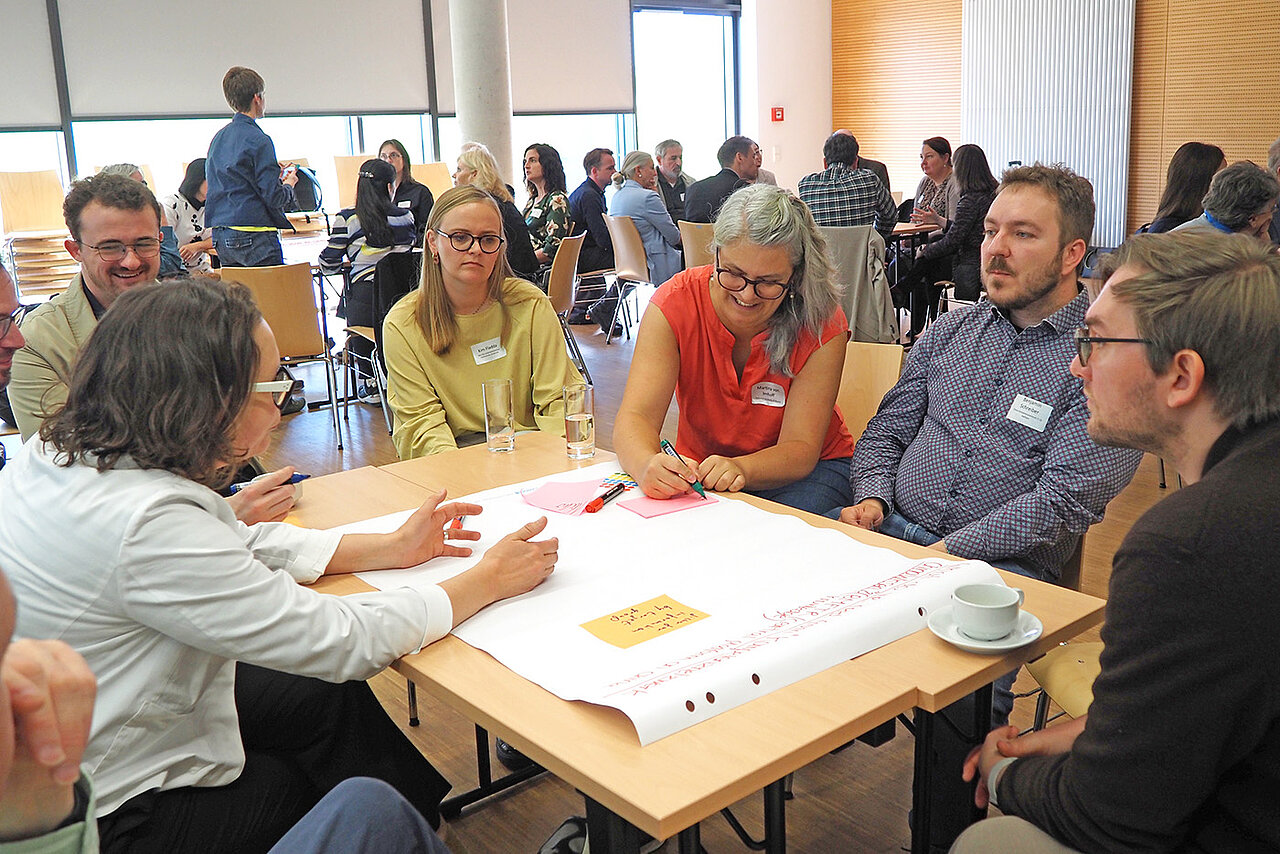
The conference concluded with a workshop focused on developing recommendations for policymakers involved in establishing these two national platforms. Participants worked in four groups to identify expectations, opportunities and concerns. The most important findings will form the basis of a policy brief to be shared with Zippelius and other stakeholders involved in setting up the platforms.
Looking ahead
The conference demonstrated that cooperation with China is a multifaceted task for European higher education. Effective engagement requires more than individual partnerships. Universities also need institutional knowledge, appropriate structures, awareness of potential risks and an understanding of the experiences of international students.
By bringing together perspectives from universities, China research, academic exchange organisations and other higher-education institutions, the conference provided a forum for discussing how European higher education can develop the competencies and structures needed for responsible and sustainable cooperation with China in the future.
Additional images