
Carbon tariffs strengthen climate policy
06/09/2026Since 2026, the EU has imposed climate tariffs on carbon-intensive imports unless the exporting country operates its own carbon pricing scheme. A new study shows how this measure could help reduce global CO₂ emissions.
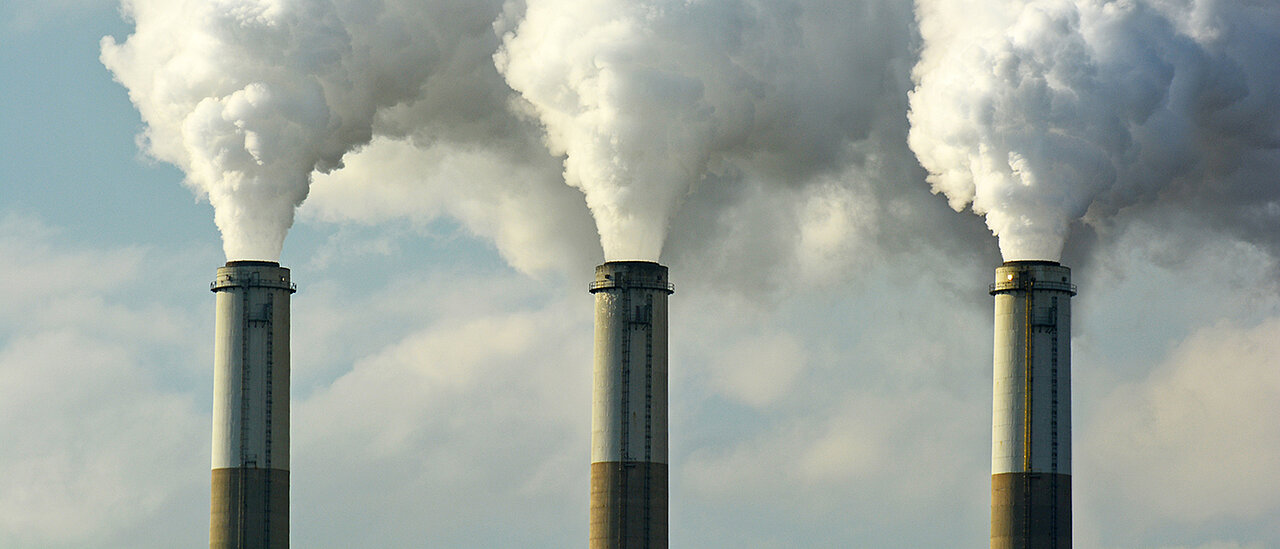
The European Union introduced its Emissions Trading System (EU ETS) in 2005. The basic idea is simple: industries that emit CO₂ must pay accordingly. For every tonne of CO₂ emitted, companies operating within the EU are required to purchase emission allowances. Surplus allowances can be traded, meaning that the price is determined by the market rather than fixed. It currently stands at around 75 euros per tonne of CO₂.
While the system has contributed to reducing emissions within the EU, it has also had a major weakness. Energy-intensive production has partly shifted abroad, while imports of carbon-intensive products have increased. This phenomenon, known as “carbon leakage”, has offset a significant share of the emissions reductions achieved within the EU.
Since the beginning of 2026, the EU has sought to address this issue through the Carbon Border Adjustment Mechanism (CBAM). Under this border adjustment system, importers of covered products must pay the same carbon price that applies within the EU, unless their home country operates a comparable pricing scheme.
A study by Professor Joschka Wanner, an economist at the University of Würzburg, together with Dr. Timothé Beaufils and Professor Leonie Wenz from the Potsdam Institute for Climate Impact Research (PIK), examines different scenarios that could emerge with and without the border adjustment mechanism.
How Europe’s climate policy can influence the world
“The Carbon Border Adjustment Mechanism is intended to enable the EU industry to decarbonise while remaining competitive – but what happens outside of the EU is not less significant,” explains PIK researcher Timothé Beaufils, the study’s lead author. “We already observe other countries like Brazil or Turkey responding to the CBAM with their own carbon price. We developed a novel framework to estimate this policy diffusion effect. It provides a strong indication that the EU Green Deal has indeed the potential to trigger the reinforcement of climate policies in other countries.”
The study is based on a specially developed economic model that combines two strands of research: trade economics and game theory. Depending on their economic interests, trading partners choose between paying the climate tariff into the EU budget or implementing their own carbon price and thereby joining a “climate coalition”. Detailed trade simulations are used to determine these choices. They depend on the level of the carbon price, the precise design of the CBAM, and which countries are already part of the coalition.
The CBAM carbon pricing on imports currently applies to steel, iron, aluminium, cement, fertilisers, electricity and hydrogen. To assess its incentive effect on international climate cooperation, the research team feeds its calculation tool with empirical data on trade flows covering 56 economic sectors and 43 countries. Using these figures, the team models the EU’s climate policy based on a carbon price of 100 dollars per tonne.
Model analysis reveals remarkable ripple effects
Without border adjustment, the European carbon price results in a reduction in domestic European emissions of 505 million tonnes of CO₂ per year. Global emissions, however, fall by only 305 million tonnes because other countries move to supply more energy-intensive products. In addition, they benefit from lower world market prices resulting from Europe’s phase-out of fossil fuels. EU climate protection therefore has a substantial leak – known as carbon leakage – which offsets 40 per cent of Europe’s emission reductions.
With the border adjustment, the carbon leakage effect is significantly smaller: only 15 per cent instead of the previous 40 per cent. As a result, global emissions are reduced by 399 million tonnes of CO₂.
When trading partners respond by introducing their own climate policies, global emissions fall by 691 million tonnes of CO₂. This represents a further 73 per cent reduction compared with the impact of EU climate policy alone. Four countries – Canada, Japan, South Korea and Taiwan – avoid the additional burden imposed by the CBAM by introducing their own carbon pricing schemes and thus joining the climate coalition.
“This strategic dimension of the CBAM is a second major strength that should not be overlooked,” says Joschka Wanner. “It not only combats carbon leakage, but also creates incentives for carbon pricing beyond the EU, bringing us one step closer to what many consider the gold standard of climate policy: a global carbon price.”
A climate coalition with potential
Additional model runs show that extending the CBAM to further sectors could encourage more countries to join the climate coalition – including the United States. By contrast, China would currently only participate if the carbon price were below 20 dollars per tonne.
While the exact quantitative findings depend on specific model assumptions, the central result remains robust across a broad range of modelling assumptions: the EU’s CBAM encourages the adoption of carbon pricing in other countries.
Publication
Beaufils, T., Wanner, J., Wenz, L., (im Druck): The Potential of carbon border adjustments to foster climate cooperation. Journal of the Association of Environmental and Resource Economists (JAERE). Erscheint im November 2026. DOI: 10.1086/742163
Contact
Prof. Dr. Joschka Wanner, Juniorprofessur für Quantitative International and Environmental Economics, E-Mail: joschka.wanner@uni-wuerzburg.de