

When warmth disturbs hibernation
04/14/2026A newly hatched red mason bee leaves its winter home, the stalk of a reed. Here is the story behind this special photo.
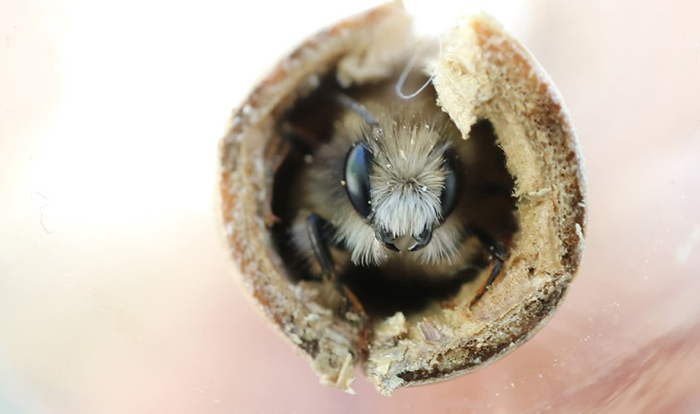
A red mason bee (Osmia bicornis) in its winter quarters, a reed stalk.
When wild bees like this hatch at the right time after a long winter break, they have enough energy reserves left to take flight and find the flowers they need to feed on.
But global warming is changing the rules of the game. Warmer springs push insects to emerge earlier, while higher temperatures cause their valuable energy reserves to be used up more quickly during hibernation. This reduces their chances of survival and reproduction.
A new study by the University of Würzburg, which examined wild bees and wasps across Bavaria, draws attention to this problem. Dr Cristina Ganuza and Professor Ingolf Steffan-Dewenter show that insects from cooler regions that are active early in the year are particularly vulnerable to warm springs. Under warmer conditions, they hatch too late, leaving them with less energy and poorer starting conditions for successful reproduction.
More on this in a JMU research news article.