Thea Emmerling: Intercultural work as a privilege
08/04/2026In her role as an EU official, JMU alumna Thea Emmerling worked with many people from different countries and continents. Reaching a consensus was usually the main focus of her work.
What do graduates of Julius-Maximilians-Universität Würzburg (JMU) go on to do? To introduce students to a range of career paths, Michaela Thiel and her team from the central alumni network ‘Uni Würzburg Community’ regularly interview selected alumni.
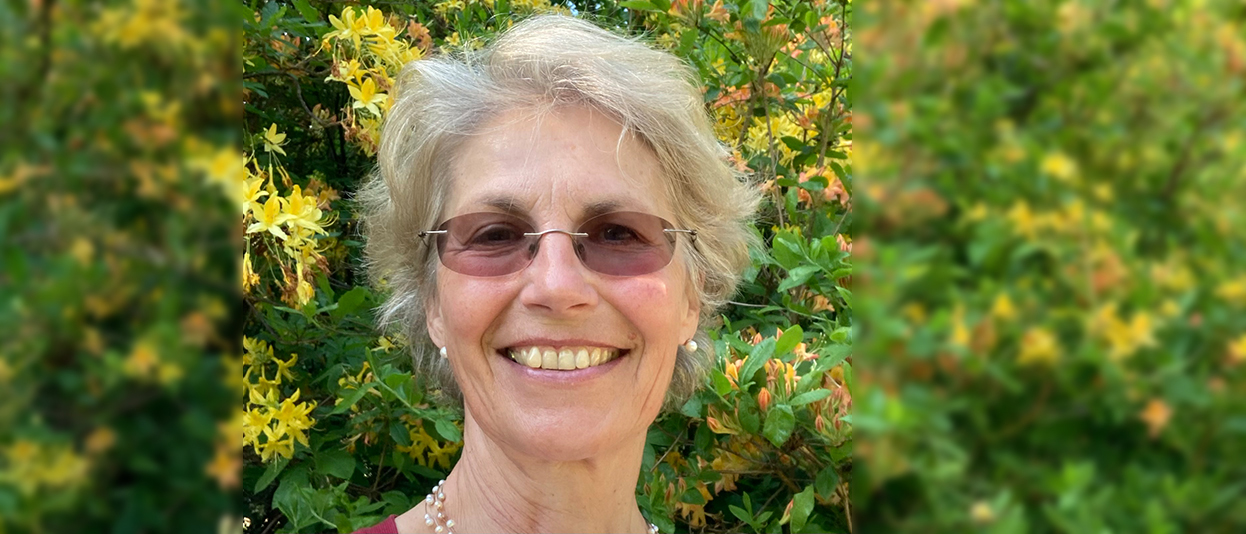
Today’s feature is on Thea Emmerling, who studied economics at the University of Würzburg during her undergraduate studies. After graduating, she worked as a journalist at the German Press Agency in Stuttgart, Bonn and Düsseldorf. This was followed by a long-standing career in the EU as a press spokesperson, cabinet member, diplomat and senior manager within the EU institutions in Brussels, Geneva and Washington.
Ms Emmerling, what was your work as an EU official like?
During my time at the European Commission, I wrote briefings, meeting minutes and speeches in the office. I sat through often tedious meetings, suggested amendments to communications or legislative proposals, represented the Commission’s position on my area of expertise in the Council vis-à-vis the Member States or in the European Parliament, and spoke with representatives of NGOs or lobbyists. It was actually much like working in a national ministry.
Were there any particular areas of focus?
I spent a very long time working on consumer protection, health and food safety. For nine years, I also represented the EU in these areas during international negotiations at the United Nations and in bilateral talks at the EU Delegation to the US. After that, I was a head of unit. I also spent five years in the cabinet of the EU Budget Commissioner, working on EU financial planning and the monetary aspects of EU policy. For a while, I was also a press spokesperson and speechwriter.
What did you particularly enjoy?
What I enjoyed most was representing the EU on the international stage: sitting behind the EU emblem and speaking on behalf of the EU. It’s a very exciting role. Whatever the EU representative says is meticulously agreed in advance during painstaking coordination rounds with the EU Member States. That’s what forging compromises on a small scale is all about. I enjoyed working with the Member States and reaching consensus just as much as representing that consensus in negotiations with other international partners. I have always regarded the intercultural aspect – being able to work with so many people from such diverse countries and continents, both within the EU and in the wider UN framework – as a special privilege.
A rather curious highlight for me was the consequence of Brexit: as a result, the geographical centre of the EU shifted to Veitshöchheim-Gadheim – right on the outskirts of Würzburg. The fact that, as a native of Würzburg, I effectively became the ‘most central EU official’ almost overnight still gets a laugh in my talks to this day.
Why is the European Union important?
The EU stands for the longest period of peace in Europe – over 80 years without war between its Member States. It was not without reason that the EU institutions were awarded the Nobel Peace Prize in 2012. The eastward enlargement following the Cold War made it possible to overcome the division of Europe. The EU stands for peace, justice, freedom and democracy. Today, we have an area with over 500 million people where people are free to act, work and travel, and enjoy a level of prosperity never seen before.
Nevertheless, many people view the EU negatively.
The EU is not the aloof European governing or legislative machine that it is often portrayed as in the media or by politicians. I see it as a – admittedly sometimes rumbling – consensus-building body. There is so much formalised cooperation, so much involvement and the development of common positions, policies and laws, that no Member State can tell me it is not informed about what is going on in Brussels – and what it itself is helping to shape. After all, everything the EU does has a national counterpart; every EU policy is supported by national ministries. There is nothing that the national administrations do not know about. Furthermore, the European Parliament now has full co-decision powers in many policy areas. We elect our MEPs; we can contact them just as we do our representatives in the federal or state parliaments. We are the EU! There is no alternative to the EU if we want to hold our own in the world of major powers, both today and tomorrow.
What advice would you give to students who wish to pursue a similar career path?
In principle, any completed degree in a specialist subject opens the door to a career in the EU. Anyone wishing to work there long-term must pass through the eye of the needle that is the recruitment process. The EU is a legal entity. You need to be able to read legal texts, so a law degree is helpful in that respect. But graduates from the fields of economics, computer science or medicine are also needed. I even know a musicologist. Alongside a degree in your chosen subject, proficiency in two foreign languages is essential. Investing in fluent English is a must, and a good knowledge of French is also important. You should have a Plan B in case there is no selection process at the moment or you fail it.
Regardless of all that, however, I would advise all young people to do and study what they enjoy. We spend so much of our lives at work; we can only keep it up for a lifetime if we enjoy what we do there.
What is your fondest memory of your time at university?
It’s the jobs I did to help fund parts of my studies. Among other things, I worked as a nursing assistant at Würzburg University Hospital, a freelancer for the Fränkisches Volksblatt, an assembly-line worker at a ball-bearing manufacturer and a working student at Siemens. One of the highlights of my time at university was being able to attend lectures by Professor Otmar Issing. Born in Würzburg, he later became one of the most influential monetary policymakers at the European Central Bank. As its first chief economist, he played a key role in shaping the euro’s monetary policy. Ultimately, such career paths show that anyone who starts out in Würzburg, the ‘City of Europe’, can feel at home all over the world – yet always right at the heart of Europe.
Thank you very much for the interview!
Are you not yet a member of the ‘Uni Würzburg Community’ alumni network or of Alumni & Friends e.V.? If not, you’re warmly invited to register! You can do so on the Community’s website, where you’ll also find the interviews with JMU alumni published to date.