
Illegal raves in the woods: the places that have shaped Würzburg’s youth
09/01/2026Always follow the bass in the woods: Würzburg used to party without mobile phones, but with a house bar and secret paths to the B-Hof. Now the wild youth are being turned into museum pieces. History students are helping with this.
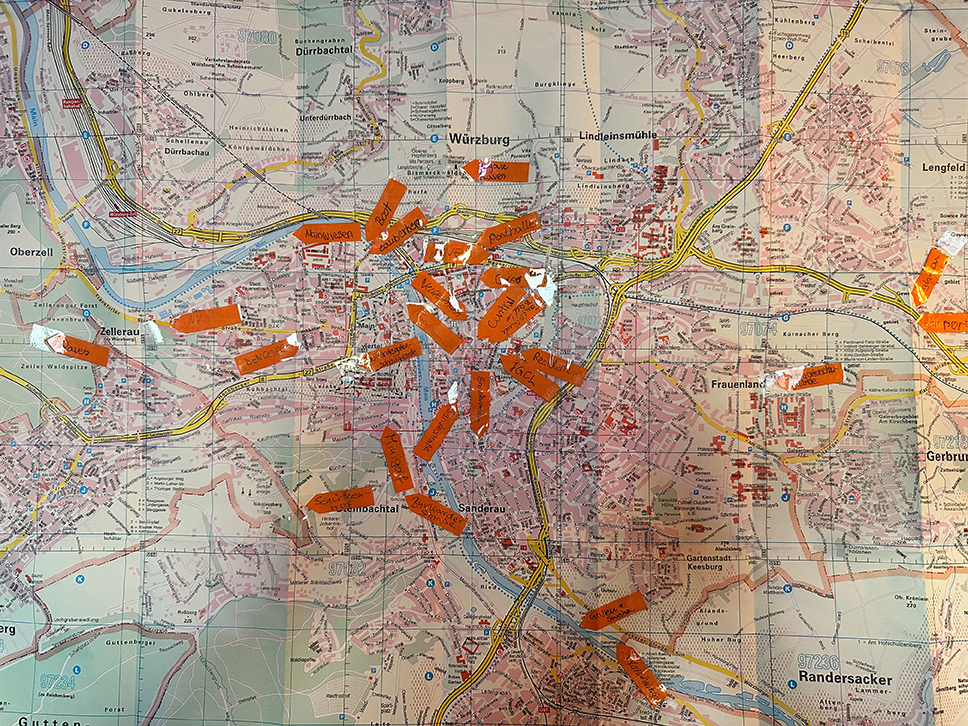
Illegal raves also took place in Würzburg during the 1990s and early 2000s. Techno fans would meet up in secret in the railway tunnel near the Posthalle, at the Bismarck Tower, in the bomb crater in Zellerau or in the woods.
News of the meeting places was passed on by word of mouth or via landline telephone. If the raves were taking place in the woods, you could find them simply by following the bass. Everyone brought drinks or snacks to share whilst partying. But there was also a downside: rubbish was often left behind.
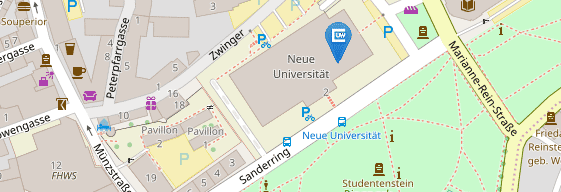
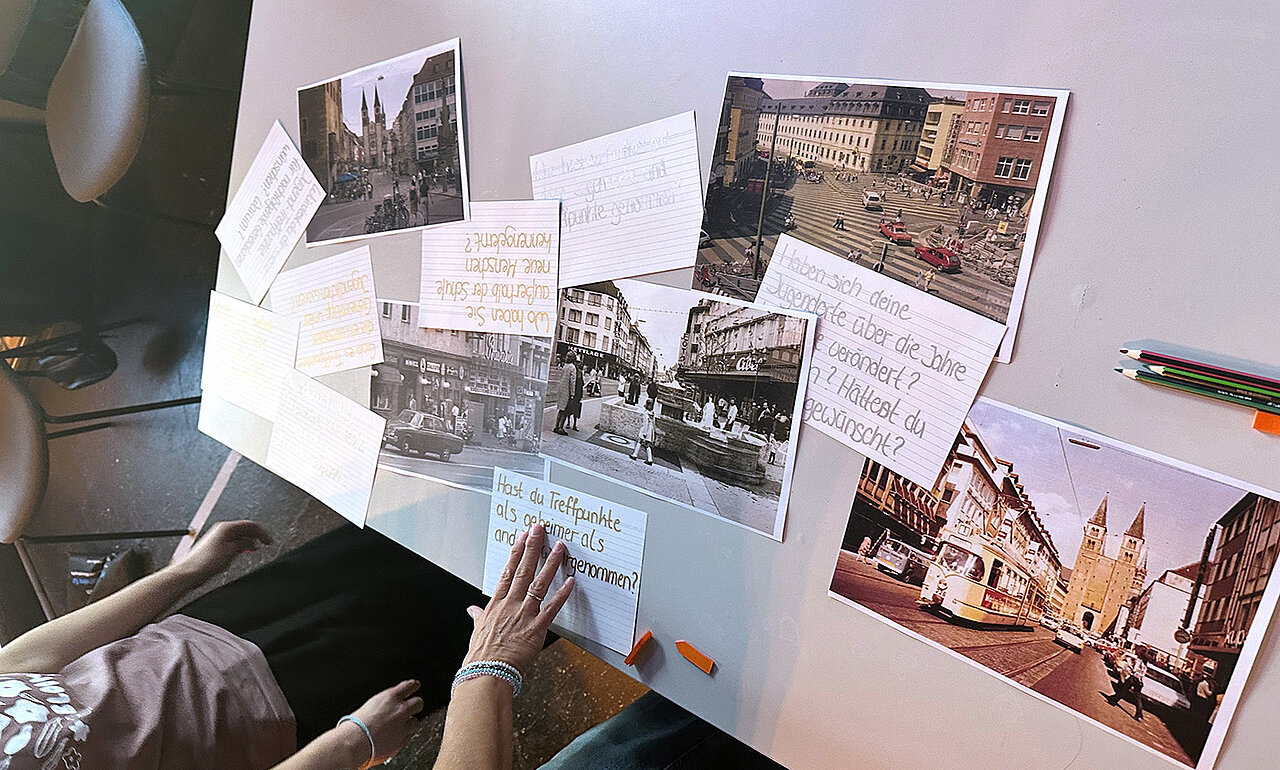
This is what one participant reported at the Erzählcafé (storytelling café) organised by JMU history teacher-training students on 24 July 2026 at the Chambinzky Theatre. At the event, 14 residents of various ages spoke about the places that had shaped their youth in Würzburg and the surrounding area.
Working with eyewitnesses
The storytelling café was part of the seminar ‘Youth in Franconia from 1945 to the present day – working with eyewitnesses’, led by lecturer Dr Miriam Montag-Erlwein from the Didactics of History.
At the meeting in the Chambinzky Theatre, the students put into practice what they had learnt in the theoretical part of the seminar about the use of ‘oral history’ in history lessons. They had selected the eyewitnesses themselves. They organised the storytelling café, devised questions and moderated the event.
From the dance school to smoking in the B-Hof
The stories provided many insights – for example, that the B-Hof youth centre had been popular even back then: after lessons at the Bäulke dance school, the young people would head over to the B-Hof later in the evening, as smoking was allowed there and they were no longer under the supervision of the dance school. As their parents had banned them from the B-Hof, the young people would sneak back to the dance school in good time before their parents came to collect them.
Many accounts centred on youth camps, tent camps, club activities or group trips to the swimming pool. Church organisations such as the Catholic Youth Group (KJG) were important meeting places; parties were also held there regularly.
Other important meeting places were the home bars. In the 1970s and 1980s, many families had a room in their basement with a small bar, where they regularly invited friends to party.
A student’s impressions after the storytelling café
“Overall, I’ve come away with the impression that people used to spend more time together back then,” says student Ilona Justus. This is probably because there were no mobile phones or social media yet. “Whilst in the past the focus was on shared experiences and people savoured the moment more consciously, my generation today is much more focused on the digital world and on presenting ourselves online and showing others what we have or how well we’re doing. As a result, shared activities are being lost.”
Young and Wild: A project by the Museum of Franconia
The practical part of the seminar took place in collaboration with the Museum of Franconia. The museum is currently collecting accounts from contemporary witnesses who describe what life in Franconia was and is like, particularly in rural areas. This project is led by Fabian Stöckl, curator and head of the collection for the 19th century to the present day.
The first phase of the project (2026–2028) is themed ‘young & wild – your youth in Franconia’. People who spent their youth in Franconia between the 1950s and the 2020s are invited to share their stories: What defines youth in Franconia? What issues concerned young people in the past and today? Where did they meet, and where do they meet now?
The museum will incorporate the collected stories into its new digital oral history archive. There, they will then be available for the public to access and listen to (the launch date of the archive is not yet known). The students’ storytelling café also aimed to find participants willing to give the museum individual interviews for the new archive.
What the students learnt
With a view to their future careers as teachers, the students learnt first-hand during the seminar what the challenges are when working with eyewitnesses. “They realised that not everyone is keen to share their past,” says Dr Miriam Montag-Erlwein. Recruiting people for the storytelling café was not easy.
Despite intensive preparation, facilitating the session was also challenging at times: the aim was to encourage participants to continue their stories by asking skilful questions when the flow of the narrative faltered. On the other hand, participants had to be ‘brought back on track’ when they strayed from the topic. “It was important to proceed sensitively, not to offend anyone, and to create an atmosphere in which everyone felt at ease,” said the lecturer.
Despite these challenges, the students are keen to try out ‘oral history’ in school later on. Based on their experiences, they now also know which method is suitable for which year group. A storytelling café, for example, is more suitable for upper-sixth form students at grammar schools; otherwise, individual interviews are recommended, as pupils can then engage more fully with the storyteller and the conversation can be steered more effectively through questions.
Additional images