
Vitamin C, once seen as a beacon of hope, disappoints in a major study
06/16/2026High-dose vitamin C does not improve organ function or survival rates in burn victims. It may even be harmful, as a new study shows.
When a person suffers severe burns, this triggers a massive inflammatory response as well as oxidative stress. The body is then confronted with excessive amounts of reactive oxygen species, which can damage its cells. Vitamin C is considered a powerful antidote, a so-called antioxidant. Its use in the treatment of burn victims has therefore been debated in medicine for decades.
Smaller studies have previously shown positive effects, such as a reduced need for fluids. Based on this promising but uncertain evidence, some international treatment guidelines recommend the administration of high-dose vitamin C. However, there is a lack of scientifically robust evidence from high-quality clinical trials to support this.
Publication in the Journal of the American Medical Association
“The guidelines urgently need to be reconsidered,” says Professor Christian Stoppe, senior consultant at the Department of Anaesthesiology, Intensive Care Medicine, Emergency Medicine and Pain Therapy at Würzburg University Hospital (UKW).
Together with Queen’s University in Kingston (Canada), his Würzburg team investigated the use of high-dose vitamin C in severe burns in the international, randomised clinical trial ‘ ’ VICToRY (VItamin C in Thermal injuRY).
The results were presented on 10 June 2026 at the ‘Critical Care Reviews Meeting’ in Belfast and published simultaneously in the renowned Journal of the American Medical Association (JAMA). They are clear: high-dose intravenous vitamin C does not improve survival or organ function in patients with severe burns. In fact, it could even be harmful.
Randomised treatment
The study looked at 238 adults with severe burns covering at least one-fifth of their skin. The patients were treated at 24 centres in North, Central and South America, Europe and Asia – either with high-dose intravenous vitamin C (50 mg per kilogram of body weight), administered every six hours over 96 hours, or with a placebo.
Treatment with vitamin C showed no benefits. On the contrary: mortality within 28 days and persistent organ failure requiring, for example, ventilation, renal replacement therapy or circulatory support – were actually more common among those receiving vitamin C than among those receiving a placebo (40.8 per cent versus 29.7 per cent).
Risk of death more than double with vitamin C
Mortality within the first 28 days was particularly striking: 15 per cent of patients in the vitamin C group died, compared with just 7.6 per cent in the placebo group. The risk of death was therefore more than twice as high with vitamin C.
Mortality during the entire hospital stay was also higher in the vitamin C group (23.3 per cent versus 16.1 per cent). Furthermore, patients who received vitamin C were more frequently required to undergo renal replacement therapy, such as dialysis (10.8 per cent versus 5.9 per cent). However, this difference could also have been due to chance, as it was not statistically significant.
Study was halted following an interim analysis
Following the interim analysis, the study was terminated prematurely as the results suggested that the treatment was of no benefit and could be associated with harm. An independent monitoring committee subsequently recommended that the study be discontinued.
“Our study provides the first high-quality, randomised evidence on high-dose vitamin C in severe burns. The results are clear: the therapy is not effective and may even be harmful. It should therefore not be used routinely,” says Christian Stoppe.
According to the professor, the results are consistent with the recently published LOVIT study on septic shock, which also provided evidence of harm using the same vitamin C regimen. This means there are now two large, randomised studies from different areas of intensive care medicine that call into question the use of high-dose vitamin C. According to Stoppe, international guidelines should urgently take these new findings into account.
Channelling limited resources towards effective measures
“In view of rising regulatory requirements worldwide and limited resources, it is all the more important that such a large international study finally provides clarity. We hope that our work will help to protect patients from an ineffective and potentially dangerous therapy and to direct limited resources towards measures of proven efficacy,” explains Professor Patrick Meybohm, Director of the Department of Anaesthesiology.
In future, international collaborations and research infrastructures should be further expanded and joint study platforms established to strengthen high-quality clinical research. At the same time, a personalised approach is being pursued. This is intended to enable the targeted identification of patients who would benefit from a specific therapy.
Major international collaboration
The VICToRY study was funded by the US Department of Defence’s Military Burn Research Program, with support from the Lotte & John Hecht Memorial Foundation (Canada) and the German Research Foundation (DFG, STO1099/10-1).
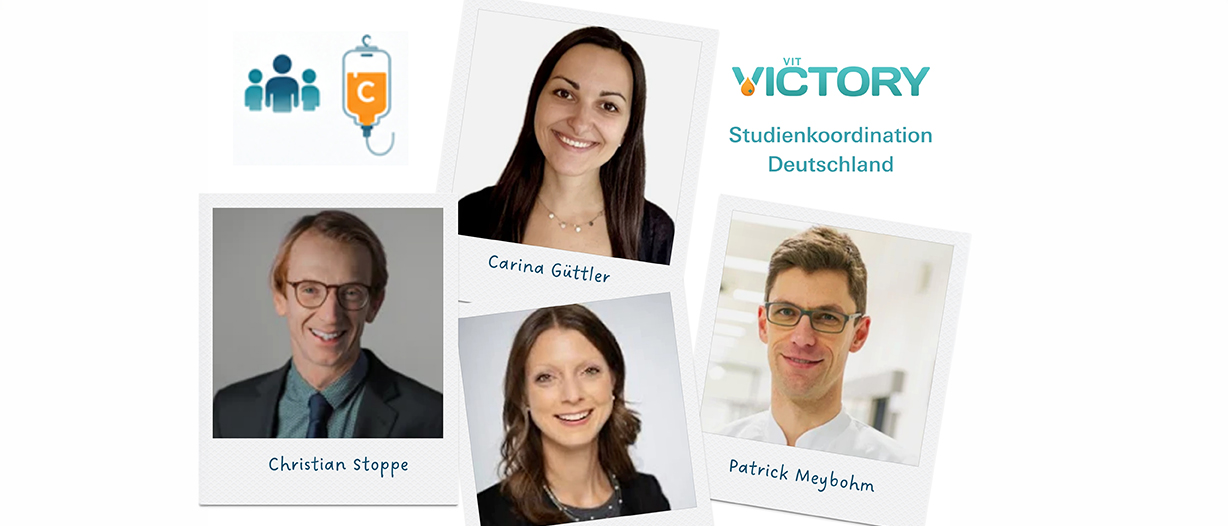
Collaborating partners included Queen’s University, Kingston (Canada), the US Army and more than 20 other international centres. In addition to Professor Christian Stoppe, Dr Ellen Dresen, Professor Patrick Meybohm and Carina Güttler from the UKW were responsible for project management and coordination of the German centres.
Publication
Stoppe C, Hill A, Cancio LC, et al. High-Dose Intravenous Vitamin C and Mortality and Organ Dysfunction in Severe Burn Injury: The VICToRY Randomised Clinical Trial. JAMA. 2026. DOI: 10.1001/jama.2026.10616