
Understand better, treat more safely
09/08/2026Communication problems can lead to delayed diagnoses or incorrect treatment. An educational project run by Würzburg University Hospital provides training on how to deal with language and cultural barriers during the medical history-taking process.
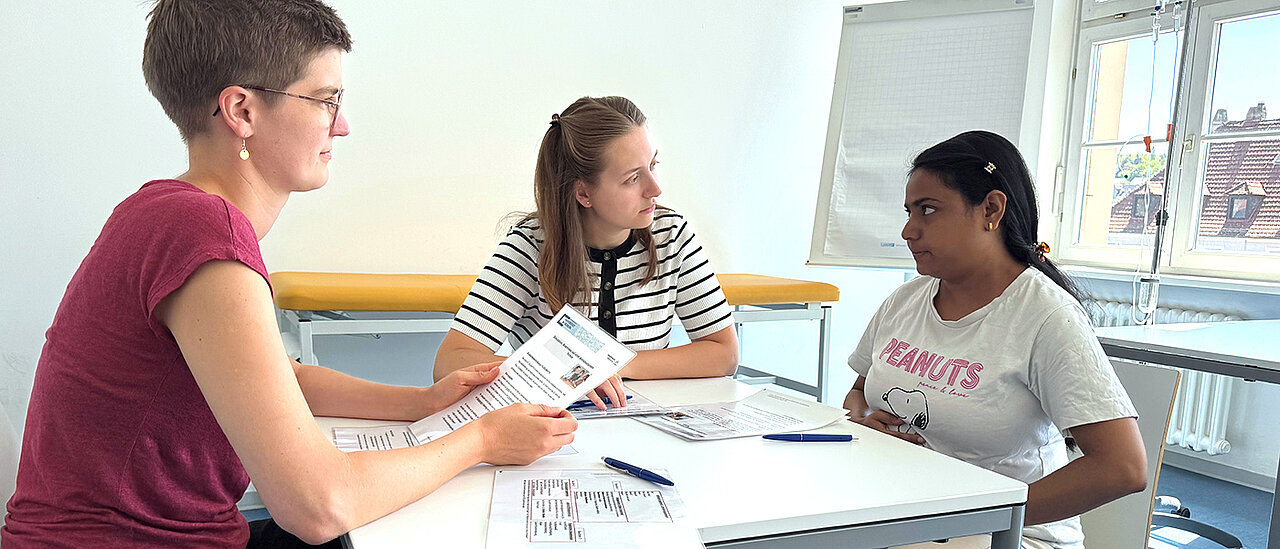
The patient speaks very little German. As no interpreter is available, communication takes place using hand gestures and a translation app. In the end, however, nobody knows whether the symptoms have been properly understood. Situations like this have long been part of everyday life in many doctors’ surgeries and clinics. But even when relatives accompany the patient and act as interpreters, there is no guarantee that the medical history will be translated accurately, whether out of embarrassment or to protect the patient.
Even when language is not a barrier, misunderstandings can still arise, potentially leading to unnecessary tests or misdiagnoses. For example, the expression ‘My gallbladder has burst’ is not usually a medical emergency. In Turkish, for example, this expression can convey a severe fright or significant emotional distress. Doctors who are unaware of these cultural nuances and linguistic nuances can easily misinterpret such symptoms.
Overcoming language barriers in taking a patient’s medical history
This is precisely where an innovative teaching project at Würzburg University Hospital (UKW) comes in. Since the winter semester of 2025, medical students from the eighth semester onwards and midwifery students from the third semester onwards have been learning together, as part of a new compulsory curriculum, how to deal professionally with language barriers, cultural differences and differing understandings of health and illness.
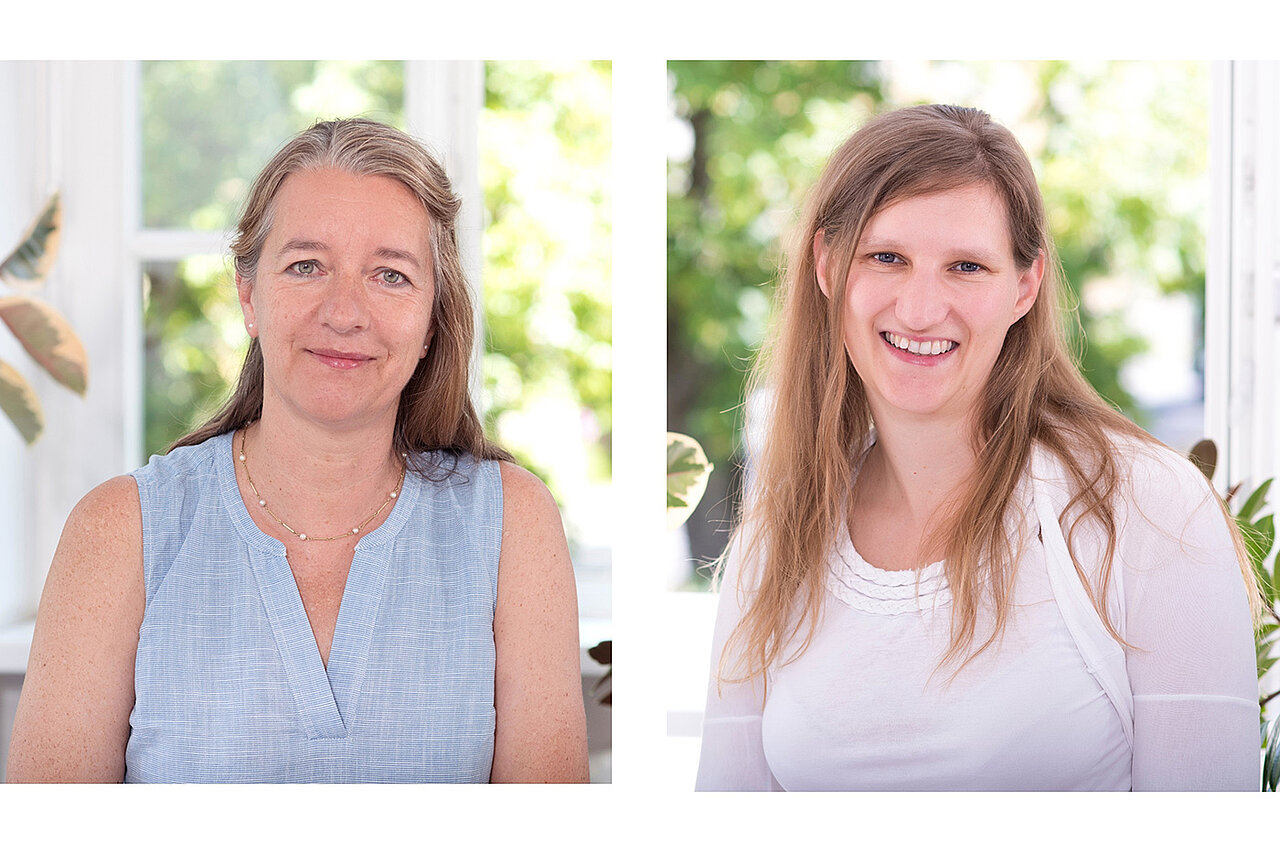
“Successful communication not only improves the relationship of trust between healthcare providers and patients, but can also help to avoid unnecessary diagnostic tests, incorrect treatment and protracted treatment pathways,” agree the project leaders, Professor Anne Simmenroth and Dr Janina Zirkel from the Institute of General Practice. The teaching concept is funded by the Foundation for Innovation in Higher Education (StIL) as part of the ‘Freiraum’ programme with just under 400,000 euros and is now in its third semester.
The project leaders are familiar with the issues from their own day-to-day work: Janina Zirkel is an internist and infectious diseases specialist. Alongside her research and teaching activities at the Institute of General Practice, she works in the infectious diseases outpatient clinic at the UKW. Anne Simmenroth heads the Institute together with Ildikó Gágyor and is responsible, amongst other things, for teaching there. Both directors also practise as general practitioners in private practices. Dr Anne Weißbrich from the Würzburg Public Health Authority also brings extensive practical experience to the project. In the field of tuberculosis prevention, she deals daily with people for whom language and cultural barriers can make communication difficult. The interprofessional project team is complemented by a midwife and two cultural studies scholars.
Online modules, seminars and practical exercises
The compulsory course begins with interactive online modules. “Here, we first raise awareness of the issue,” explains Janina Zirkel. How do linguistic and intercultural barriers affect the quality of healthcare – and what specific resources are lacking in practice to overcome these barriers?
The second module focuses on communication in an intercultural context, health literacy and discrimination. Students reflect on the stages of their lives and experiences that have shaped them, and how their own socialisation influences their view of other people. How do I even recognise that I’m starting to slip into a prejudice? Such a shift in perspective can be surprising. “An ‘aha’ moment for me was realising that I myself want to be understood culturally,” says one student. It is precisely this attitude that the lecturers aim to foster: a willingness to continually question one’s own perspective and to engage with patients openly and without prejudice. After all, despite all the difficulties, the motivation should be to help people.
The third online module prepares students for the practical module and explores the advantages and disadvantages of the various language mediation tools. The costs of professional language mediation are not usually covered by statutory health insurance schemes in outpatient care. The only alternatives are lay interpreters or apps. But what about confidentiality and data protection in this context? And which is better?
“The apps often translate nonsense”
Anne Simmenroth knows from her own experience how unsatisfactory communication with translation apps can be: “It always takes much longer. Everyone types something, passes the mobile on, the other person reads it and looks back questioningly because the app makes mistakes in the translation.” The apps not only waste time and make communication more difficult, but also often lead to misunderstandings, as the role-plays in the practical module have shown.
Here, the students take on the role of healthcare professionals and conduct medical history interviews with ‘patient’ actors speaking foreign languages – pupils from the Würzburg School of Interpreting – following a set script. In one scenario, they use translation apps; in another, a student from the interpreting school acts as an interpreter. The conversations are then evaluated together. The extent of the differences in quality between human interpreting and translation apps came as a surprise not only to the students but also to the project team.
Janina Zirkel comments: “In our case, the professional expertise of the trainee interpreters and the script served as a corrective. In fact, it turned out that in our role-plays, the apps sometimes produced seriously flawed translations. Or to put it another way: the apps often translate utter nonsense.”
In everyday life, however, such faulty translations often go unnoticed. The feedback sessions revealed that whilst the doctor felt that everything was fine, from the patient’s perspective, key issues were either not addressed or misunderstood. Furthermore, patients often felt uncomfortable and not taken seriously, particularly when the person they were speaking to had to laugh at the app’s incorrect translations.
Talking with, not at, the patient
“But even a conversation with laypeople acting as interpreters must be well prepared,” says Anne Simmenroth. Ideally, a preliminary discussion should be held to brief the interpreter on confidentiality, the content of the medical history and specific rules, followed by a debriefing afterwards. “It is important to reproduce exactly what has been said, without interpretation, and always in the first person. We do not talk about the patient, but with the patient,” says Simmenroth.
Janina Zirkel also recommends discussing cultural nuances in advance and paying attention to non-verbal cues during the consultation. For example, shaking one’s head does not necessarily mean refusal. “We actually always say: the patient has a right to information; I must explain things to them. In some families and cultural contexts, however, it is customary for the diagnosis and treatment to be discussed with the head of the family.” Instead of details about lung cancer, the patient might then be told by the family council, for example: “You have a problem with your lungs; after this treatment, you’ll feel better.”
Patients benefit from sensitive communication
The project leaders emphasise that the course is not geared exclusively towards the care of people with a migration background. Even German patients without a migration background have very different ideas about what illness means or how a treatment works. “Good medicine begins with understanding these perspectives and putting oneself in the patient’s shoes,” says Anne Simmenroth. The art lies in asking the right questions and ultimately taking a medical history that is empathetic, sensitive to diversity and professionally sound.
And the students have demonstrably practised this skill. The evaluations clearly show that, in the second course, the ability to take a diversity-sensitive medical history rose significantly from a low to a high level following the exercises. Almost all participants consider the course content to be highly relevant to practice.
Applying these skills to all aspects of patient care
Although language barriers, differing conceptions of health and culturally influenced communication patterns have long been part of everyday life in hospitals and surgeries, they have so far played hardly any role in medical studies. The Würzburg teaching concept closes this gap in medical education.
Although funding for the project will end in spring 2027, the team has set itself the goal of permanently embedding the topic – which will continue to grow in importance in the face of an increasingly diverse society – within the curriculum and gradually extending it to other professional groups. After all, it is not only trainee doctors and midwives who benefit from confident and culturally sensitive communication, but also nursing staff, therapeutic professions and practising doctors. To achieve this, we need advocates from the various professional groups who can bring these skills to where they are needed: in the day-to-day care of patients.
Additional images