
A new era in immune cell therapy
10/13/2026CAR-T cells could protect the heart in future. An international research consortium led by Würzburg University Hospital is working on this. It is receiving seven million euros from the European Union for this project.
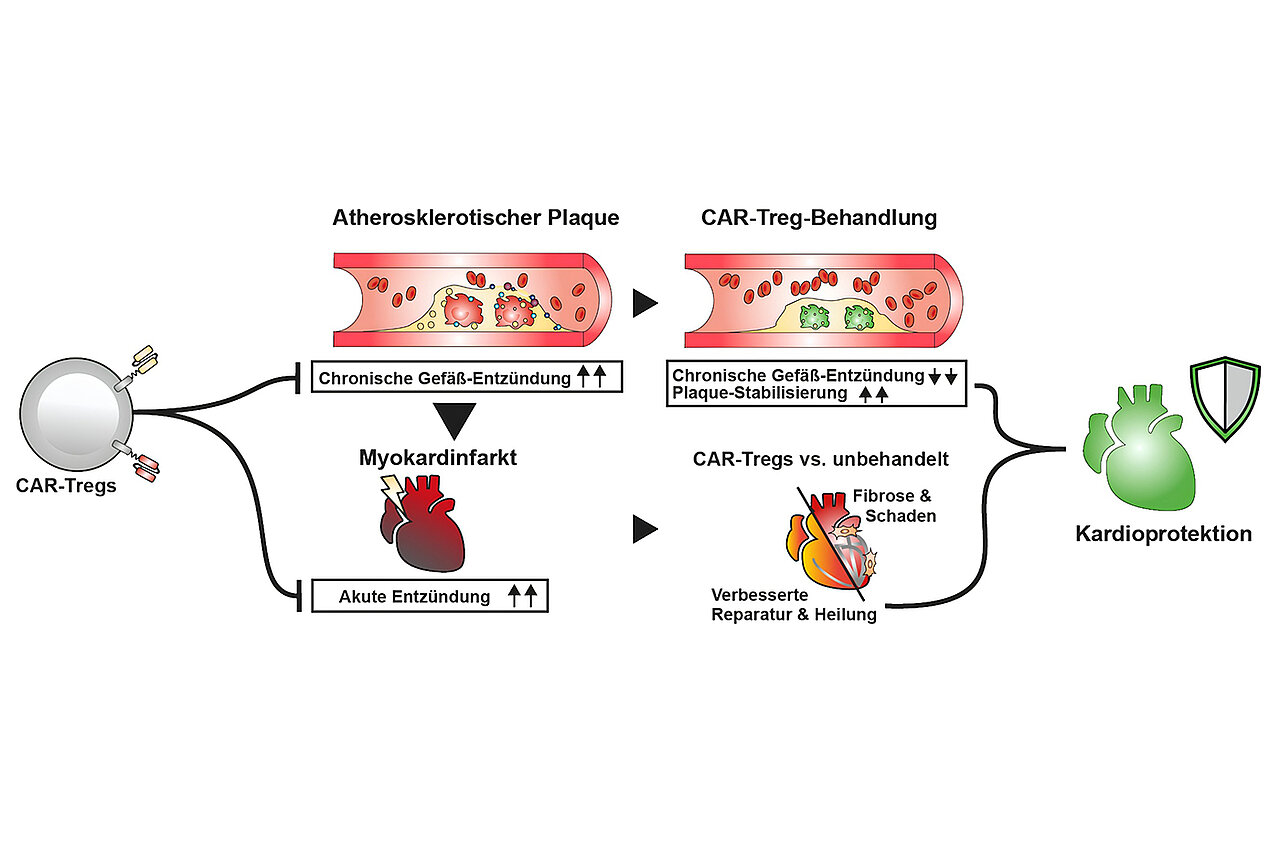
What has so far been known primarily as a highly effective treatment for certain types of blood cancer could, in future, also help people who have suffered a heart attack or even protect them from having one in the long term. An international research consortium led by Würzburg University Hospital (UKW) is, for the first time, developing CAR-T cell therapies designed to specifically curb inflammatory reactions following a heart attack and promote the healing of the heart muscle.
In addition, the researchers aim to develop a second therapeutic approach that regulates chronic inflammation in atherosclerotic plaques and could thus prevent cardiovascular diseases in the long term. Atherosclerotic plaques are deposits in the vessel walls that can narrow the coronary arteries. If such a plaque ruptures, a blood clot can form, suddenly blocking the vessel and thus triggering a heart attack.
Around seven million euros from the European Union’s Horizon Europe research and innovation programme has been allocated to the CARDIO project. Of this, around 2.8 million euros will go to the Würzburg site.
CAR-Tregs regulate misdirected immune responses
CAR-T cells are regarded as a milestone in cancer medicine. In this process, certain immune cells – known as T cells – are genetically modified to form so-called chimeric antigen receptors (CARs) on their surface. With the help of these receptors, the immune cells can specifically recognise and destroy cancer cells based on their characteristic surface molecules.
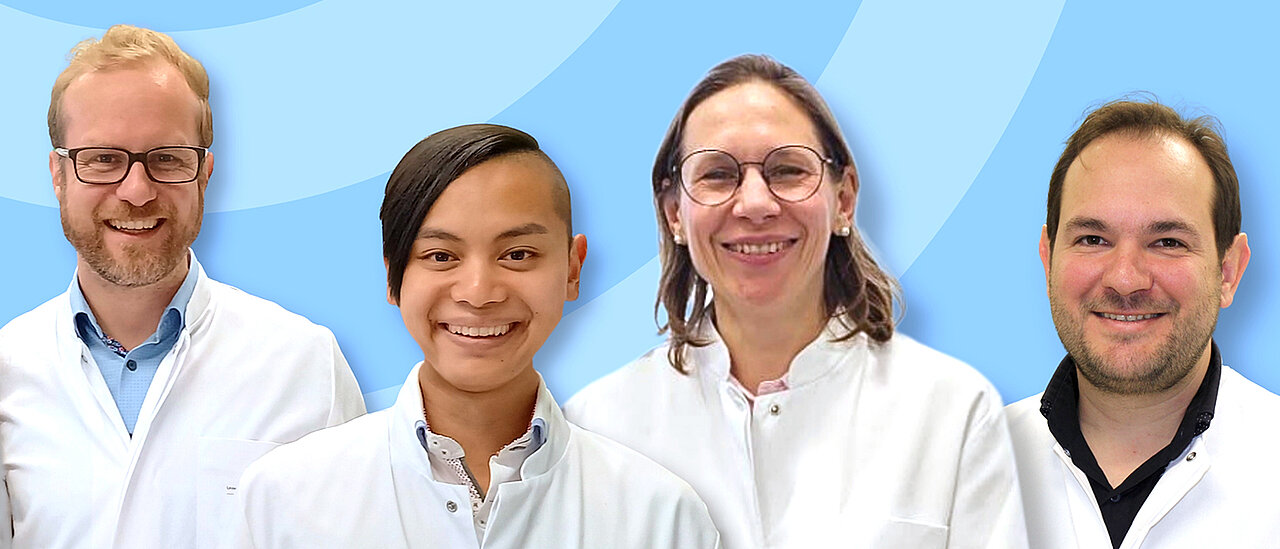
“We are now applying this basic principle consistently to cardiovascular diseases for the first time – albeit with one crucial difference. Our CAR-T cells are not designed to kill, but to protect. Instead of aggressive killer cells, we are creating regulatory CAR-T cells, known as CAR-Tregs. These migrate specifically to damaged heart tissue, where they dampen excessive inflammatory reactions,” explains Dr Maik Luu. The assistant professor of Translational Medicine at the Chair of Cellular Immunotherapy is coordinating this innovative project.
The Würzburg expertise
It is no coincidence that the project was initiated at the UKW: it brings together long-standing expertise in the fields of immunocardiology, vascular biology and cell therapy. Researchers from several institutes are contributing their complementary strengths – ranging from the immunological basis of vascular inflammation and heart healing, through the identification of suitable target structures, to the development and preclinical testing of new cell therapies.
“Following a heart attack, the immune system must strike a balance: on the one hand, inflammatory reactions are necessary to remove damaged tissue and initiate repair. On the other hand, excessive immune activation can further impair heart function,” explains Professor Ulrich Hofmann. The senior registrar at Medical Clinic I discovered as early as 2012 that T-cells play a central role in recovery following a heart attack. Biologist Professor Gustavo Ramos built on this work. Together with his research group at the German Centre for Heart Failure (DZHI) in Würzburg, he identified myosin, a structural protein in heart muscle cells, as a key target of the immune response.
T-cells limit inflammatory processes in the damaged heart
“Following a heart attack, myosin is released from damaged heart muscle cells. Whilst certain T-cells can thereby exacerbate inflammation, regulatory T-cells recognise these same structures and help to limit the immune response and initiate healing,” explains Gustavo Ramos. He has just been awarded the prestigious Arthur Weber Prize by the German Society of Cardiology (DGK) for his groundbreaking findings in immunocardiology.
In the EU-funded CARDIO project, T-cells are now, for the first time, being equipped with a CAR that targets the myosin protein in the heart. In addition, they are being engineered to express the transcription factor FOXP3, which confers their anti-inflammatory properties.
Treatment for heart attacks and prevention of atherosclerosis
“Whilst in cancer treatment we stimulate T-cells to produce inflammatory messengers so that the tumour is better recognised, here we want to achieve the opposite. We want the T cells to produce inhibitory substances,” says Maik Luu, explaining the concept. His former PhD student and now postdoctoral researcher, Dr Sarah Staudt, carried out essential preparatory work for the grant application.
Luu’s expertise lies primarily in the metabolic optimisation and functional enhancement of therapeutic T-cells. To date, his work has focused on further developing cellular immunotherapies so that they remain effective for longer whilst maintaining good tolerability, and can also be successfully deployed against solid tumours in the future.
The CARDIO project expands the range of potential applications: not only in the treatment of heart attacks, but also in prevention, which begins here in the blood vessels – namely in the treatment of atherosclerosis.
Halting harmful inflammatory processes in blood vessels
Professor Alma Zernecke-Madsen’s research focuses on regulatory T cells in the heart, as well as on vascular immunology and atherosclerosis. As Head of the Institute for Experimental Biomedicine II and Deputy Spokesperson for the Würzburg Collaborative Research Centre SFB 1525 ‘Cardiovascular Interfaces’, has made a significant contribution through her research to the current understanding that atherosclerosis is not purely a lipid metabolism disorder, but rather a chronic inflammation of the vessel wall. In particular, she has investigated how immune cells enter the vessel wall, how they communicate with one another there, and whether they fuel or curb the inflammation.
“The immune system acts like a double-edged sword in atherosclerosis too. Some cell types promote inflammation, whilst others – such as T-cells or certain macrophages – can limit it and thus curb vascular damage. The aim of our new CAR-T cell therapy is therefore not to completely suppress the immune system, but to specifically curb the harmful inflammatory processes and promote the protective ones,” says Alma Zernecke-Madsen. “By influencing the inflammatory processes in the vessel walls, we could, in the long term, protect against the consequences of chronic vascular inflammation and thus potentially prevent heart attacks.”
Antibodies against relevant target structures in plaques
The Würzburg team is receiving support in this work from scientists at the Centro Nacional de Investigaciones Cardiovasculares Carlos III (CNIC) in Madrid, at CeMM – the Research Centre for Molecular Medicine of the Austrian Academy of Sciences – and at the University of Natural Resources and Life Sciences, Vienna. Another key partner in the CARDIO consortium is DKMS. The German Bone Marrow Donor Registry has one of the largest and best-characterised donor databases in the world. This benefits not only patients with blood cancer. The comprehensive genetic characterisation also opens up valuable opportunities for new cell therapies.
Unlike the CAR-T therapies approved in oncology, which are produced individually for each patient, the CAR-T cells must be immediately available for the treatment of heart attacks. “That is why we are working on an allogeneic therapy. This means that the cells come from healthy donors, are pre-produced and stored frozen – so-called ‘off-the-shelf’ CAR-T cells. Or, to put it another way: off-the-shelf CAR-T cells,” reports Maik Luu.
With the help of the DKMS register, donors with the most common HLA characteristics possible are to be selected. HLA stands for human leukocyte antigen. The more similar the HLA characteristics of the donor and recipient are, the lower the risk of a rejection reaction or – in the case of stem cell transplants – graft-versus-host disease. On this basis, CAR-T cells can be developed that are suitable for as large a proportion of the population as possible. “If the foreign cells are rejected after a short time, this is not as serious as in cancer treatment, where the cells are intended to persist and remain effective for as long as possible,” says Luu.
Translation considered from the outset
The new cell products will first be investigated in cell cultures and animal models and subsequently tested on human tissue. The aim is to generate sufficient efficacy and safety data by the end of the four-year project to bring this innovation into clinical use as quickly as possible. For the translation phase, the project team is collaborating with the biotech company T-Curx, a spin-off from the University Medical Centre Würzburg led by Professor Michael Hudecek, holder of the Chair of Cellular Immunotherapy. Among other things, T-Curx is developing new processes that make it easier, faster and more cost-effective to produce CAR-T cell therapies – ideally directly within the hospital.
The CARDIO project demonstrates that the expertise built up in Würzburg in the development of CAR-T cell therapies is increasingly being applied to new therapeutic areas. “We see great potential for cell therapies beyond oncology,” says Michael Hudecek. “In this respect, the funding under Horizon Europe is a great success. It demonstrates the project’s high scientific relevance and opens up the opportunity for us to work with strong partners to explore the potential of CAR technology for entirely new medical applications.”
Additional images