
Experts call for better regulation of assisted suicide in Germany
06/16/2026Assisted suicide is permitted in Germany, but there is still no clear law on the subject. Experts from the fields of medicine, law and ethics show how they envisage a constitutionally compliant regulation.
In 2020, the German Federal Constitutional Court established the fundamental right of the individual to an assisted suicide. Since then, the number of assisted suicides has risen continuously.
Probably the greatest public attention to the topic to date was at the end of 2025, when two well-known entertainers, the twin sisters Alice and Ellen Kessler, ended their lives at the age of 89 with the support of an organisation for assisted suicide.
Assisted suicide constitutes ‘aiding and abetting suicide’. The person providing the assistance (a relative of the person wishing to die, someone close to them, a doctor or a suicide assistant) provides the person wishing to die with a lethal substance, which the person then administers to themselves.
Law professor: "Insecurity and abuse are imminent"
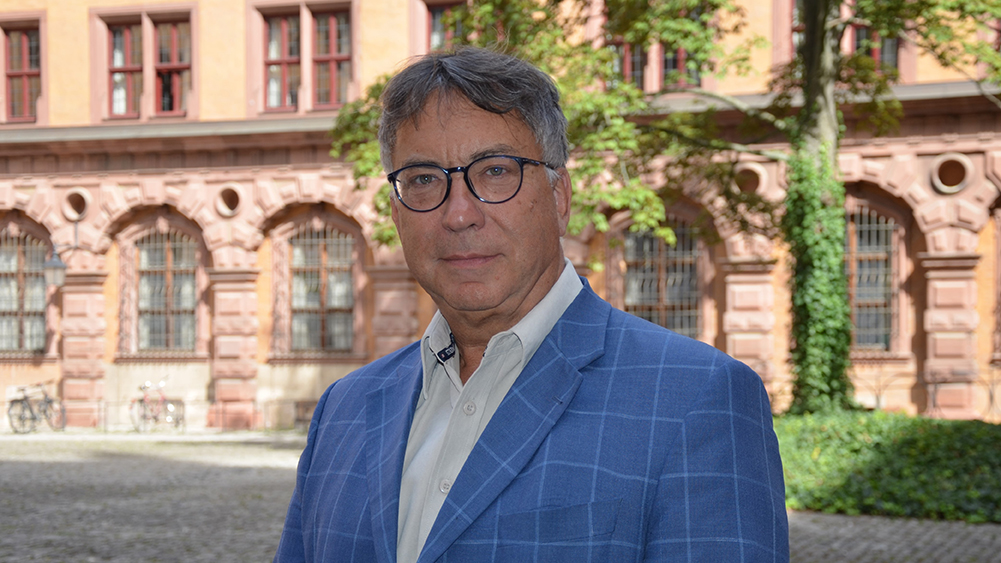
Assisted suicide is permitted in Germany, but there is currently no legal regulation. "Without a law on assisted suicide, there is a risk of uncertainty, fear and abuse. And if the regulations are too strict, there is a risk that the fundamental right in question will be undermined," says Professor Eric Hilgendorf, Head of the Chair of Criminal Law, Criminal Procedure Law, Legal Theory, Information Law and Legal Informatics at the University of Würzburg.
Against this background, the Würzburg professor and twelve other experts from the fields of palliative medicine, psychiatry, psychology, law and medical ethics describe in a key points paper what they believe is important in a legal regulation.
The paper states, among other things
- that the liberal constitutional state guarantees the self-determination and freedom of the individual - and therefore also the right to seek help with a freely responsible, safe and peaceful suicide. A future assisted suicide law must do justice to this fundamental right while taking appropriate account of the protection of life.
- that initial empirical studies, individual case reports and court judgements point to deficits in assisted suicide practice in Germany. These concern, among other things, appropriate professional counselling, the assessment of free responsibility and the actual execution of the suicide.
- The Federal Constitutional Court has also issued an opinion on how the assessment of free responsibility should be carried out and documented - to ensure that the four requirements stipulated by the Federal Constitutional Court are met: Capacity of insight and judgement, informedness as well as voluntariness and inner firmness of the suicide decision.
The authors published their key points paper in the Frankfurter Allgemeine Zeitung FAZ Online on 26 May 2026. It is intended to educate the public and support legislators.
The text of the paper (in German language) is freely available to everyone on Eric Hilgendorf's website. https://go.uniwue.de/eckpunkte
The authors of the paper
- Professor Dr Gian Domenico Borasio is a neurologist and palliative physician. He held the Chair of Palliative Medicine at the Universities of Munich and Lausanne.
- Professor Dr Matthias Dose is a specialist in psychiatry/psychotherapy and kbo consultant for autism and Huntington's disease.
- Professor Dr Eric Hilgendorf holds the Chair of Criminal Law, Criminal Procedure Law, Legal Theory, Information Law and Legal Informatics at Julius-Maximilians-Universität Würzburg.
- Professor Dr Friedhelm Hufen taught public law, constitutional and administrative law at the University of Mainz and was a member of the Rhineland-Palatinate Constitutional Court.
- Professor Dr Ralf Jox is a medical doctor, teaches at the University of Lausanne and is a member of the Swiss National Ethics Committee in the field of human medicine.
- Professor Dr Hartmut Kreß teaches ethics and social ethics at the Protestant Theological Faculty of the University of Bonn.
- Professor Dr Georg Marckmann teaches at the Institute for the History of Medicine at the Ludwig Maximilian University of Munich.
- Dr Benedikt Matenaer is an anaesthetist, palliative physician and pain therapist.
- Gita Neumann is a qualified psychologist, social scientist and philosopher and a member of the Academy for Ethics in Medicine.
- Wolfgang Putz is a lawyer and lecturer in medical law and medical ethics at the Ludwig Maximilian University of Munich.
- Dr Michael de Ridder is a doctor of internal medicine / emergency medicine and Chairman of the Stein Foundation for Palliative Medicine.
- Professor Dr Jan Schildmann heads the Institute for the History of Medicine at the University Hospital Halle (Saale).
- Professor Dr Bettina Schöne-Seifert teaches at the Institute for the History of Medicine at Münster University Hospital and was a member of the German Ethics Council.