
Understanding the skin condition HS better and preventing flare-ups
09/22/2026The Würzburg-based HS-ORIGINS project aims to decipher immunological and digital relapse patterns in hidradenitis suppurativa (HS) in patients receiving IL-17 and TNF-α blockade. To this end, it combines immunological research with app technology.
The HS-ORIGINS research project, led by Astrid Schmieder of Würzburg University Hospital (UKW), is investigating immunological mechanisms and digital relapse patterns in the chronic inflammatory skin condition hidradenitis suppurativa during treatment with IL-17 and TNF-α inhibitors. In collaboration with the Chair of Computer Science II at the University of Würzburg and Health-Study-Club GmbH, the ‘Wunderkint’ smartphone app is being further developed to use AI to create so-called relapse maps and digitally record disease progression. The aim is to develop biomarkers and digital tools capable of predicting treatment response and relapses at an early stage. The project is funded by Sanofi and combines modern immunology with digital medicine.
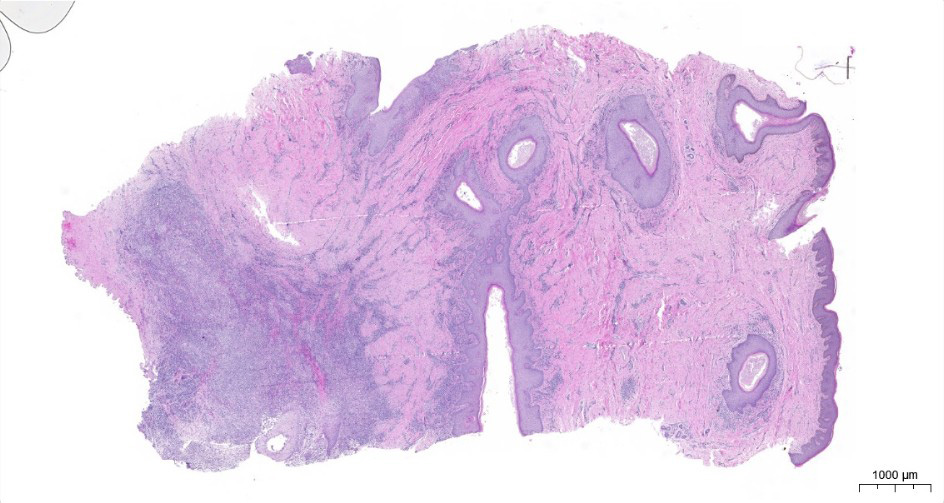
Hidradenitis suppurativa (HS), also known as acne inversa, is a chronic, inflammatory skin condition. Those affected suffer from painful nodules and abscesses, which form primarily in skin folds in the armpits, groin and buttocks. The condition usually develops in young adulthood, often follows a relapsing course and can significantly impair quality of life through scarring and pain, leading to social isolation. This significantly increases the risk of depression, anxiety disorders and suicide. Studies indicate that 0.4 per cent of the population is affected. “However, we assume there are a considerable number of unreported cases,” says Prof. Dr Astrid Schmieder, senior consultant at the Department of Dermatology, Venereology and Allergology at Würzburg University Hospital (UKW). “Many cases go undiagnosed or are diagnosed late – partly because the condition is often mistaken for other skin problems and those affected often do not seek medical help until years later.”
Although modern medicines – known as biologics – are now available that specifically target the immune system, only around one in two patients benefits sufficiently from them. The effectiveness often wanes over time, or the condition returns. To date, there is a lack of reliable markers to help select the appropriate treatment or detect relapses at an early stage.
Astrid Schmieder and her team aim to change this. She heads the Immunodermatology and Digital Medicine sections at the Dermatology Clinic. It is precisely these two fields that are combined in the new HS-ORIGINS project. The project is funded by the biopharmaceutical company Sanofi through ORIGINS, an accelerated innovative research funding programme run by Sanofi to support scientists worldwide.
TNF-α and IL-17 inhibitors interrupt key inflammatory pathways and reduce excessive immune responses in HS
As part of the project, two approved classes of active substances will initially be investigated: those that block tumour necrosis factor alpha (TNF-α) and those that block interleukin-17 (IL-17).
Project leader Astrid Schmieder explains the background: “Hidradenitis suppurativa is caused by the blockage and rupture of hair follicles, which triggers an inflammatory response. This is exacerbated by cells of the innate immune system, particularly macrophages, as well as by cells of the adaptive immune system such as T and B cells. The inflammatory mediators TNF-α and IL-17 play a central role in this process. With TNF-α and IL-17 inhibitors, we block these inflammatory signalling molecules and dampen the excessive immune response.”
Understanding individual responses to treatment
The team aims to analyse these two inflammatory mediators and other members of the IL-1 family, as well as the OX40 receptors and their binding partners (OX40 ligands) on other immune cells, and their interactions in greater detail. The aim is to understand why patients respond differently to TNF-α or IL-17 inhibitors. To this end, the researchers are combining modern laboratory analyses of tissue and blood samples – such as spatial gene expression analyses, flow cytometry and comprehensive cytokine measurements – with digital methods and artificial intelligence. The immune responses in the inflamed skin areas are being studied longitudinally and in detail, and supplemented by blood analyses over several months.
Identifying immunological hotspots and regions with a high risk of relapse using the enhanced ‘Wunderkint’ app
The‘Wunderkint’smartphone app is being further developed to enable patients to document their skin regularly and thus provide early indications of a possible relapse. Schmieder’s research group had already developed the app in an earlier project in collaboration with the Chair of Software Engineering at the University of Würzburg and Health-Study Club GmbH, to analyse and digitally monitor chronic wounds using AI and smartphone photos. For HS, it is now being expanded to include so-called ‘relapse maps’. These are designed to help with the targeted collection of tissue samples – including from areas that still appear clinically normal but present a potentially high risk of relapse.
Identifying patterns that can predict treatment success
By linking these molecular developments with digital relapse maps, the project aims to provide biologically grounded biomarkers and digital tools that can be applied directly in clinical practice. The aim is to improve the treatment of HS and similar inflammatory conditions: patients should receive the treatment best suited to them more quickly, whilst a loss of efficacy and relapses should be detected and prevented as early as possible.
“The collaboration with the University of Würzburg combines sound clinical research with modern immunology and digital approaches,” emphasises Dr Mohammed Mosa, HS Research Disease Lead at Sanofi. “Weare supporting this project to gain a better understanding of the disease mechanisms underlying hidradenitis suppurativa, particularly potential resistance mechanisms.” This is because the use of artificial intelligence and predictive models can help to better map disease progression and further develop clinical prediction for complex chronic inflammatory diseases. “In this way, translational research projects such as this one can, in the long term, bring innovative therapies to clinical practice more quickly for patients with high unmet medical needs,” adds Mohammed Mosa, .
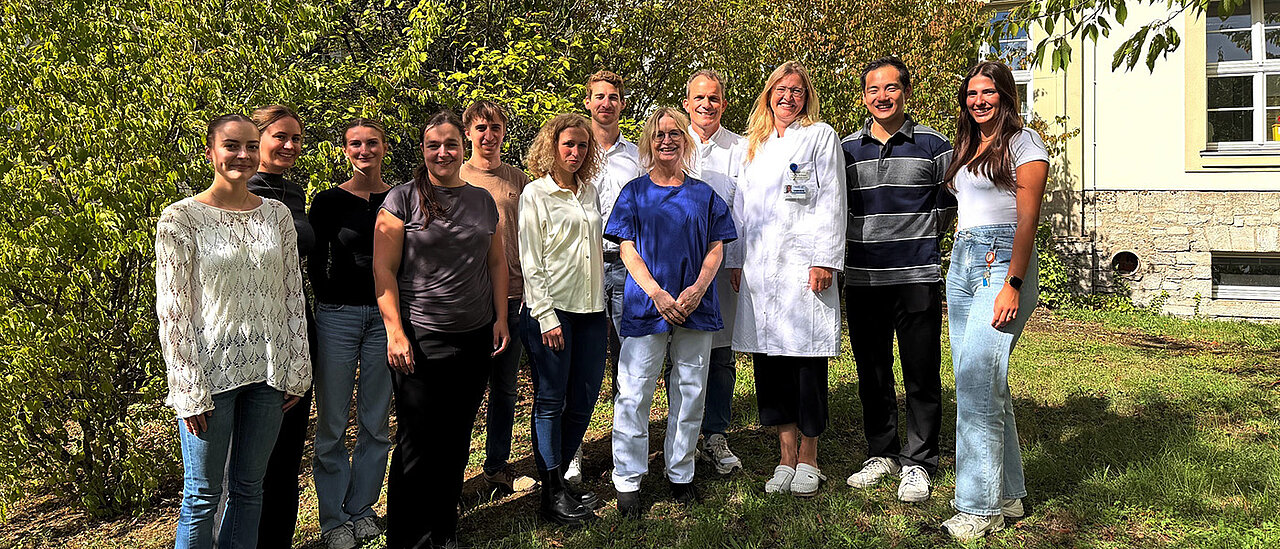
“We are delighted that Sanofi is supporting our project,” comments Astrid Schmieder. Whilst Schmieder focuses her research in particular on the medical-translational aspect of the project and its coordination, bioinformatician Dr Yamila Rocca is examining the interplay of the entire immune system. In addition, the team includes Marco Stumpf, a biologist with a penchant for programming; medical PhD students Jiahong Yuan and Mariele Sieben; senior consultant Dr Dagmar Presser, an expert in dermatology and a surgeon; senior consultant PD Dr Andreas Kerstan, an expert in chronic-inflammatory diseases and dermatopathology, Senior Consultant PD Dr Andreas Kerstan, the specialist Dr Caroline Glatzel, as well as Prof. Dr Samuel Kournev, holder of the Chair of Computer Science II (Software Engineering), and his software engineering team, including Vanessa Borst, are all involved in the HS-ORIGINS project.
Additional images