
Self-employment following a degree in the humanities and social sciences
10/06/2026Freelance work rather than working for a start-up: a study reveals what self-employed careers look like for graduates of the humanities and social sciences at JMU.

Researchers at the Centre for Cultural Mediation at the Institute of German Philology at the Julius-Maximilians-Universität Würzburg (Julius-Maximilians-Universität Würzburg) have investigated the entrepreneurial activities of graduates in the humanities and social sciences. The findings have been published under the title ‘Can the Humanities and Social Sciences Foster Entrepreneurship? A Survey on Self-Employment Among Graduates of the University of Würzburg’.
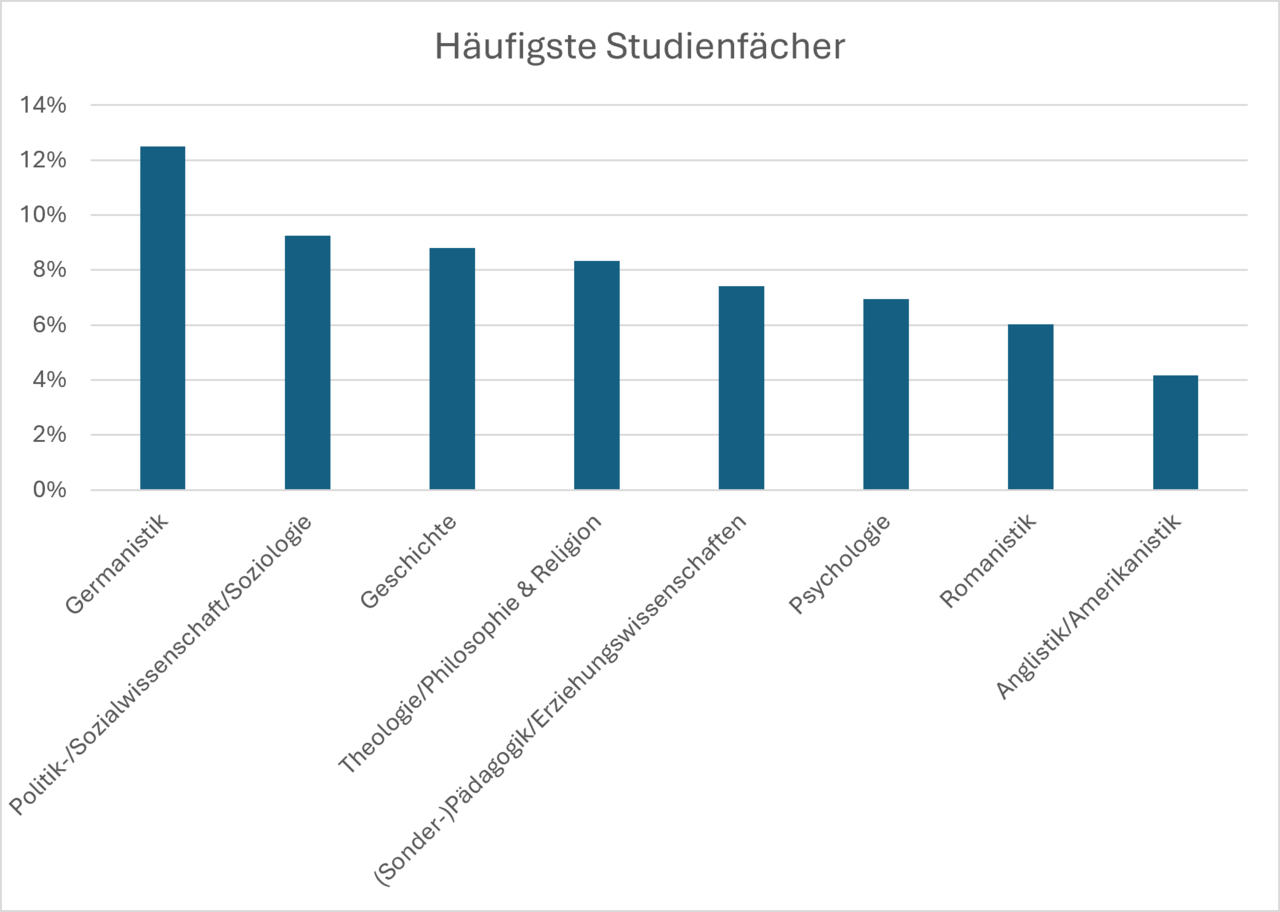
For the study, Dr Christine Ott, Susanne Bremer and Rahel Behnisch surveyed 105 former JMU students who are currently self-employed or have been in the past. The respondents are particularly likely to work on a freelance basis, for example in education, culture, the media or consultancy.
Start-up statistics do not usually reflect self-employment
Of the 105 respondents, more than 85 per cent stated that they were working as freelancers. Around 20 per cent had set up their own business, whilst three per cent had taken over an existing business. In addition, around 14 per cent were both working as freelancers and involved in setting up a business.
“The results contradict the widespread perception that graduates of the humanities and social sciences are scarcely active as entrepreneurs,” says Christine Ott. This perception also stems from the fact that start-up statistics fail to adequately reflect many forms of self-employment: These statistics often focus on traditional start-ups, whilst freelance work is usually overlooked.
Education, culture and consultancy as key fields of work
38 per cent of those surveyed work in the field of education and training. They offer, for example, language courses, learning support or further training for businesses. A further 32 per cent work in the arts and culture. This includes self-employed artists, such as professional musicians and authors, as well as cultural event organisers and operators of media and creative agencies. 26 per cent are active in coaching and consultancy.
More than half of those surveyed worked over 30 hours a week as self-employed individuals. 82 per cent relied on this as their main source of income.
Reasons for becoming self-employed
The most important reason for becoming self-employed was the desire for greater creative freedom and the ability to make their own decisions. Almost half also cited more flexible working hours as a motive. Many also wanted to be better remunerated for their work. Just under 30 per cent identified a gap in the market or saw a growing demand for their expertise.
56 per cent of those surveyed did not become self-employed until more than three years after completing their studies. However, around one in five had already started self-employed work whilst still a student. “The time spent at university appears to be an important phase for gaining initial entrepreneurial experience,” said Christine Ott.
Many respondents described skills they had acquired whilst studying as particularly helpful for their self-employment: working independently, critical thinking, research skills, initiative and the ability to familiarise themselves quickly with new topics.
Expectations of the university
The University of Würzburg offers students a range of advisory and support services with a view to their future careers. The Career Centre is just as active in this regard as the alumni network. The university’s start-up advisory team also provides students with advice and practical support.
Looking back, what would the respondents in the study have liked to see from the university? Above all, they mentioned easily accessible information on topics such as business registration, tax law and financing. Half would have liked more information about potential career paths whilst studying. Exchange programmes with experienced JMU alumni who are currently in the workforce were rated highly.
The research policy dimension of the study
For Christine Ott, the study has a science policy dimension: measuring entrepreneurship primarily by the number of start-ups founded is too narrow an approach. The European Reference Framework for Entrepreneurial Competences (EntreComp, for short) defines entrepreneurship much more broadly, for example. Universities should also take this understanding as their guide when recording and promoting the entrepreneurial activities of their students, staff or graduates. Otherwise, there would be a risk of misjudgements in research policy that significantly underestimate the social, cultural and economic contribution of the humanities and social sciences.
Author recommends tailored further training programmes
Looking to the future, Christine Ott recommends that support services at universities be geared even more strongly towards different forms of self-employment. “One possibility, for example, is tailored continuing professional development programmes, such as for people who wish to become self-employed only years after completing their studies.”
She considers this particularly important against the backdrop of the current upheavals caused by artificial intelligence, which have already brought about noticeable changes in some professional fields within media, communication and translation. Further research will be needed to determine which business models in the humanities and social sciences will be successful in the long term under these conditions.
Survey as a building block for transfer-oriented university research
The online survey of 105 JMU graduates took place between 20 January and 20 February 2026. As the survey included only those who were or are currently self-employed, no conclusions can be drawn from it regarding the self-employment rate amongst graduates.
The author also points out that, due to the limited number of participants, the survey is not representative. Rather, the survey is intended as a building block for further transfer-oriented university research at JMU.
Publication
Dr Christine Ott: Can the Humanities and Social Sciences Foster Entrepreneurship? A Survey on Self-Employment Among Graduates of the University of Würzburg. Working Paper, University of Würzburg, August 2026. Link to the study on OPUS: https://doi.org/10.25972/OPUS-45857
Contact
Dr Christine Ott, Centre for Cultural Mediation, Institute of German Philology, University of Würzburg, christine.ott@uni-wuerzburg.de
Additional images