

How plants around the world are responding to climate change
03/31/2026A unique experiment tracks the evolution of plants in response to climate change - and defines the limits of adaptability. Researchers from the University of Würzburg are also involved.
Ever since biologists recognised the potential consequences of climate change, they have been concerned with the following question: Can plants change evolutionarily fast enough to adapt to an increasingly warm planet? Until now, experiments on this topic have mostly been conducted in isolation and progress has been correspondingly slow.
This is why Professor Moisés Expósito-Alonso from the University of Cal Berkley (USA) initiated an international network of researchers: "Genomics of rapid Evolution to Novel Environment" (GrENE).
Researchers planted 360 small beds of model plants in 30 different climate zones - from Western Europe to the Mediterranean, the Middle East and North America. A team led by Professor Arthur Korte (Bioinformatics) and Dr Daniel Maag (Pharmaceutical Biology) at Julius-Maximilians-Universität Würzburg (JMU) is involved in the study.
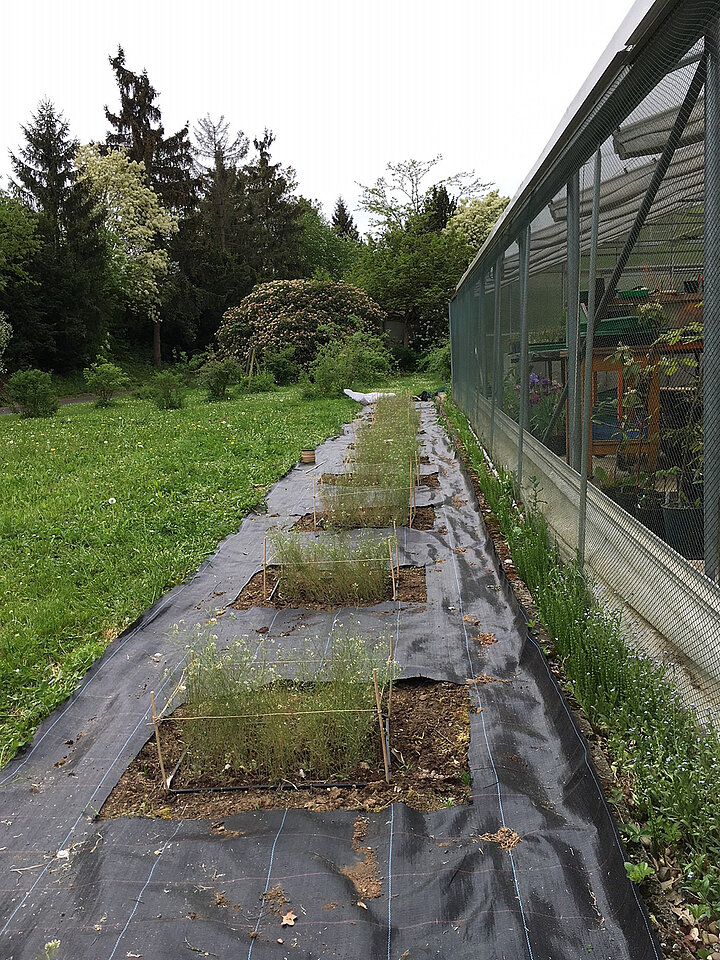
Experimental beds in the botanical garden
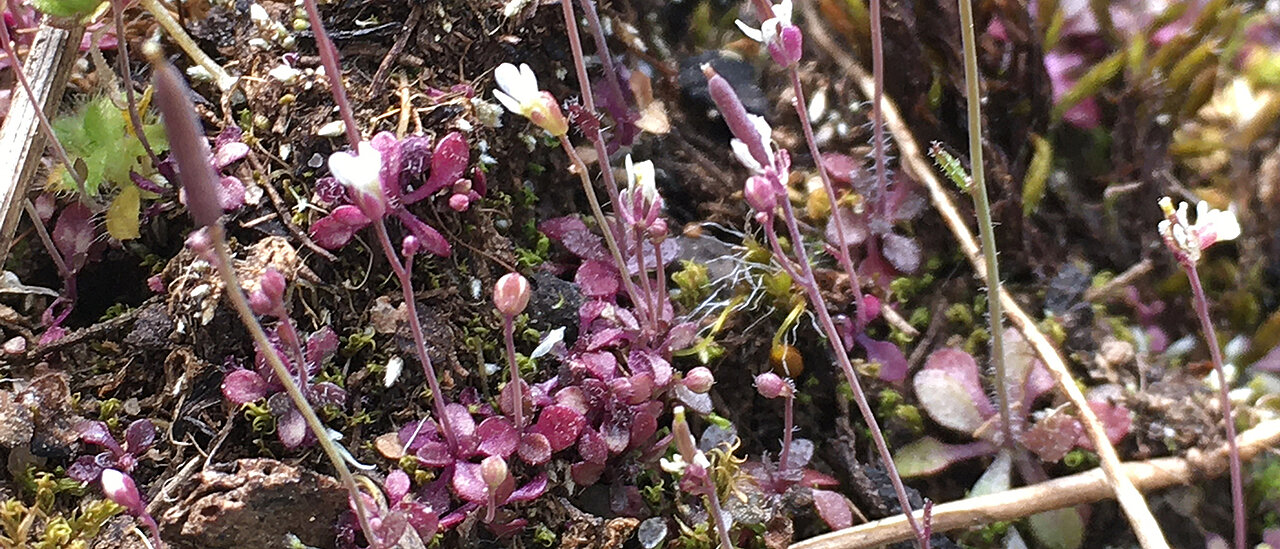
At the centre of the experiment was a genetically diverse mixture of the model plant Arabidopsis thaliana, an annual species from the cruciferous family. The plants were allowed to grow and evolve uninfluenced at the various locations for five years. The aim of the experiment was to find out how quickly the plants develop under different climate stressors.
The experiment ran from 2017 to spring 2022 and a recent publication in the renowned journal Science now includes the genomic analyses over the first three years.
In Würzburg, the experiments were carried out in the Botanical Garden. "A great sign of good international networking and the Botanic Garden's involvement in research," says Arthur Korte.
The researchers hoped that the experiment would provide information about the speed of evolutionary processes and the associated genetic changes. These are crucial for the development of models that can be used to identify endangered plant and animal species when their environment changes.
Heat as a potential problem
The Würzburg researchers were also involved in analysing the first three years of genomic data from the experiment. The results showed that in most cases the plants developed genetically in such a way that they adapted to the new environmental conditions. However, some populations, especially in particularly warm climate zones, did not show any early adaptation. Instead, their development was seemingly random and ultimately led to extinction.
The central questions: How fast does evolution take place? And when does it not start? "We were able to show that this speed can be three, four or five years - given sufficient genetic diversity. For the first time, we can directly observe how certain DNA variants - adaptive variants - become established in populations," says Expósito-Alonso.
A key finding: in the warmest climate zones - a particularly relevant group in view of global climatic developments - populations with predictable evolutionary changes survived, while those with chaotic genetic developments died out.
Rapid adaptation to climate change is therefore possible, but extreme heat limits population size and can drive populations beyond an evolutionary tipping point towards extinction.
Adapt or die out
The aim of the project was not only to measure the speed of evolutionary adaptation, but also to identify those gene variants or mutations that enable adaptation to changing environmental conditions. Therefore, each experimental plot contained a genetically diverse population of several hundred plants originating from different natural occurrences of Arabidopsis. This diversity should ensure that at least some individuals carry the rare genes that are necessary for successful adaptation.
If such rare gene variants - so-called alleles - are present, the adaptation should be reflected in changes to the genetic composition: for example, through increases or decreases in certain allele frequencies, the occurrence of new mutations or their recombination.
In order to record these changes, the researchers took samples of flowers every spring and sequenced the complete genomes of the plants. Based on sequences from over 70,000 surviving plants from more than 2,500 temporally and spatially staggered samples, they were able to identify millions of changes in expressed genes that reflect the populations' attempts to adapt. These genetic changes differed between different climate zones, but were comparable within similar climates - an indication of the reproducibility of the adaptation processes.
A clear indication of natural selection - i.e. the survival of the best-adapted individuals - was that several of the twelve experimental plots at one location showed similar changes in gene frequencies. The same was true for sites with comparable environmental conditions, such as dry shrub landscapes in Spain and Greece. In total, this was observed at 24 of the 30 sites. Genes that react to heat stress or control flowering times were particularly affected.
While certain genetic changes were to be expected due to the high diversity and the strong climatic stress, the speed with which the allele frequencies changed was particularly surprising. This happened faster than many researchers had expected.
However, not all experimental plots showed successful adaptation - some populations died out.
In some climate zones, either no changes occurred at all or the observed changes were inconsistent. In these cases, it was more a case of genetic drift - i.e. random changes - rather than evolution driven by natural selection.
As the researchers sampled each of the 360 experimental plots annually over several years, they were able to show that populations with random or absent genetic changes eventually died out in the first few years.
"For a population to survive in the long term under changing climatic conditions, it will most likely have to go through natural selection," says Expósito-Alonso. "Without some kind of evolutionary rescue - that is, without genotypes with higher fitness that prevail and shift allele frequencies - a population cannot maintain its size over five years, at least in warm environments."
Enabling well-founded predictions
Based on the knowledge acquired about Arabidopsis , well-founded predictions can now be made about a wide variety of species. "With such models, calibrated to a model species and combined with a deep understanding of evolutionary speed and adaptability, we could potentially help hundreds or thousands of species," says Expósito-Alonso.
Publication
Xiung Wu et al: Rapid adaptation and extinction in synchronised outdoor evolution experiments of Arabidopsis in Science, 26 March, DOI: https://doi.org/10.1126/science.adz0777
Additional images