
Sargassum seaweed: Curse and blessing of the Caribbean
04/07/2026For the Caribbean, the Sargassum seaweed is both a curse and a blessing. This is shown in a special exhibition at the Senckenberg Museum. Professor Laura Otto from Würzburg helped to organise it.
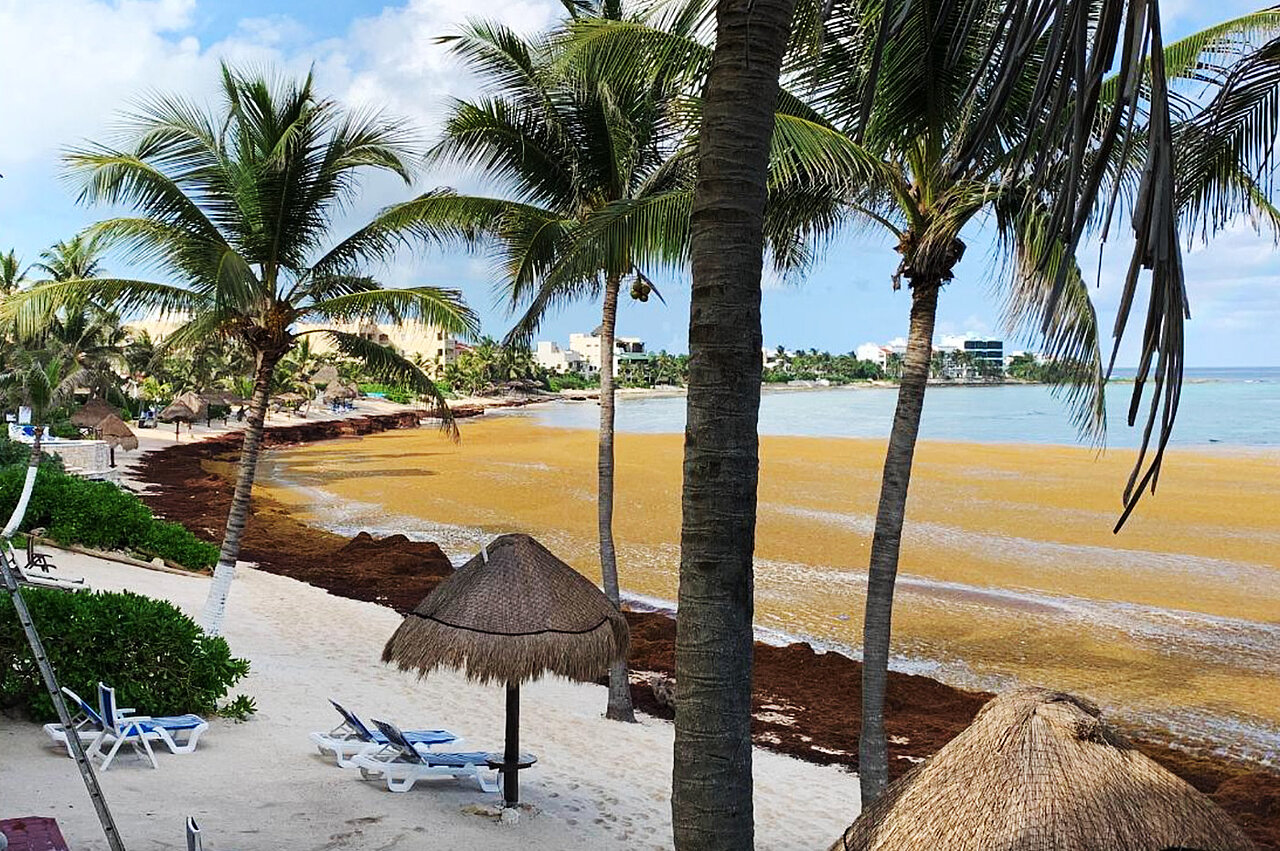
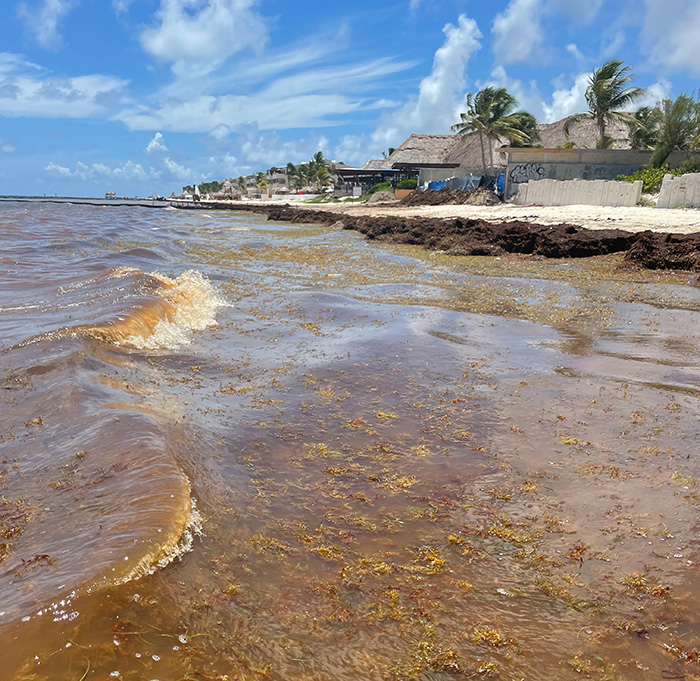
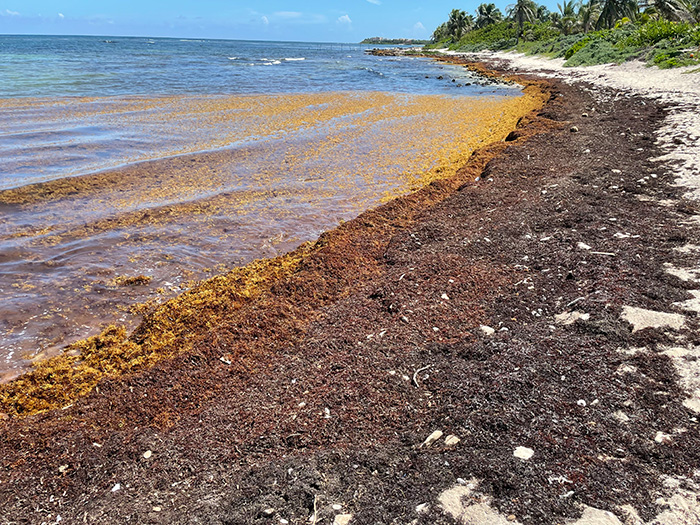
The brown algae Sargassum has two faces. Since 2011, it has been multiplying in the Atlantic to such an extent that huge floating carpets of algae have formed. And these do not remain on the open sea, but are also washed up on the coasts of the Caribbean and Mexico.
The masses of algae are killing turtles and coral reefs. They cause economic and health problems for local people. Out at sea, on the other hand, they form a unique habitat with a high level of biodiversity.
The Senckenberg Nature Museum in Frankfurt/Main is now dedicating a special exhibition to the algae, which can be seen until 18 October 2026.
Researching the consequences of algae proliferation
Laura Otto, junior professor at the University of Würzburg, helped curate the exhibition. The cultural scientist is very familiar with the topic: She investigated the consequences of Sargassum mass reproduction in a project funded by the German Research Foundation. It was completed in 2025.
"It means a lot to me that my research is now visible in the Senckenberg Museum and reaches a wider audience," says Laura Otto.
She knows her co-curator Dr Torben Riehl from the Johanna Quandt Young Academy at Goethe University: "There we realised that we were working on the same algae, but with very different scientific approaches. This shared perspective gave rise to the idea for the exhibition. We spent around two years developing and realising it together. It was particularly important to me to bring together different forms of knowledge and make them tangible for visitors."
Laura Otto became aware of the algae while on holiday
Laura Otto came to Sargassum by chance. When she was on holiday in Mexico after completing her doctoral thesis, she was confronted with vast quantities of this algae on the beach. The rotting mass, which reeked of rotten eggs, drove the tourists away and had serious consequences for the local population - an exciting research topic for the cultural scientist.
Laura Otto now reports on the findings from her ethnographic research work in Mexico and the Caribbean in the podcast "Curse and blessing of the Caribbean" (in German), which the Senckenberg Museum has published in its media hub to accompany the special exhibition. Dr Torben Riehl from the Senckenberg Society for Nature Research talks about the biology of algae and the habitat in the algal carpet.
Website of the Sargassum exhibition at the Senckenberg Naturmuseum
Additional images