
Würzburg-based pain researcher has been elected a member of the Leopoldina
09/01/2026Heike Rittner, holder of the Chair of Pain Medicine at Würzburg University Hospital, has been elected to the National Academy of Sciences.
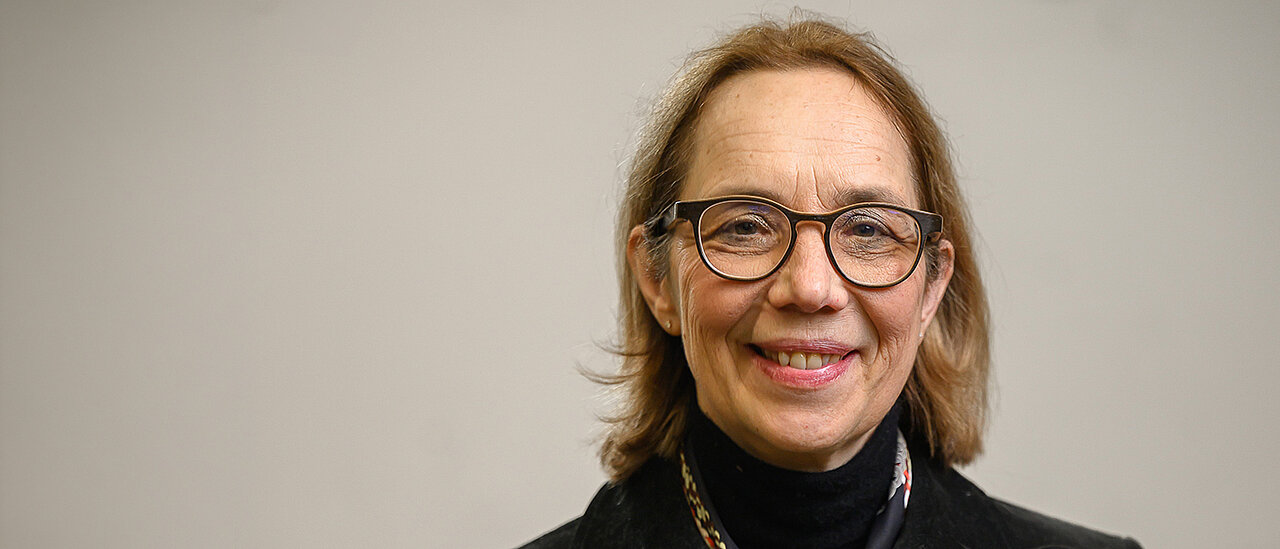
Professor Heike Rittner says she was overjoyed to be elected to the Leopoldina National Academy of Sciences. “Membership of this venerable and renowned academy of scholars is the greatest recognition and most important honour for my scientific achievements that exists in this country. Furthermore, it gives my field of research – pain – greater visibility.”
Heike Rittner founded the Centre for Interdisciplinary Pain Medicine (ZiS) in 2017 and has headed Germany’s first Chair of Pain Medicine since 2023. A key milestone was the approval of the DFG-funded ResolvePAIN Clinical Research Group, which investigates the mechanisms of pain resolution.
Pain medicine needs better framework conditions
As a specialist in anaesthesiology, pain specialist and researcher at Würzburg University Hospital (UKW), she hopes that her membership will provide fresh impetus for pain medicine and help to embed the topic of ‘chronic pain’ more firmly in science, health policy and society.
Given the growing significance of chronic pain, particularly in relation to musculoskeletal disorders and in connection with psychological stress, Heike Rittner sees a great need for action. This is because, despite the high number of people suffering from chronic pain, care is inadequate in many places and is under greater threat than ever due to hospital reforms. “Evidence-based, interdisciplinary pain therapies are often disadvantaged under the current reimbursement system, whilst invasive procedures – some of which offer only limited benefit – are frequently reimbursed at more attractive rates,” says Rittner.
A holistic perspective
According to her, pain research is currently in a particularly dynamic phase. This is because initial findings from basic research over the past two decades are now finding their way into clinical practice. New active substances and molecularly targeted therapies are opening up promising prospects. However, progress is only possible if modern medicines are combined with a holistic treatment approach that also takes into account psychological factors, expectations of treatment and patients’ life circumstances.
It is precisely this holistic approach that makes the field of pain management so special. “It forces us to think on a small scale and, at the same time, on a large scale: from molecules and biological mechanisms right through to the individual with their psychological, social and professional circumstances – in other words, the interplay between all these factors,” explains Heike Rittner. Chronic pain, in particular, is the result of close interaction between physical processes, the brain, the psyche and the social environment. That is why research and treatment must take all these levels into account together.
Pain is a social phenomenon
This is another reason why Heike Rittner is delighted to be a member of the Leopoldina. Although she is affiliated with the ‘Surgery, Orthopaedics and Anaesthesiology’ specialist section, the interdisciplinary exchange between the 28 specialist sections and the four classes – Mathematics, Natural and Technical Sciences, Life Sciences and Medicine, and Humanities, Social and Behavioural Sciences – is one of the central tasks of the National Academy of Sciences. This opens up a wealth of opportunities for networking and scientific dialogue, particularly for her interdisciplinary pain research. “Pain is not purely a medical issue, but a social phenomenon. That is why its research and treatment require different scientific perspectives,” emphasises Heike Rittner.
Heike Rittner’s career
Heike Rittner was born in Berlin in 1968 and grew up in Oldenburg, Lower Saxony. After studying medicine in Vienna and the University of Würzburg and completing further training, including at the universities of Yale and Basel, her academic career initially took her to the Mayo Clinic in Rochester (USA). Via the Charité – Universitätsmedizin Berlin, where she laid the foundations for her career in pain research, she moved in 2008 to the Department of Anaesthesiology, Intensive Care Medicine, Emergency Medicine and Pain Therapy at Würzburg University Hospital (UKW). At that time, the UKW already had one of the first pain outpatient clinics in Germany, as well as a university pain day clinic. The specialist in anaesthesiology gradually expanded this area of focus into the Centre for Interdisciplinary Pain Medicine (ZiS), which she has headed since 2017.
In 2020, the German Research Foundation (DFG) approved the ResolvePAIN Clinical Research Group, led by her and Prof. Claudia Sommer, which aims to gain a better understanding of the molecular mechanisms underlying pain resolution in order to develop personalised and tailored therapies.
In 2021, Heike Rittner was appointed to the W2 Chair in Clinical and Experimental Pain Therapy, and in 2023 she took up the newly established Chair in Pain Medicine, the only one of its kind in Germany. Her areas of expertise include inflammatory and neuropathic pain, barriers that protect the nervous system, as well as persistent pain following surgery and complex regional pain syndrome. She has been Vice-Dean since 2025 and is a member of the Faculty Executive Board. Heike Rittner is married, the mother of three children, and lives with her family in Würzburg.
About the Leopoldina
The Leopoldina, the German National Academy of Sciences, is one of the oldest and most prestigious scientific academies in the world. Founded in Schweinfurt in 1652 as the “Academia Naturae Curiosorum”, the first members of the “Academy of Naturalists” focused primarily on medical and scientific issues and made a significant contribution to the scientific Enlightenment. To this day, the Leopoldina – which has had its headquarters in Halle an der Saale (Saxony-Anhalt) since 1878 – stands for scientific excellence and interdisciplinary exchange.
To maintain the Academy’s strength, the Leopoldina elects around 50 new members each year. The approximately 1,700 members from more than 30 countries are organised into specialist sections, which in turn are assigned to four classes focusing on the natural sciences, life sciences, medicine, and behavioural, social and humanities sciences. Independent of economic or political interests, the scientists address socially relevant issues of the future and advise German policymakers and international institutions on key matters.