
A risk map for heat stress
04/21/2026Heat stress is making summers in Central Europe and the Mediterranean increasingly dangerous. Researchers from the Universities of Würzburg and Augsburg are investigating where the hotspots are, how they arise and what measures could be taken.
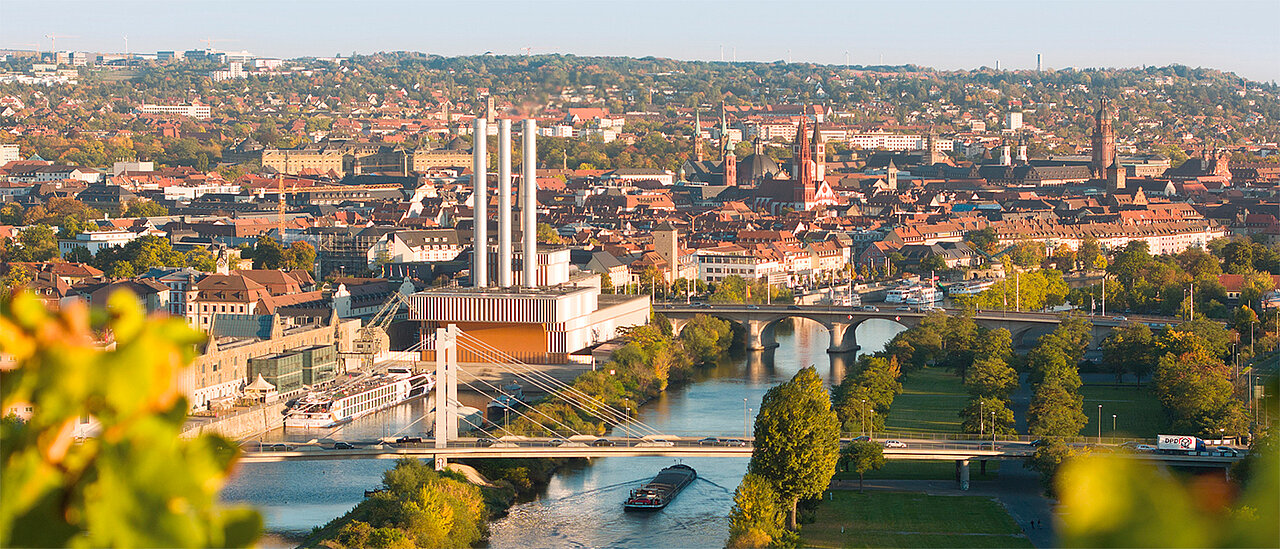
Anyone who has lived in Würzburg for any length of time will be familiar with hot summers. In 2018, 2021 and 2022, temperatures reached over 40 degrees Celsius on several days. Such temperatures can trigger heat stress in people: In this state, the body absorbs more heat than it can release. The metabolism, cardiovascular system and water balance are particularly affected. Exposure to heat stress for too long can be fatal.
Würzburg is just one of many examples: As hotspots of climate change with an ageing population and high urbanisation, Central Europe and the Mediterranean region are particularly affected by summer heatwaves. Researchers at Julius-Maximilians-Universität Würzburg (JMU) and the University of Augsburg are investigating how and where heat stress occurs in these regions and what risks there are for the health of residents.
The new project is being led by Heiko Paeth, JMU Professor of Climatology, and Professor Elke Hertig, Head of the Chair of Regional Climate Change and Health in Augsburg. The German Research Foundation is funding the THERMAL-INTERACT project with a total of almost 520,000 euros for a period of three years.
An approach that considers all factors for heat stress
"In previous studies, heat stress has primarily been analysed using air temperature. Instead, we have chosen an approach that also takes humidity, wind speed and solar radiation into account," explains Paeth. The Würzburg team has access to high-resolution regional climate data for this purpose.
However, the researchers are also analysing other factors: These include personal characteristics such as age, gender, health and socio-economic status of the population.
"The older a person is, the higher the risk of health consequences. The more wealth someone has, the easier it is to buy suitable clothing, air conditioning and other ways to cool down," says the climatologist. Heat stress is therefore also caused by social circumstances.
Structural issues are also important: What is the spatial planning of cities and rural regions like? Are there enough green spaces or bodies of water to reduce the heat? Where are early warning systems integrated, where are they missing?
Elke Hertig's team in Augsburg is primarily concerned with health factors. To do this, it evaluates epidemiological data from the last 20 years.
A map to determine the risk of heat stress
Given the large amount of data, there may still be hurdles in the course of the project: "Depending on the region, the data is maintained differently. In Germany, the authorities normally keep detailed, analysable data, whereas in Italy and Spain there are often major regional differences," says Paeth.
The aim is to create a digital risk map that shows Central Europe and the Mediterranean region in a detailed regional breakdown. "The map will provide overviews for many questions: Where do particularly high-risk groups live? Which concept for green spaces is particularly successful and can it be transferred from one city to another? What differences are recognisable between urban and rural areas?" says the JMU climatologist, listing some of the possibilities.
The concept of the risk map could be extended globally as a methodological framework in the future. According to Paeth, the project group is also planning to transfer it to areas in Asia, Africa and other continents.
Contact
Prof. Dr. Heiko Paeth, Head of the Climatology Working Group - Team Climate, Professorship of Climatology, Institute of Geography and Geology, T +49 931 31-84688, heiko.paeth@uni-wuerzburg.de