

Responsible research involving animals
10/06/2026To replace animal experiments wherever possible, reduce their number and minimise the distress caused to the animals: these are the objectives of a new centre at Würzburg University Hospital.
Animal testing remains of great importance in biomedical research and is often indispensable. Whilst cell cultures, organoids and ‘organ-on-a-chip’ models can now replicate individual processes with a high degree of accuracy, they cannot fully replace a living organism with its complex interactions between metabolism, blood vessels and the immune system. Furthermore, many disease mechanisms are not yet fully understood.
Animal experimentation can help to bring individual findings together to form a complete picture and, on this basis, to develop new medicines and therapies. Animal experiments are also carried out at the University Medical Centre Würzburg – always in accordance with the 3R principles.
Innovative 3R methods
The 3Rs mean that animal experiments should, wherever possible, be replaced (replace), their number reduced (reduce) and the distress caused to the animals minimised (refine). Since the start of this year, these 3Rs have been specifically integrated at the newly established Main3R – Würzburg Centre for the 3Rs at Würzburg University Hospital (UKW).
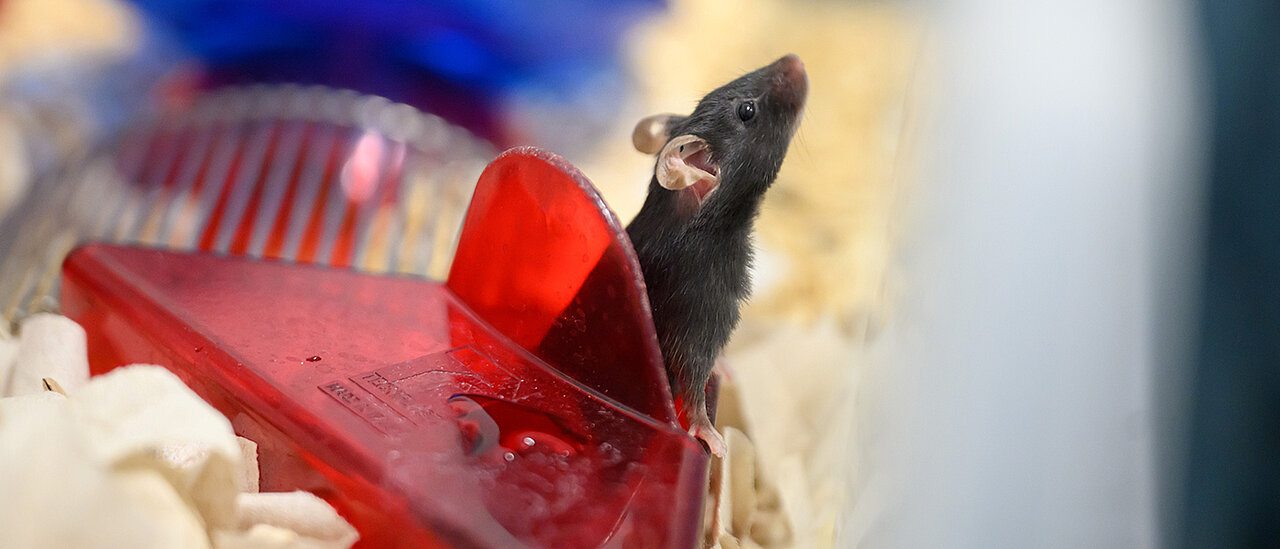
In close collaboration with the Chair of Laboratory Animal Science and Animal Welfare at the University of Würzburg and as a partner of WI3R – the Würzburg 3R Initiative, the head of Main3R, Dr Nadine Baumgart, together with her team, is continuously refining the husbandry of laboratory animals, as well as the conduct of experiments and post-experimental care, in order to improve animal welfare and, consequently, the quality of the data obtained. In addition to rewards – mice particularly love chocolate – training sessions to maintain the animals’ fitness are also utilised, amongst other measures. Work is also underway on tools that can improve experimental procedures.
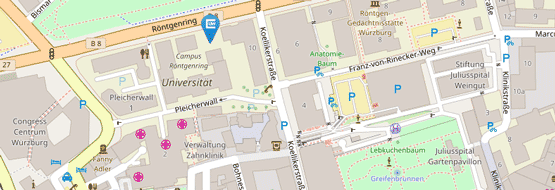
To ensure that these findings reach users, the support services at the Main3R Centre on Röntgenring are given full attention. “We advise scientists on how to implement the 3Rs in their research projects, develop and apply new, innovative 3R methods, and also utilise existing models and methods,” says Nadine Baumgart.
Cross-site databases
For example, there is close collaboration with the ‘Preclinical Models’ flagship project, funded by the Bavarian Centre for Cancer Research (BZKF). Under the leadership of Professor Nicolas Schlegel, holder of the Chair of Experimental Visceral Surgery, the project has established two cross-site databases containing organoid and animal models of various tumour types. The aim is to improve the exchange of information on preclinical models and thereby also contribute to the implementation of the 3Rs principles.
“For the first time, the databases provide an overview of which preclinical models are already available and where they can be used. This enables us to avoid duplication of effort, make better use of research resources, and plan and reduce animal testing in a more targeted manner,” comments Nicolas Schlegel. The surgeon and scientist warmly welcomes the establishment of the 3R Centre in Würzburg. “Main3R helps us to raise the profile of existing organoid and animal models, as well as established methods, and to bring researchers together.”
Removing the taboo surrounding animal testing
Another key component of the 3R Centre is open communication about research involving animals. For this reason, the UKW has followed JMU’s lead and has now also joined the ‘Transparent Animal Testing’ initiative. By signing up, the more than 130 participating institutions have committed to providing transparent information on animal experimentation, communicating openly and actively shaping the public dialogue. The aim is to remove the taboo surrounding animal experimentation.
“For us, the 3R Centre and signing up to the transparency initiative go hand in hand,” emphasises Matthias Frosch, Dean of the Faculty of Medicine at JMU and a member of the UKW Executive Board. “For us, responsible research means continuously refining methods whilst at the same time ensuring transparency regarding how research involving animals is conducted. Both build trust and facilitate an open exchange – within the scientific community and with society.”
Double anniversary in Berlin
It is therefore a particular priority for Matthias Frosch and Nadine Baumgart to attend the major anniversary event organised by the ‘Transparent Animal Testing’ and ‘Understanding Animal Testing’ initiatives on 1 and 2 October 2026 in Berlin. The transparency initiative was launched in 2021 by the ‘Understanding Animal Experimentation’ information initiative of the Alliance of Science Organisations and the Standing Senate Commission for Animal Experimentation Research of the German Research Foundation (DFG). ‘Understanding Animal Experimentation’ has been active since March 2016.
“Ten years of ‘Understanding Animal Experimentation’ and five years of ‘Transparent Animal Experimentation’ show that science communication in this field has developed significantly,” says Nadine Baumart. “Openness should not be a one-way street. It is about explaining in an accessible way how and why research is carried out using animals, what responsibilities this entails, and what progress has been made with regard to the 3Rs. Transparency lays the foundation for an objective dialogue. For us, this also means taking questions and critical perspectives seriously.”
Links
In her profile in the UKW series #WomenInScience, Nadine Baumgart explains how she came to be involved in the 3Rs:
Main3R – Würzburg Centre for the 3Rs
Würzburg 3R Initiative
‘Transparent Animal Testing’ Initiative
‘Understanding Animal Testing’ Initiative
Alliance of Science Organisations
Additional images