
Genomic "doctor's letter" against resistant myeloma cells
03/03/2026Researchers at the University Hospital of Würzburg have shown in a new study that therapies for multiple myeloma leave genetic traces. Their detection determines which therapies can be effective again.
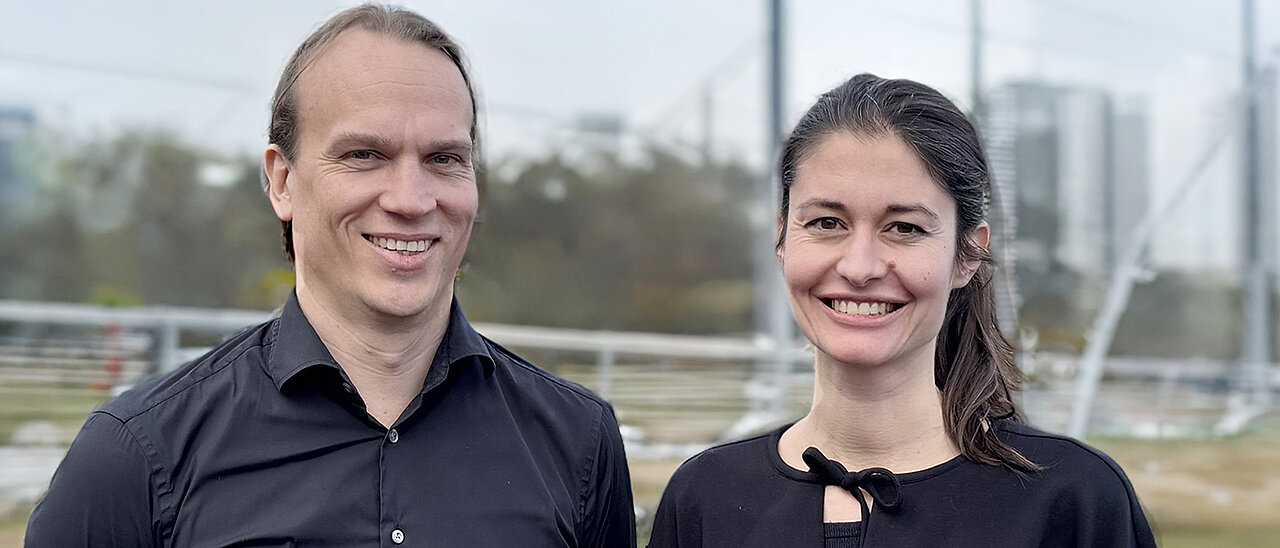
What sounds like a frustrating treatment marathon is actually a real success story, according to Professor Leo Rasche from the Myeloma Centre at the University Hospital of Würzburg (UKW). In the past, there were only a few effective therapies for multiple myeloma. Today, he sees patients who have received seven different classes of medication: Two each of proteasome inhibitors and immunomodulators, monoclonal and bispecific antibodies and CAR-T cell therapy. "This means that they have lived with the disease for many years and are relatively fit thanks to the gentler, innovative immunotherapies," says Rasche.
Many years of research into resistance mechanisms
But what should be done if the patient has a recurrence after the seventh therapy, the cancer has returned and the therapy has reached the end of the line? Leo Rasche and his team at the UKW's Medical Clinic II have introduced the term hepta-refractory, i.e. resistant to seven (Greek: hepta) important types of treatment.
Rasche has been researching the resistance mechanisms that drive such relapses for a long time. Understanding these mechanisms is crucial for the development of suitable treatment strategies. "However, it is important to bring our findings out of the ivory tower and onto the street. We have now succeeded in doing this with our latest study, in which we combined whole genome sequencing with immunohistochemistry," says Leo Rasche.
Myeloma therapies leave traces in the genome
Together with Dr Christine Riedhammer and partners from Würzburg, Munich, Hamburg, Heidelberg and Calgary, Canada, he was able to show that numerous multiple myeloma therapies leave traces in the genome of the tumour cells. With the help of whole genome sequencing, complex previous therapies could be reconstructed - you could call it a genomic doctor's letter.
"For some therapies, we can actually say quite clearly that they don't need to be used again. The tumour is definitely resistant to them. For others, however, we were able to discover targets for a new therapy, so that a repeat treatment makes perfect sense," reports Christine Riedhammer. The haemato-oncologist shares first authorship of the findings published in the journal Leukemia with Marietta Truger.
A total of 37 patients who had exhausted all available therapies were included in the multicentre study. The Munich Leukaemia Laboratory (MLL) carried out whole genome sequencing on 17 of them.
Antigen loss and mutation in half of the patients
The results show that in around half of the patients, the tumour cells themselves cause the resistance. This means that the tumour has mutated so that the immunotherapy is no longer effective. In this case, we speak of tumour-intrinsic resistance development. In the other half, however, the mechanisms are still completely unclear. They may lie in epigenetics, in the immune system or in the microenvironment, i.e. the healthy cells surrounding the tumour.
What do these findings mean for further treatment? If the key antigens for immunotherapy are still intact, it can be given a second time. The protein BCMA is the target for CAR-T cells and GPRC5D for a bispecific antibody. "In our cohort at the UKW, all patients with existing antigens responded to the new immunotherapy and were in remission for a median of nine months," reports Christine Riedhammer. The therapy of multiple myeloma is still primarily about prolonging life with a good quality of life.
Ultimately, the study illustrates the urgency of new therapies and precise diagnostic investigations. It illustrates the genetic complexity of multiple myeloma and the evolution of the tumour. Every therapy that the tumour cell survives makes it stronger. The tumour cell can survive and divide more and more easily as it successively switches off the tumour suppressor genes. These genes normally ensure that no tumour develops. "As a result, the biology becomes increasingly wild and the cells increasingly unleashed," explains Leo Rasche. The last author of the study paints a picture of a completely scarred but strong myeloma cell that has become even stronger as a result of the fight against the numerous drug classes.
Hepta-refractory is the new "normal" in everyday clinical practice
In recent decades, no other haematological cancer has seen more new drug approvals than multiple myeloma, including some of the most modern drug classes. Nevertheless, the disease remains incurable. Patients who are resistant to two immunomodulatory substances, two proteasome inhibitors and a CD38 antibody are referred to as "penta-refractory". In the past, their median survival was only 5.6 months.
With the advent of novel immunotherapies, such as CAR-T cells and bispecific T-cell activating antibodies directed against plasma cell antigens such as BCMA and GPRC5D, treatment outcomes for this patient group have improved significantly. One third of patients are still relapse-free five years after CAR-T cell treatment.
For most patients, however, these new immunotherapies have not yet been able to achieve a lasting survival plateau, with many ultimately suffering a relapse. These "hepta-refractory" patients (penta-refractory plus resistance to BCMA- and GPRC5D-targeted therapies) are being seen with increasing frequency in everyday clinical practice. Around 40 hepta-refractory patients are currently being treated at the UKW. As long as the disease cannot be cured, this hepta-refractory stage will soon become the new "normal", according to Leo Rasche.
Publication
Riedhammer, C., Truger, M., Lee, H. et al. The evolution to hepta-refractory myeloma involves sequential loss of CD38, BCMA and GPRC5D. Leukemia (2026). https://doi. org/10.1038/s41375-026-02889-3