
From luxury hotel to hotspot school
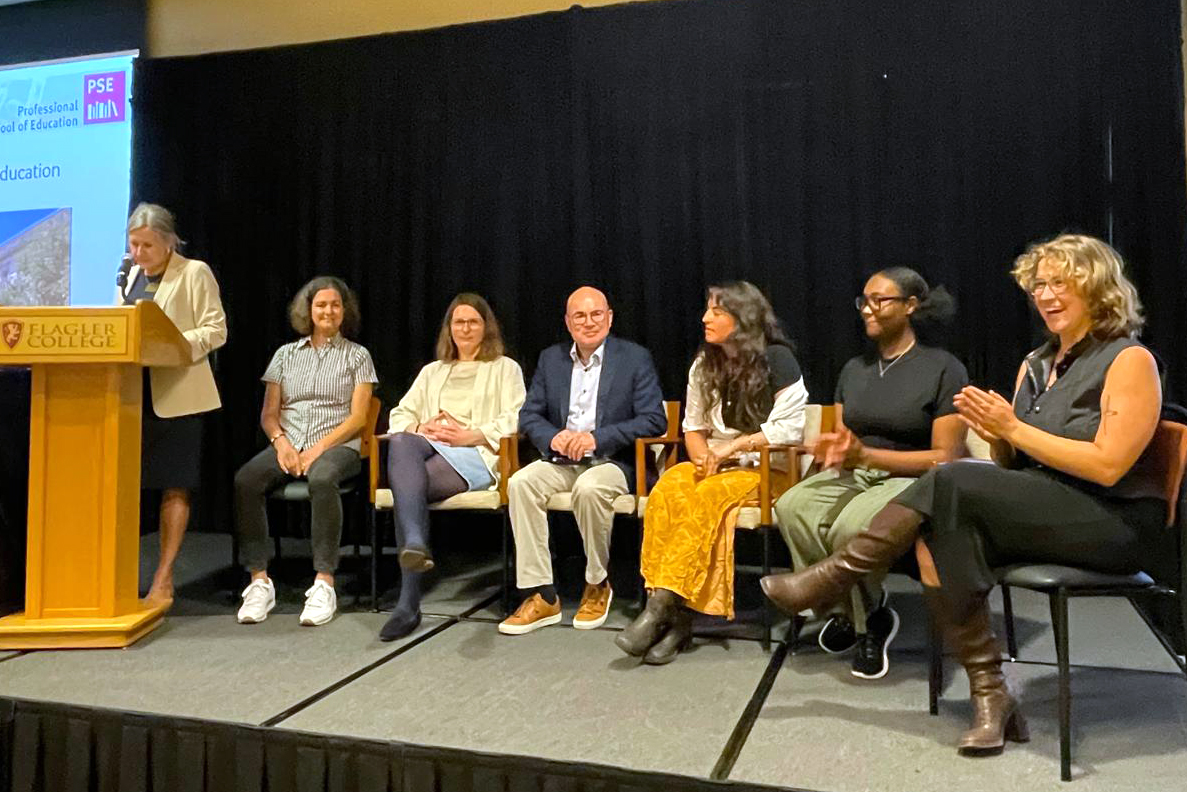
05/05/2026At the end of March, members of the Professional School of Education at the University of Würzburg visited Flagler College in Florida. The exchange on site and the visit to a school revealed surprises on both sides.
The pilot project Lehramt.International "Global Teacher Education plus" (GoTEd+) has been based at the Professional School of Education (PSE) at the University of Würzburg since 2025. Funded by the German Academic Exchange Service (DAAD), the aim of this initiative is to promote the structural comparability of teacher training programmes and thus the recognition of academic achievements in a targeted manner and to implement them on a model basis within the framework of cooperation with international partner universities.
The project not only promotes student mobility in the context of subject-related stays abroad; it also supports guest lectureships and study trips by German and international researchers and education experts. While Professor Maria Eisenmann spent a week as a guest lecturer at Flagler College at the end of March as part of the GoTEd+ project, Dr Matthias Erhardt, Managing Director of PSE, and Maike Madera, GoTEd+ project coordinator and Erasmus+ coordinator, were there at the same time.
Ms Madera, Mr Erhardt, Ms Eisenmann: You recently travelled to Florida as representatives of the Professional School of Education to visit Flagler College? What was the purpose of this visit?
Matthias Erhardt : Flagler College has been a partner university of the PSE since 2025. The aim of our visit was to gain an insight into the American education system and in particular the teacher training programme at the college.
What was your impression of this college?
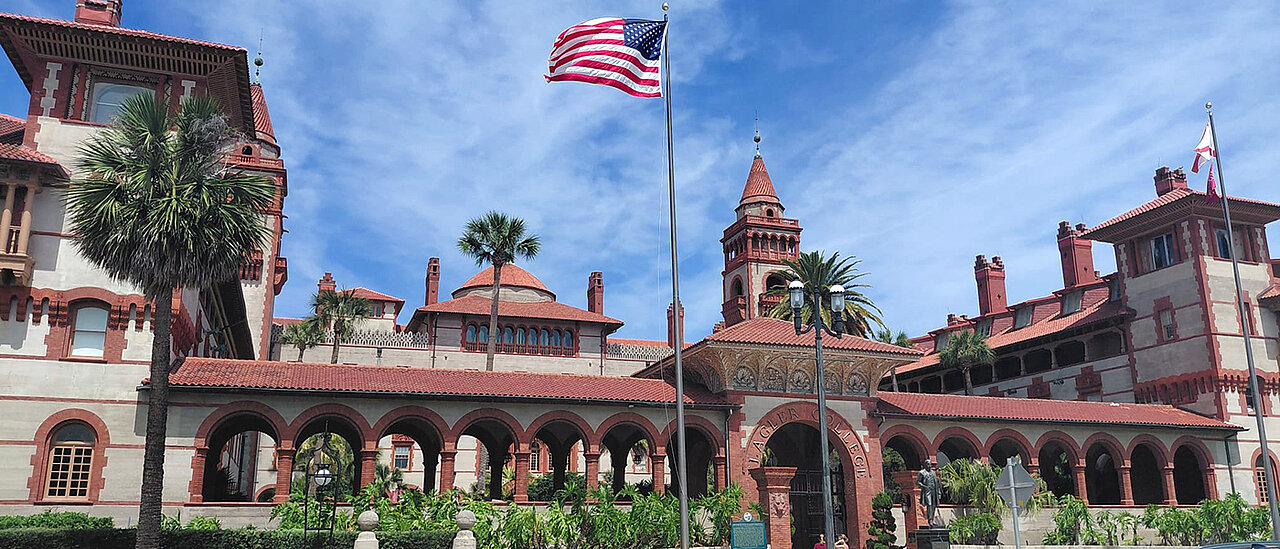
Maike Madera: Flagler College is located in St. Augustine on the east coast of Florida. It impresses at first glance with its unusual architecture: the current main building served as a luxurious hotel at the end of the 19th century. It has now been used for university teaching for around 60 years - and students still dine in the hotel's magnificent former dining room.
However, I assume you were not just interested in architectural impressions.
Matthias Erhardt: No, of course not. During our stay, the so-called "Educational Week" took place - a series of events that specifically prepares students on teaching-related degree programmes for starting their careers. This provided us with ideal opportunities to make contact with representatives from the educational sciences and colleagues from the International Office. This enabled us to have an intensive exchange about the content of the degree programmes, college life and the transition from studying to teaching.
Was there anything that particularly impressed you?
Maike Madera : I was particularly impressed by the close links between the college, schools and school authorities. Everyone involved pursues the common goal of preparing the students for the demands of everyday school life in the best possible way. Due to the comparatively small number of students, individual, appreciative and encouraging support is possible.
Maria Eisenmann: The interplay between theoretical content, didactic training and practical testing should be emphasised in particular: so-called "core practices" are practised at an early stage and directly tested during weekly work shadowing at neighbouring schools - including immediate subsequent feedback from teachers and lecturers at Flagler College.
Have you been able to experience this yourself in the schools?
Matthias Erhardt: Yes, we gained a concrete insight into this practice during a visit to Webster Elementary School. This primary school combines mainstream and special needs classes under one roof and, as a so-called "Title 1 School", is one of the schools that receive additional financial support due to their socio-economic circumstances.
How big are the differences between a school in Bavaria and one in Florida?
Maike Madera : There are indeed some significant differences to everyday school life in Germany - from comprehensive camera surveillance and the presence of a sheriff on the school grounds to emergency buttons on the teachers' transponders, which can be used to alert the police immediately in an emergency.
Beyond these security measures, what other differences have you noticed?
Maria Eisenmann : In school classes, which are rather small by our standards, there are often not only regular teachers present, but also support teachers or, in other cases, parents or relatives of some pupils. These are there to provide the best possible guidance and support for children who need special care in challenging situations.
I suspect that students and teachers from the USA are also surprised by some of the details when they visit German schools.
Maike Madera: That is to be expected. This became apparent, for example, when we were able to compare our experiences with those of students from Flagler College who had already completed practical phases at schools in Bad Neustadt as part of the "Teaching Beyond Borders" panel. They were quite irritated by some of the observations - for example about closed shops on Sundays or the fact that in Germany it is a matter of course to be able to open the windows in classrooms.
Matthias Erhardt: These observations then led to a lively discussion about the differences, similarities and potential for development in the two countries' respective education systems and in teacher training.
What is your conclusion after this visit?
Maike Madera : We had an intensive and extremely enriching visit, which further strengthened the cooperation between our institutions. And now we are looking forward with great anticipation to the next steps in our cooperation and are taking numerous inspiring ideas for the further development of teacher training back to Germany.
What does this mean for student teachers at the University of Würzburg?
Matthias Erhardt : As part of the GoTEd+ project, scholarships are awarded for five-month combined study and internship stays at the partner universities. It is planned that Würzburg student teachers will also have the opportunity to study at Flagler College in Florida until the end of the project period in 2029. If you are interested, you should follow the PSE homepage, its Instagram account or the newsletters closely so as not to miss any current calls for applications.
Thank you for the interview.
Contact
Dr Matthias Erhardt, PSE, Maike Madera, PSE, T +49 931 31-83533, e-mail: goted@uni-wuerzburg.de, https://www.uni-wuerzburg.de/pse/
Additional images