
Software projects for society and the world of work
07/21/2026How can Germany become more digitally sovereign? At the end of the semester, nearly 40 students from various Master’s programmes presented the results of their innovative projects from the ‘Projektiade 2026’ start-up competition.

Digital, innovative and successful – that is what the start-ups founded by students at the University of Würzburg as part of the course ‘Professional Project Management in Practice’ should be. They are guided in this by Professor of Computer Science Harald Wehnes.
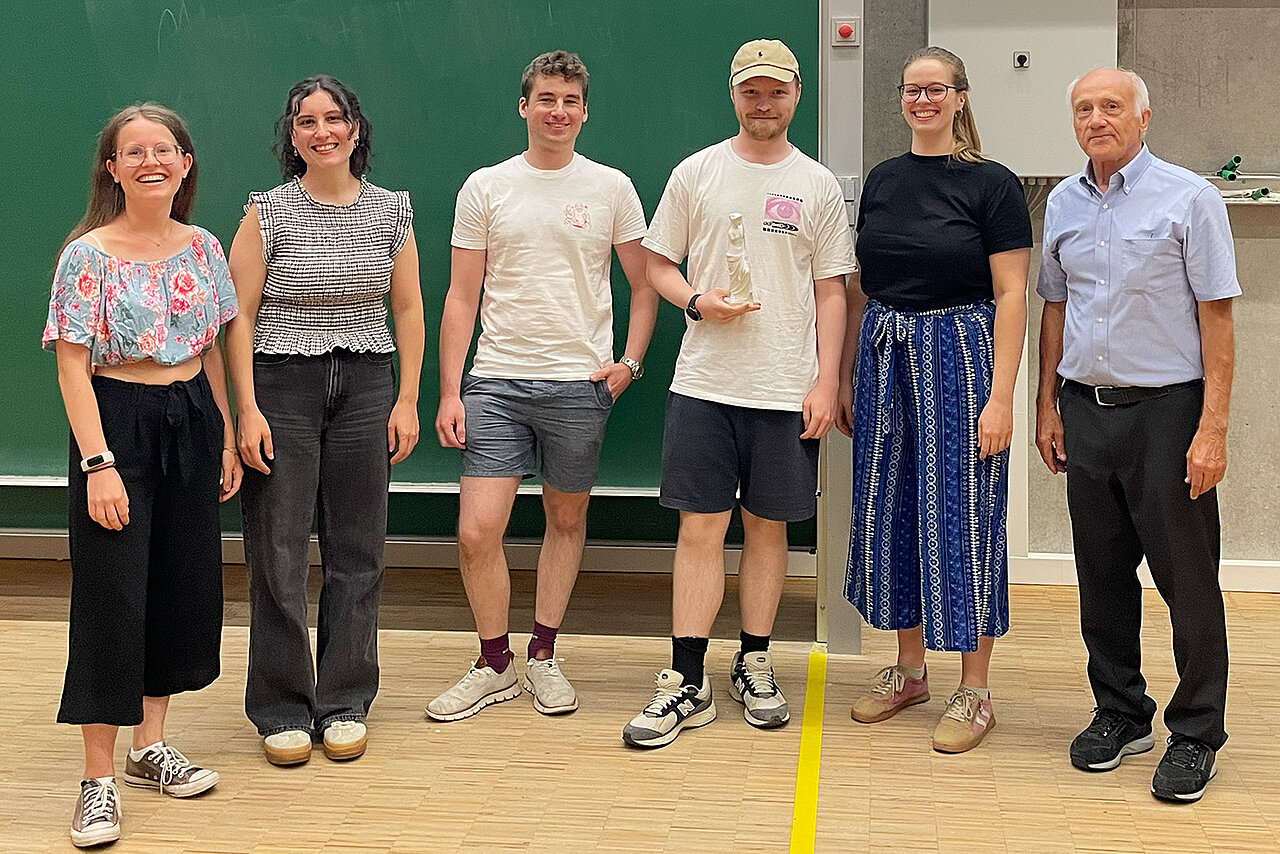
For over two decades, the public closing event has been the highlight of this course, which took place on 13 July this year. The project teams impressively demonstrated the outstanding achievements that are possible with modern project management methods and a high level of commitment.
Working in interdisciplinary teams of five to seven, they developed promising products and services. A particular focus this year was on the topic of ‘digital sovereignty’. The students explored how dependencies – particularly on US monopolies – can be avoided. According to Harald Wehnes, it was no easy task for the high-calibre jury to select the best projects and award them the Projekta Prize.
Projekta 2026: “Greatest benefit to society”
In Germany, more than 600,000 people are affected by ME/CFS. Nevertheless, there is little public awareness of this condition, and even doctors often know too little about it. This is where the app developed by the “Patientenakte” team aims to help: Those affected can document how they are feeling, upload medical documents and gain a simple overview using AI analysis. It also provides a structured overview of the course of the illness, which can be used during consultations with doctors. The aim is to give those affected greater self-management and to make doctors’ work easier.
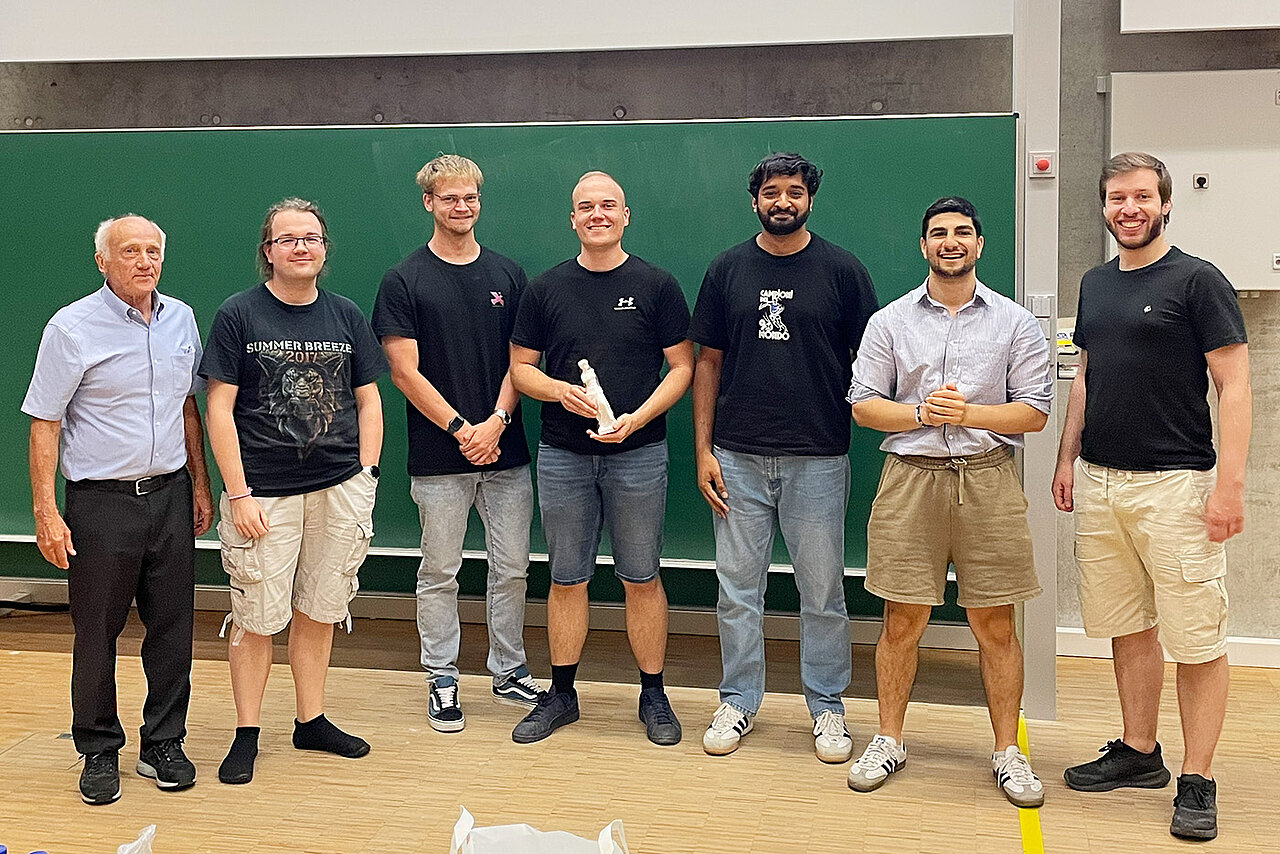
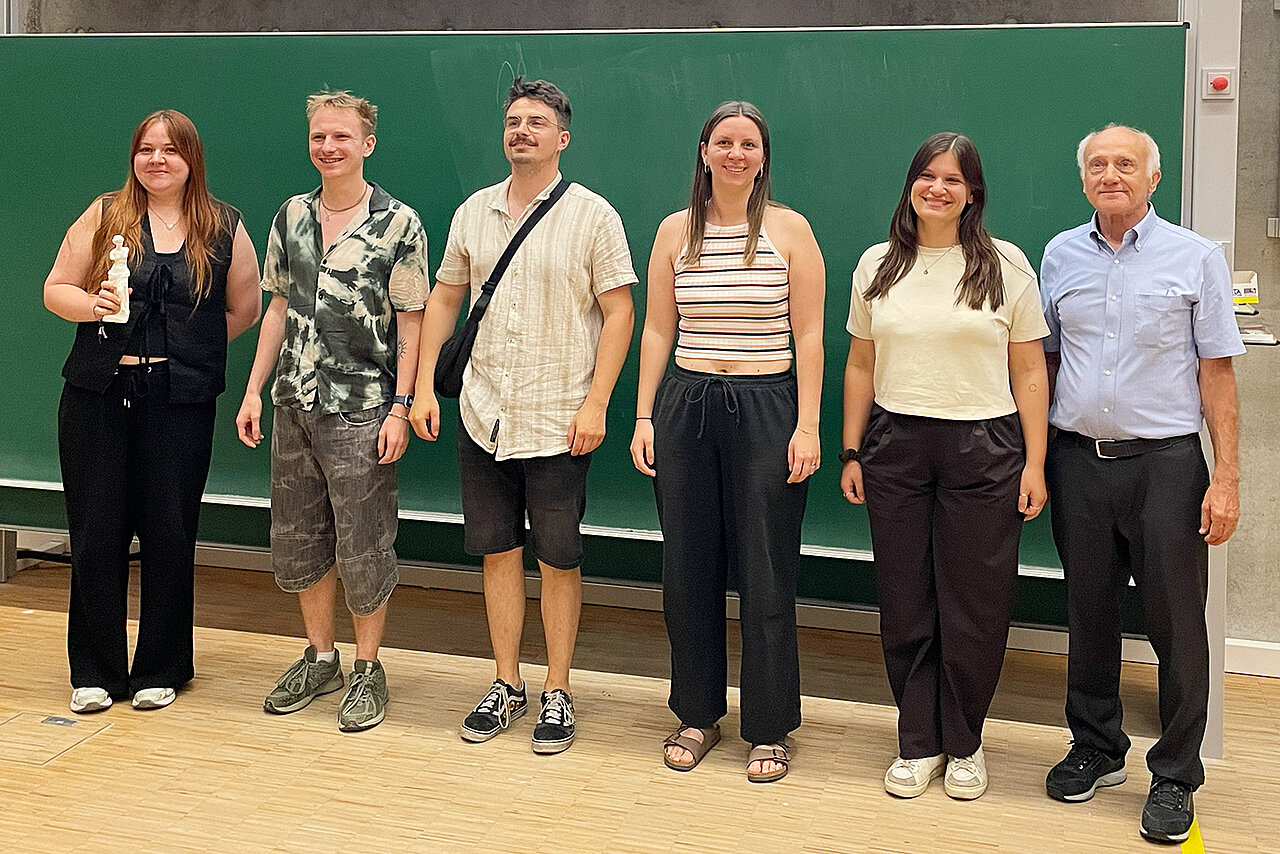
For these reasons, the “Patientenakte” team – comprising Kerry Kramer, Melisha Schuller, Max Weißkopf, Aurelia Abou Shama, Simon Koch and Chiara Novakovic, led by Dagmar Börsch and Jochen Stiepel – was awarded the Projekta Prize for “Greatest Social Benefit”.
Projekta 2026: “Best AI Project”
The “mindocu” team, comprising Daniel Gruber, Kevin Vonnahme, Constantin Rappert, Omid Sedighi-Mornani, Korbinian Mireis and Muhammad Mahad, developed a local AI system for the structured processing and analysis of files in the context of family law assessments. Key features of the software include the pre-sorting of case files and an AI chat function capable of answering questions about a specific file. The group placed great emphasis on data sovereignty and security. For these reasons, the “mindocu” team, led by Johannes Störlein and Oliver Gawron, received the award for “Best AI Project”.
Projekta 2026: ‘Best Presentation’
This year, following the jury’s assessment, the award for ‘Best Presentation’ went to the ‘Funeral Compass’ team, comprising Tim Grün, Felix Bäckmann, Sara Houfar, Asad Ahmed and Wali Ahmed, working on behalf of Bestattungen Schöneberg. This group’s web application helps with funeral planning, as time pressure, confusing options and a lack of transparency regarding costs often make this a difficult process. During the live demo of this application, the team demonstrated how easily users can ‘click through’ a series of questions, for example to select music for the funeral, decorations or the attire of the deceased. The aim is to simplify this process, particularly for families living in different locations.
Project 2026: ‘Best Live Demo’
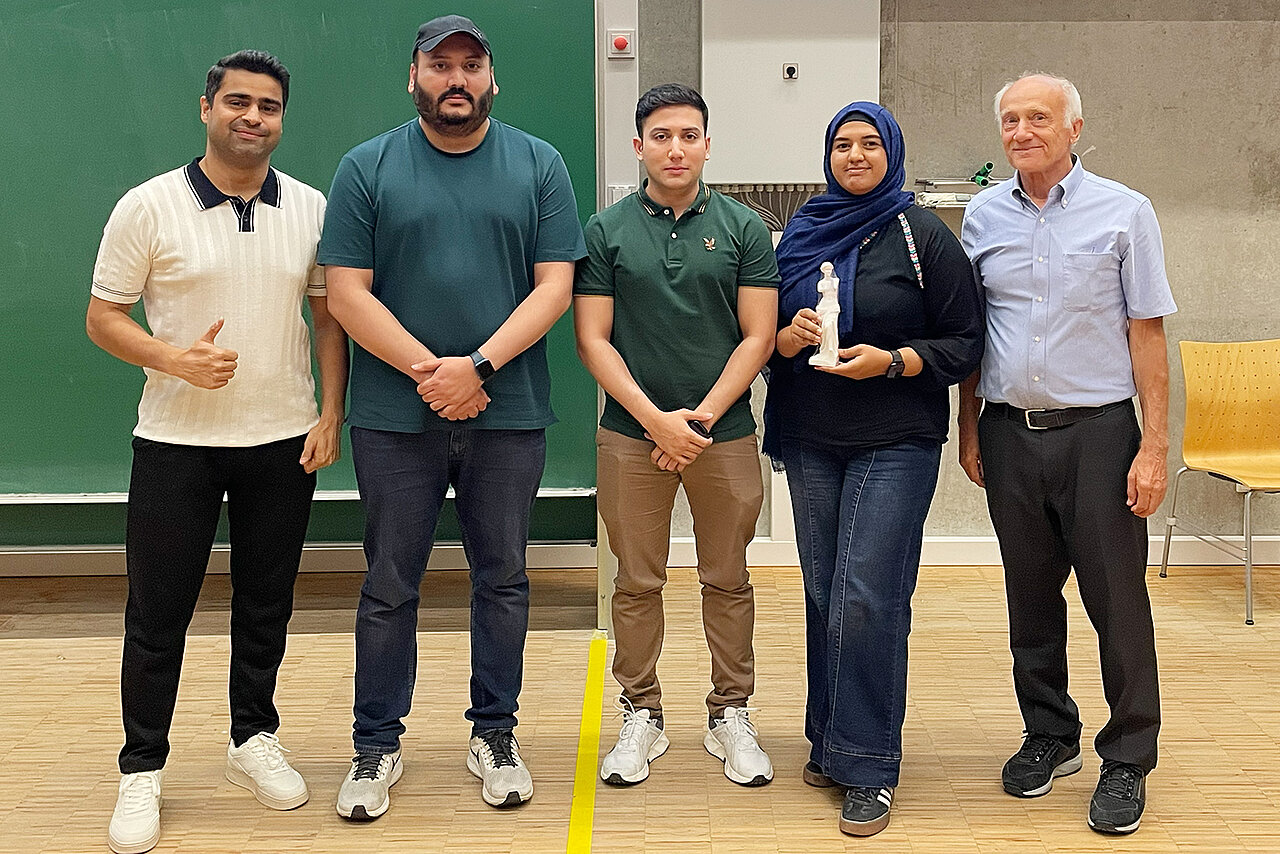
The “DataDigit” team, comprising Hafsa Mateen (Product Owner), Faraz Kayani, M. Athar Azam, Sarmad Kayani, Talha Fayaz and Armughan Ahmed, was awarded the prize for the best live demo. The application helps to extract data from invoices, bank statements or receipts and visualise it in a dashboard. This makes it easier to spot anomalies and process payments quickly. A key aspect was data protection, which is ensured by processing the data in the browser and using end-to-end encryption.
Projekta 2026: ‘Most Innovative Product’
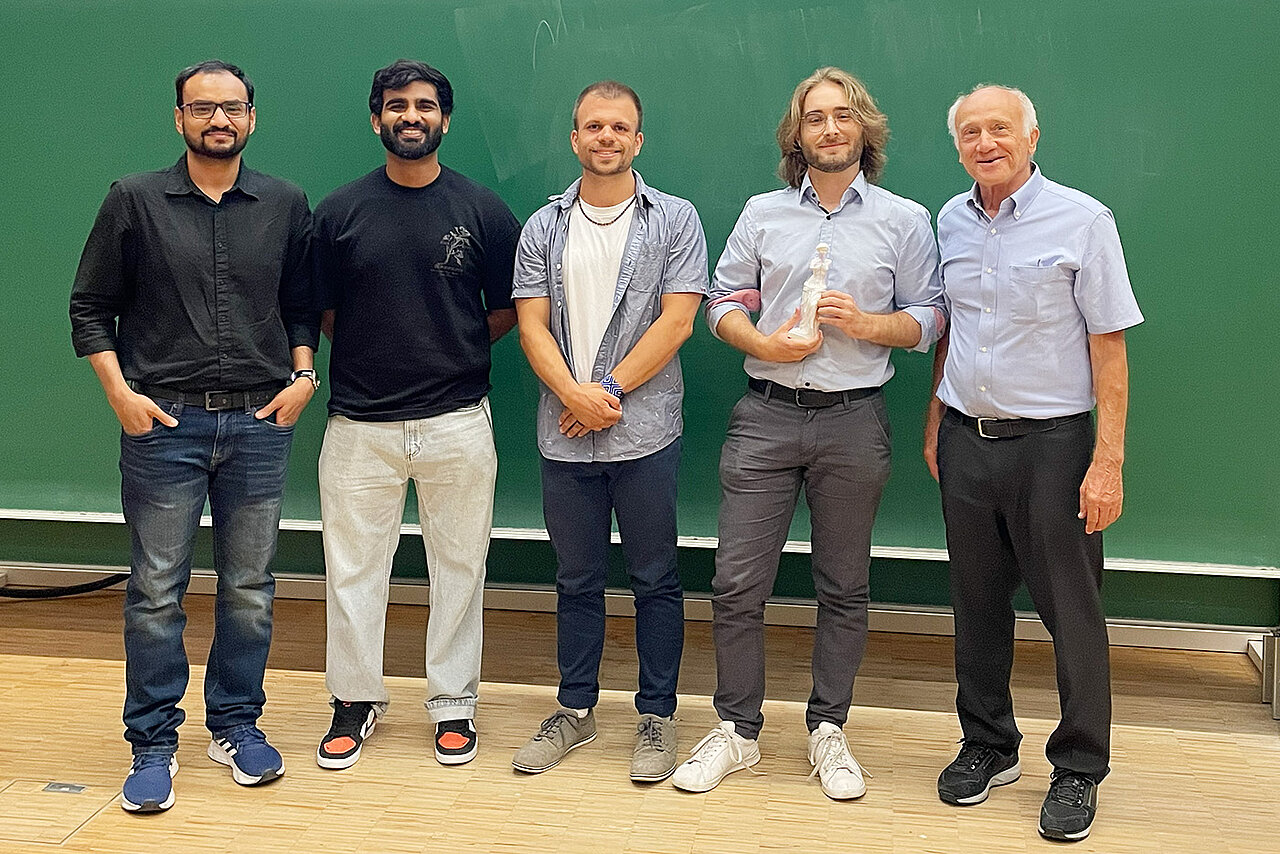
The “MindLeague” team, comprising Anne Bucher, Johannes Höfler, Yasmin Bah-Traore Djibril, Julius Arzberger, Otto Rößler, Nadine Noel and Lena Kutter, led by Sophia Lick, was awarded the prize for the most innovative product. The AI-powered platform they developed aims to optimise mental performance in sport. The aim is to support athletes in their day-to-day sporting lives, for example by tracking sleep and steps or carrying out personalised concentration exercises. The group has even already announced its first collaborations with Bundesliga sports teams.
Audience Award and Project A 2026
The “G-Audio” team, comprising Tabea Imhof, Selina Kässmann, Max von Trümbach, Kilian Hohl and Paula Schießl, led by Dr Margret Jestremski, was awarded the prize for the best Smart City project. To counteract declining cultural participation, G-Audio aims to make culture and music history accessible in a spontaneous and location-specific way. Users can listen to short audio clips at various locations in Würzburg – such as the former synagogue or the Frankonia Fountain – but only if they are within a certain radius of these sites. To make this possible, the web app accesses the user’s location.
Project teams comprising students from various Master’s programmes
The participants come from various degree programmes, including Computer Science, Management, Human-Computer Interaction and Diversity Management. Great importance was attached to interdisciplinarity when forming the project teams. Reflection revealed that this was a key factor in the projects’ success, as the wide range of skills and perspectives enriched the challenging project work.
High-calibre jury
The jury comprised Dr Christian Andersen from ZDI Mainfranken, Dr David Hock from Infosim, Andreas Veber from the University of Würzburg’s Centre for Research and Technology Transfer, and Harald Wehnes from the Institute of Computer Science.
The event ‘Professional Project Management in Practice’ teaches modern agile, traditional and hybrid approaches and demonstrates how to apply them to specific projects. In interdisciplinary team projects, participants apply the key methods in a practical manner to digital start-up projects and reflect deeply on their experiences.
Project management has established itself as the best management method for tackling complex challenges in industry, business and public administration in a structured manner and overcoming them successfully. In Germany, more than a third of economic output is now generated through projects. Modern project management is the key factor for the success of projects of all kinds – particularly in times of high uncertainty.
Additional images