Palliative medicine: Professorship for Carmen Roch
03/24/2026A core objective of palliative medicine is to provide symptom-relieving therapy for patients with incurable diseases. Carmen Roch is a professor in this field.
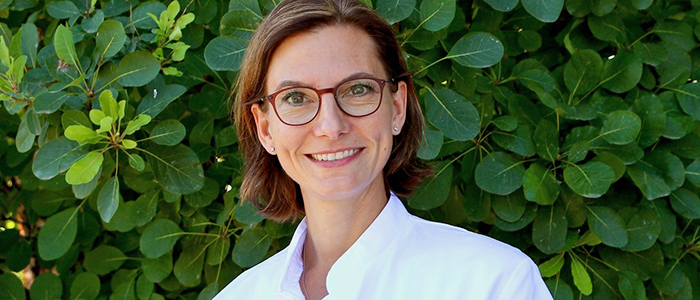
Carmen Roch has been Professor of Palliative Medicine at Würzburg University Medicine since February 2026. She also heads the Palliative Medicine Centre at Würzburg University Hospital (UKW). Patients with advanced and incurable diseases receive holistic care at the Interdisciplinary Centre for Palliative Medicine.
Treatment is not focussed on curing the illness, but on providing the best possible quality of life and strengthening the patient's own resources. The centre has its own ward with currently six beds, an outpatient clinic and a hospital-wide palliative care service.
"A core objective of our work is symptom-relieving therapy. It is therefore important that palliative medicine is involved as early as possible when it is clear that the disease can no longer be cured," emphasises the professor.
Involvement of palliative care at every stage
Palliative medical care can extend over several years. "As a multi-professional team, we can make an important contribution to quality of life during this time. The involvement of palliative medicine can be useful at any time during an illness - even at the same time as disease-specific treatment that is ongoing," says the anaesthesiology specialist. The 50-year-old also has additional qualifications in palliative medicine and specialised pain therapy and is a trained ethics consultant in the healthcare sector.
Carmen Roch has been working at the Interdisciplinary Centre for Palliative Medicine at the UKW since 2017. Her research focuses on the assessment of symptoms and stress in specific disease situations and, based on this, the best possible and individualised treatment of symptoms.
Three pillars of palliative medical care
In addition to its own ward at the UKW, the palliative care service is an important pillar of care at the University Hospital of Lower Franconia. Its core tasks include counselling, treating symptoms and providing resource-oriented support for patients and their relatives. In addition, there are topics such as anticipatory care planning, including advice, for example on living wills or advance care planning, the coordination and organisation of palliative care and support in the dying phase.
Professor Roch: "It's also about supporting the autonomy of patients in the best possible way." The palliative care service treats around 1,000 patients every year. A hospital-wide screening process ensures that the palliative care centre is involved quickly. Around 220 patients are currently admitted to the ward each year. Outpatients who do not require inpatient admission are advised and treated in the centre's palliative outpatient clinic.
Deciding together, providing optimal treatment
Together with the Bavarian Centre for Cancer Research (BZKF), the Palliative Care Centre at the UKW has introduced the certified share-to-care programme at the Interdisciplinary Centre for Palliative Medicine. The aim of this programme is to make medical decisions together with patients - the technical term is "shared decision making".
Carmen Roch: "When people come to the palliative care centre, they are faced with important decisions regarding their illness and quality of life. We want to work together and transparently to show them what treatment options are available."
In organisational terms, the Interdisciplinary Centre for Palliative Medicine is part of the Clinic and Polyclinic for Radiotherapy and Radiooncology at the UKW. When the new radiotherapy clinic is completed, palliative medicine will also move into the new building. The number of inpatient beds in palliative medicine will then also be increased.
Sponsoring organisation supports services
In addition to medical care, there are a number of other support services for patients at the Interdisciplinary Centre for Palliative Medicine at the UKW. An important help here is the centre's own support association.
The professor: "Unfortunately, many support programmes that can relieve or strengthen our patients are not covered by health insurance." These include art and music therapy, seasonal decorations on the ward and smaller cultural events such as readings or concerts that take place directly in the clinic.
Weblink
Further information (in German language) on the UKW palliative care centre and the support association: https://www.ukw.de/palliativmedizin/