
Precision oncology in Europe: an overview
09/29/2026A review article in *The Lancet Regional Health – Europe* provides an overview of molecular diagnostics and targeted cancer treatment in more than 20 European countries
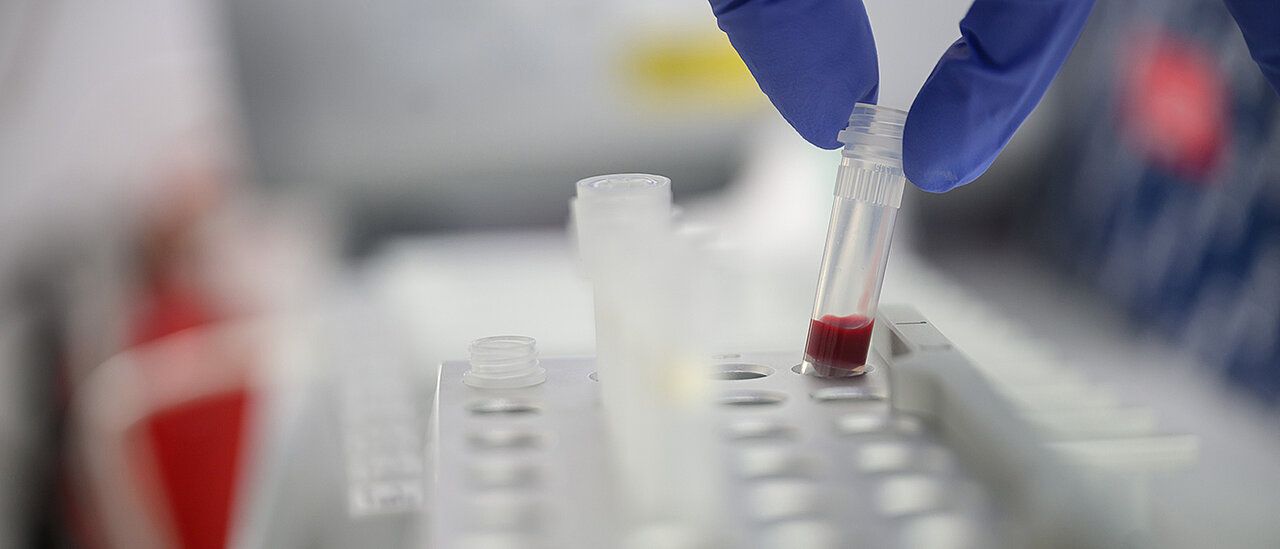
Every tumour is different. Even in patients with the same diagnosis, tumours can differ significantly at a molecular level. This is precisely where precision oncology comes in: it utilises the molecular characteristics of a tumour to tailor treatment as precisely as possible to the individual patient.
In Europe, this form of cancer treatment is increasingly becoming a clinical reality. However, a recent, comprehensive review published in the journal*The Lancet Regional Health – Europe*also shows that access to this treatment remains a major bottleneck. The study, ‘Landscape of cancer genomics and precision oncology in Europe’, provides an overview of the implementation of precision oncology in more than 20 European countries. It brings together the insights of over 150 leading experts, scientific evidence, policy analyses and snapshots of implementation at national level. The authors include Professor Anke K. Bergmann, Head of the Institute for Clinical Genetics and Genomic Medicine (KGGM) at Würzburg University Hospital (UKW), and Dr J. Matt McCrary, Head of the Healthcare Research Group at the KGGM.
Molecular diagnostics are widespread in Europe – the challenge lies in treatment
The team of authors was particularly struck by how similarly precision oncology is now organised across much of Europe – despite differences in infrastructure and reimbursement. In many countries, molecular tumour boards, reimbursable diagnostics and pathways to targeted therapies are already well established. Public investment makes the greatest contribution here. With its universal healthcare systems, common regulatory frameworks and cross-border research infrastructures, Europe generally has good conditions in place for equitable access to precision oncology.
The key obstacle at present is not diagnosis, but treatment. The task that still needs to be tackled is ensuring that patients receive the right treatment at the right time. And this gap is widest among people with rare cancers.
Precision oncology requires a learning healthcare system
The authors therefore recommend that policymakers and healthcare systems further develop precision oncology as a learning healthcare system. Within this system, treatment outcomes should be systematically recorded and used to inform decision-making. They recommend better coordination between clinical trials, reimbursement and implementation, and greater integration of research-initiated trials into clinical practice. Priorities should be guided by the level of evidence: for established biomarker-drug combinations, broad access is needed; for rare cancers, Europe-wide studies are required; and for new applications, a structured framework for generating evidence is essential.
“If we develop precision oncology as a genuine learning healthcare system based on real-world data and adaptive decision-making, then equitable access will no longer be a mere slogan, but will become part of our daily practice in cancer care,” says Kjetil Taskén, corresponding author of the study, Head of the Institute for Cancer Research at Oslo University Hospital and coordinator of the EU project PRIME-ROSE as part of the Cancer Mission. PRIME-ROSE, much like the ‘Personalised Cancer Medicine for all EU citizens’ (PCM4EU) consortium, addresses the major gap described: how do patients actually progress from a molecular diagnosis to a suitable treatment, and how can evidence be generated to support this and enable reimbursement?
Other European consortia, such as the Joint Action on Personalised Cancer Medicine (JA PCM), the Joint Action on Networks of Expertise (JANE) and CAN.HEAL, were also involved in the review. The latter, for example, has laid important groundwork and provided recommendations on how genomic diagnostics and personalised medicine can be integrated into European cancer care. JA PCM, the most recent initiative, which has been running since January 2026, builds on the findings of CAN.HEAL and PCM4EU and aims to expand access to and knowledge of personalised cancer medicine across Europe. It comprises more than 140 organisations from 29 countries. JANE is currently establishing seven pioneering networks of excellence in key areas of oncology.
UKW contributes through its participation in EU networks
The Institute of Clinical Genetics and Genomic Medicine plays a key role in all the networks mentioned. “We are proud that, through our involvement, we are contributing to this article and to European efforts to ensure the equitable implementation of precision oncology across the entire continent,” comments Professor Anke K. Bergmann.
Dr J. Matt McCrary adds: “Building on German national initiatives, such as the Genomic Sequencing Pilot Project, our work specifically aims to identify and integrate personalised genetic risk information. This is intended to enable precise cancer prevention and aftercare programmes across Europe, thereby complementing precise treatment approaches.”
The review article is being published in parallel with the ‘Lancet Oncology Commission on Cancer Genomics and Precision Oncology’. This groundbreaking global initiative was presented today, 25 September 2026, at the UICC World Cancer Congress in Hong Kong.
Publications
Gro Live Fagereng, Edvard Abel, CAN.HEAL Consortium, Raffaella Casolino, Ruggero De Mariad, Stefan Fröhling et al. Landscape of cancer genomics and precision oncology in Europe. The Lancet Regional Health – Europe. THE LANCET Regional Health, Sept. 2026, DOI: 10.1016/j.lanepe.2026.101841
Raffaella Casolino, Joaquin Mateo, Prof Elisabeth G E de Vries, Amber Johns, Melanie Courtot, Prof Rita T Lawlor, et al. Accelerating equitable cancer genomics and precision oncology in healthcare and research: a Lancet Oncology Commission. The Lancet Oncology, Sept. 2026, DOI: 10.1016/S1470-2045(26)00302-5