
A look at the literature of France and Italy
04/28/2026Professor Karl Philipp Ellerbrock deals with a wide range of topics. He is the new Würzburg Chair of French and Italian Literatures.

Professor Karl Philipp Ellerbrock has held the Chair of French and Italian Literatures at the University of Würzburg since 1 October 2025. Prior to this, the 43-year-old academic held a professorship for Romance Literatures at the University of Konstanz.
In the field of Italian literature, his work focusses on the 13th and 14th centuries. Dante Alighieri (1265-1321) played a prominent role in this period: the poet is considered by many to be the founder of the Italian language. He wrote his masterpiece, the Divine Comedy, not in Latin, as was customary at the time, but in the everyday language of his home town, Florentine.
Dante thus had a significant influence on the development of the Italian written language. In his main work, he describes in detail the medieval ideas about the Christian afterlife - hell, purgatory and paradise. This captivated many artists and inspired other writers to also write in the vernacular.
Dante's poetics of the unsaid
To this day, the Divine Comedy remains one of the most influential works of literature. Karl Philipp Ellerbrock analysed it in his habilitation thesis: "In view of the great wealth of knowledge that comes to bear in the Commedia, I was interested in the question of what things Dante does not say in his epic." The work is permeated by a "poetics of the unsaid". Through skilful omissions, the Commedia develops an appeal that in the Middle Ages was not reserved for vernacular literature, but for the Bible.
Ellerbrock is committed to communicating Dante's works to the public. He has been Chairman of the Weimar-based German Dante Society, which was founded in 1865, since 2021. Its aim is to promote the study of Dante and his era. To this end, the society organises conferences, readings and summer schools.
Florence as a city of poets
Ellerbrock's new book "Florenz - Stadt der Dichter" (in German) has just been published in April 2026. It is the result of many years of research, lectures and seminars at the universities of Jena, Klagenfurt and Constance as well as excursions to Italy with students.
The monograph provides an insight into medieval vernacular poetry about the city. Based on ten selected sights that can still be visited in Florence today, the chapters show how well-known and lesser-known Florentine writers of the 14th century viewed their city. This enables readers to see not only the Ponte Vecchio and the Baptistery, for example, but the entire city with new eyes.
A book presentation will take place on 6 May 2026 at 7 pm at the Akademische Buchhandlung Knodt in Würzburg.
Telling literary history differently
In the field of French literature, Ellerbrock's aim is to provide students with insights into different eras, from the Middle Ages to the present day. One question that drives him: How can literary history be told in an exciting way? Together with his colleague Professor Anne Kraume from Constance, he is planning a conference that will take place in Würzburg from 14-16 January 2027. "We have invited experts to explore the Middle Ages, Renaissance and Classical periods anew on the basis of short text passages."
One example: the work of Marie de France, the first known female poet in France, who lived in the twelfth century. In one of her verse tales, which revolve around the theme of courtly love, a couple is separated for years and a swan carries their messages back and forth. No less fascinating than the absent person is the message itself, which we eagerly await and read again and again. "In this," says Ellerbrock, "there is also praise for the mediality of literature, which is an instance of mediation and thus of the creation of perspectives."
Claude Denis: fountain builder and poet
Karl Philipp Ellerbrock is currently planning a research project on Claude Denis, who worked as a fountain engineer at the court of the Sun King Louis XIV. Denis was responsible for the construction of the fountains in the gardens of Versailles.
He described the hydraulic works of art in a lengthy poem, which has survived in manuscripts and was only published later. "The verses about the palace gardens are not only a valuable source for the history of the fountains, they also operate at an interface between technology and literature and provide information about the significance of poetry in relation to other fields of knowledge," says Ellerbrock.
The professor will dedicate his inaugural lecture to this topic, which will take place on 5 June 2026 at 6 p.m. in the Z6 lecture hall building.
Career of the newly appointed professor
Karl Philipp Ellerbrock, born in 1982, grew up in Dortmund. He studied French, English and Italian at the University of Münster, where he gained his doctorate in Romance Philology in 2013. His habilitation in Romance, General and Comparative Literature at the University of Jena followed in 2019.
In the course of his career, he has held visiting positions at the University of Pisa, the Alpen-Adria-Universität Klagenfurt, Columbia University in New York and Stanford University.
From 2020, Ellerbrock held the professorship for Romance Literatures with a focus on Italian literature at the University of Konstanz. From there, he took up the Chair of French and Italian Literatures at the University of Würzburg.
Bachelor's degree in "Franco-German Studies": As Chair, he is now also responsible for the Bachelor's degree programme "Franco-German Studies - Language, Culture, Digital Competence". In this binational degree programme, students spend their time studying alternately in Würzburg and Caen (Normandy). At the end of the programme, they receive a degree from both universities.
Contact
Prof. Dr Karl Philipp Ellerbrock, Chair of French and Italian Literatures at the University of Würzburg, T +49 931 31-80856, karl.ellerbrock@uni-wuerzburg.de
Inaugural lecture
Fountains and verse. A poetic fountain builder in Versailles
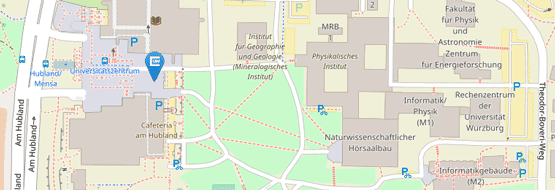
In German language - Friday, 5 June 2026, 6 p.m., Central Lecture Hall and Seminar Building Z6, Am Hubland, Lecture Hall 0.001
Please register by 25 May 2026 at nicole.winter@uni-wuerzburg.de
New publication
Florenz - Stadt der Dichter. Eine literarisch Spurensuche. Berlin 2026 (in German).
Book presentation
Wednesday, 6 May 2026, 7 pm, Akademische Buchhandlung Knodt
To register