
Monuments, Memory, and Cultural Exchange
05/12/2026Students from Würzburg and the United States have been exploring monuments and remembrance practices since 2021. Their collaborative exhibition Monuments & Memory has now been expanded with two new contributions.
Monuments come in a wide variety of forms. Some are so well-known that they easily come to represent entire cities or even countries: for example, the Statue of Liberty or the Brandenburg Gate. Others might not seem obvious and escape our immediate attention.
But they are all touchstones for remembrance and, as such, often the subject of controversy. One such controversy laid the groundwork for the first Monuments & Memory seminar in 2021. At the time, the question of how to deal with monuments to the Confederacy was a topic of intense debate and activism in the United States.
“Unfortunately, it’s often the case that people no longer talk to one another and positions become increasingly entrenched. That’s why dialogue among students is a central focus of our course,” according to Timothy Johnson, Craig and Audrey Thorn Distinguished Professor of Religion at Flagler College in St. Augustine, Florida. The Julius Maximilian University of Würzburg (JMU) has collaborated with Flagler College since 2021, with Hastings College (Nebraska) joining the interdisciplinary collaboration in 2025.
Community-Based Remembering
In their project, students Samantha Hohnhaus (JMU), Lilly Käting (JMU), Gianna Maniscalco (Flagler), Emma Morelli (Hastings), and Hannah Scholz (JMU) explore monuments that engage the general public.
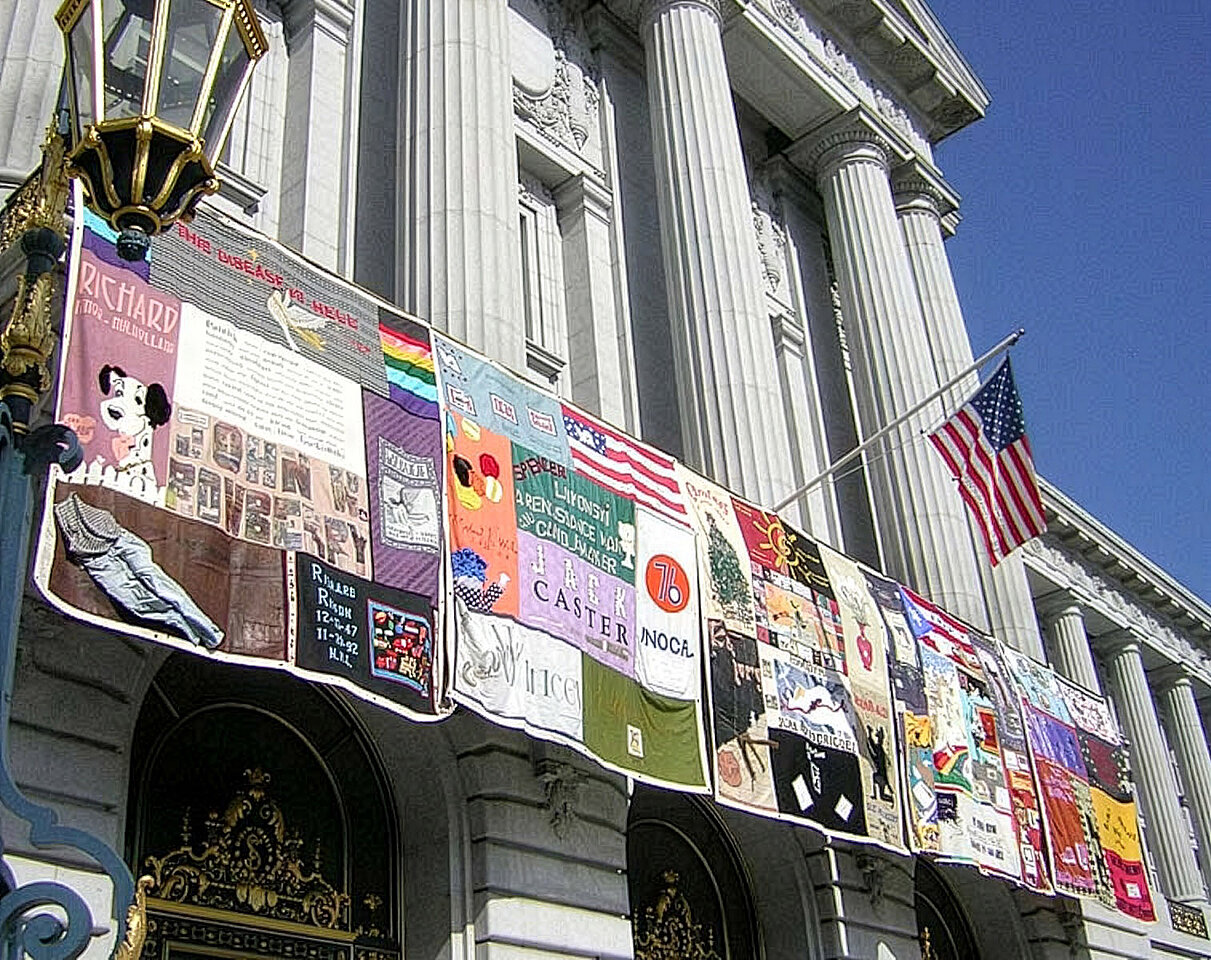
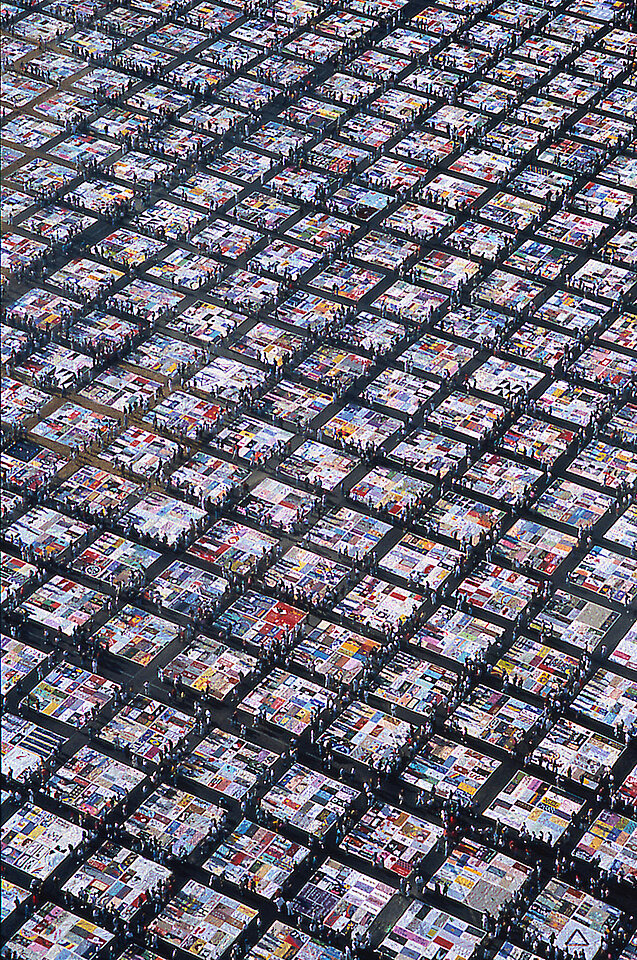
“We took a closer look at one example from the US and one from Germany,” Lilly Käting explains, “namely the AIDS Memorial Quilt, a collaborative artwork that commemorates people who died of AIDS. We also examined the Harburg Memorial Against Fascism.”
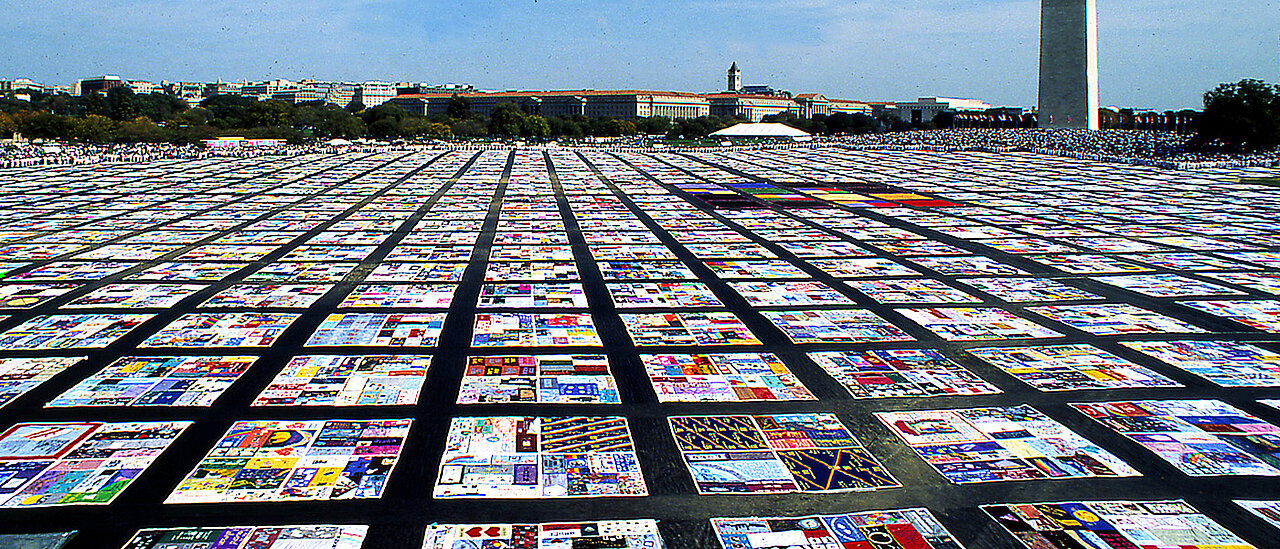
The AIDS Memorial Quilt project was initiated in 1987. At that time, people living with AIDS were often victims of social exclusion. The quilt consists of sewn-together pieces of fabric, or “panels,” created by friends and relatives of the deceased. It now comprises over 40,000 “memorial panels.“ Due to its enormous size, it is rarely exhibited in its entirety; the last time this happened was 1996 in Washington, D.C.
The decision to establish a Memorial Against Fascism in Hamburg-Harburg was made in 1983, on the 50th anniversary of the Nazi seizure of power. After the memorial’s dedication in 1986, messages, signatures, and notes from visitors were collected over the next seven years on the twelve-meter-high column. The progressive lowering of the column during this time was accompanied by panel discussions and lectures on National Socialism.
For their project, the students interviewed artist Esther Shalev-Gerz, who designed the memorial in Hamburg-Harburg together with Jochen Gerz, as well as the team behind the AIDS Memorial Quilt. They are certain: “When society actively participates in the creation of memorials, a completely different connection is formed. Remembrance becomes much more intense and personal. Moreover, such projects can attract greater attention.”
Reading City Halls
In a further project, Anna Klein-Heßling (JMU), Clara Lüft (JMU), Rachel Wall (Flagler), and Xander Uhrmacher (Hastings) explore government buildings as sites of identity and memory. Their contribution, “Reading City Halls: Architecture, Memory, and Civic Identity,” provides an introduction to the history of city halls in Würzburg, Nuremberg, St. Augustine, and Hastings and invites exhibition visitors to reflect on their own experiences with such civic spaces.
Understanding Through Collaboration
Beyond its central topic of cultural memory, the collaboration with US partners has a fundamental goal: intercultural exchange. “Our collaboration is primarily about bringing students into dialogue. We want to create a space for transatlantic exchange,” according to Professor MaryAnn Snyder-Körber who, with Professor Helmut Flackenecker, oversees the Würzburg side of the project.
For students in the course, that goal was reached. Flagler student Gianna Maniscalco sums up: “It was great to get to know each other in person, learn more about the cultures of our respective countries, and explore monuments and historical sites together.“
The next round of the transnational project seminar begins on 18 May.
Monuments & Memory as a case-study example for transformative higher education and democracy education
Contact
Prof. Dr. MaryAnn Snyder-Körber, American Cultural Studies, Tel: +49 931 31 86839, E-Mail: maryann.snyder-koerber@uni-wuerzburg.de
Additional images