

How children learn to defend themselves against viruses
05/12/2026A study at Würzburg University Hospital is investigating how the immune system develops in the first years of life. The study period for newborns can now be extended by one year.
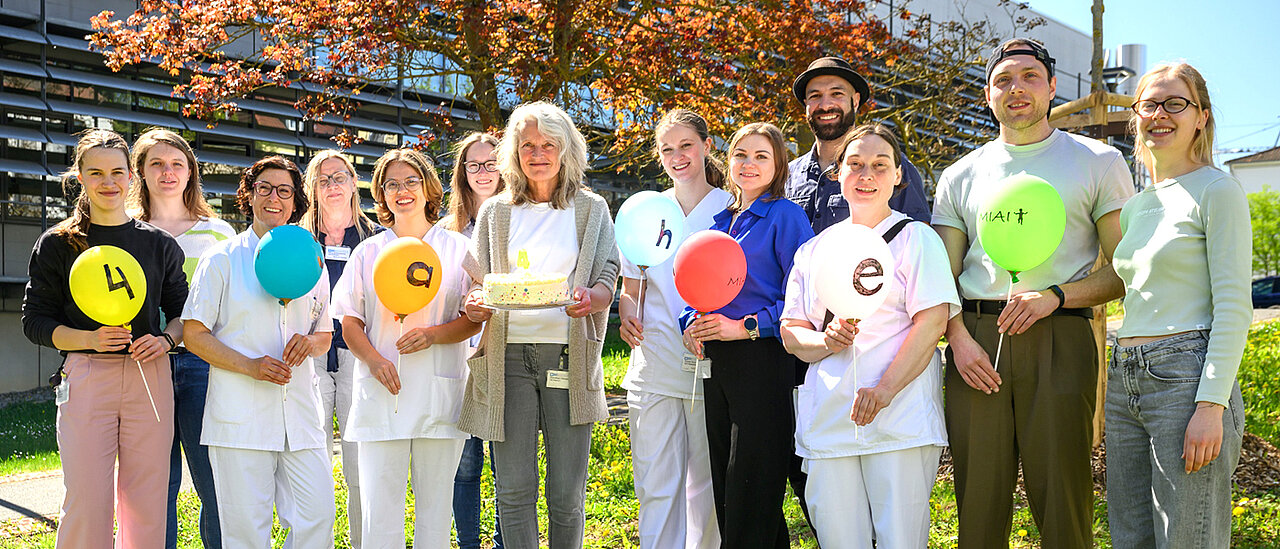
The twins Sophia and Emilia Waxenegger are not only among the first MIAI babies, but also among the first well-wishers. MIAI is the short name of a study entitled "Maturation of Immunity Against Influenza" (development of the immune system against viral infections of the respiratory tract). Like MIAI, the girls are celebrating their fourth birthday in May. Immediately after their birth at the Würzburg Women's Hospital, Sophia and Emilia were included in the birth cohort and examined after one, six and twelve months in the MIAI study outpatient clinic at the Children's Hospital.
What is new is that the two are allowed to come back for another examination in a year's time. The cohort has been extended to five years. This means that Professor Dorothee Viemann, holder of the Chair of Translational Paediatrics at the Children's Hospital at the University Hospital of Würzburg (UKW) and head of the MIAI study, and her team can now gain an even more comprehensive picture of the development of the immune system.
Many factors influence the development of the immune system
Dorothee Viemann and her study team want to use the data, test results and biosamples collected in the MIAI birth cohort to understand how children learn to defend themselves against viruses such as influenza, RSV or SARS-CoV-2 in the first years of life. Viral respiratory infections continue to be a major global problem and cause numerous illnesses and deaths.
How well our immune system develops to defend against such viral infections depends not only on genetic factors, but above all on environmental influences. However, it is not yet fully understood which environmental factors promote immune maturation and which interfere with it. In addition, research is still needed into which components and cells of the immune system are important in newborns and children in order to prevent severe respiratory infections.
For example, the MIAI team is investigating the role of socio-economic background, the number of family members, attendance at crèches, vaccinations, infections and nutrition in the early development of immune responses. They are also investigating whether there is a connection between the formation of the microbiome - i.e. the totality of microorganisms in the body - and the development of immunity to these viral infections after birth.
High satisfaction and long-term support
In the first four years, the team enrolled a total of 277 children in the MIAI study. 49 per cent of them are female, 51 per cent male. Among them are eight pairs of twins and now also three siblings. 238 of the MIAI children are already over one year old. A total of 4,800 samples were properly secured, collected and stored.
Study acceptance is also remarkable: over 90 per cent of the families remain active in the study and are extremely satisfied with their participation. They value the opportunity to make an important contribution to research and are willing to continue supporting the MIAI team. "Their committed cooperation is an essential part of the success of our study and helps us to further deepen our medical knowledge and improve preventive care," says Dorothee Viemann, thanking both the parents and the children.
The path to preventive medicine
A key goal for the future is to establish immunodiagnostics for paediatrics that can predict at an early stage whether a child's immune system is developing healthily or whether it should be specifically supported in order to promote long-term health.
"In particular, we want to examine immune cells in early phases of life in order to identify unfavourable cell differentiations that may be associated with increased susceptibility to infection in the long term. In this way, we want to gain more precise insights into how the immune system can be strengthened in a targeted manner," explains Dorothee Viemann. In the long term, MIAI aims to usher in a new era of medicine in which diseases are not only treated, but prevented as early as possible.
"By analysing all available metadata, we want to identify specific patterns that indicate which biological signals and cellular compositions play a role in preventing disease processes," comments Professor Christoph Härtel, Director of the Children's Hospital at the UKW. "Preventive medicine is at the centre of our vision. Our aim is to translate these findings into a fundamental improvement in medical care."
The study is therefore far from over. Ideally, the study team would like to accompany Sophia, Emilia and the numerous other MIAI children through puberty. During this phase, a lot of things are reorganised in the immune system.