
Martin Väth takes up Professorship for Immunometabolism
06/30/2026Martin Väth will take up the newly created W2 professorship for Immunometabolism at the Institute of Systems Immunology at the University of Würzburg on 1 July 2026.
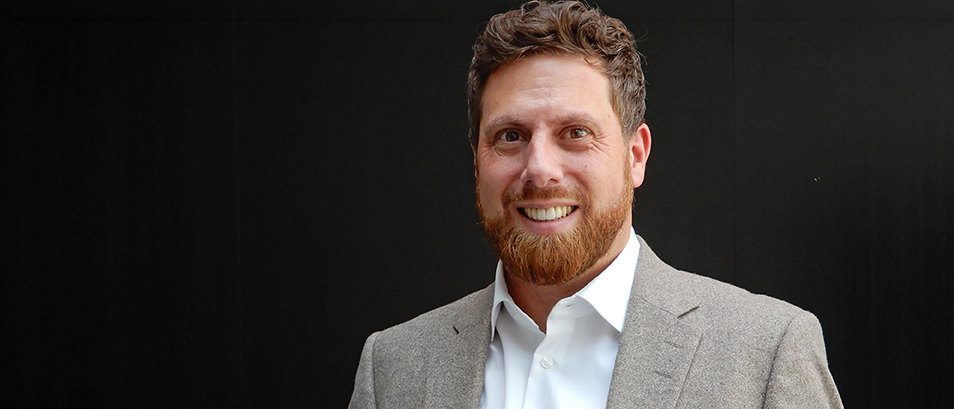
Why do immune cells lose their effectiveness in chronic infections and cancer, whilst they overreact in autoimmune diseases? What role does metabolism play in this? And how can these findings be used to develop new therapies? These are the questions being explored by the biochemist and immunologist Dr Martin Väth.
He is investigating how immune cells interact with their metabolic environment, for example in inflamed tissue or in the tumour microenvironment. These processes provide important insights into the development and progression of cancer and autoimmune diseases. Metabolism influences far more than just the energy supply to immune cells: it also intervenes in signal transduction pathways and controls the epigenetic regulation of immune cell function.
Crucial years in the Max Planck Research Group for Systems Immunology
Over the past seven years, Martin Väth has established an independent junior research group within the Max Planck Research Group for Systems Immunology, led by JMU professors Georg Gasteiger and Wolfgang Kastenmüller.
“My time as a junior research group leader was essential for me to continuously develop my research profile. I am particularly grateful to Professor Gasteiger and Professor Kastenmüller, who provided me with significant support as mentors,” says Väth.
Long-term continuity is crucial, particularly in his field of research. New scientific questions require time to be developed and addressed. He is therefore all the more delighted to now be able to continue and further deepen this research.
Research breakthroughs in understanding T-cell exhaustion
Professor Väth’s research to date has centred on the question of why T-cells lose their function in the course of chronic diseases, such as in the tumour microenvironment in cancer.
His work points to a previously underestimated key role played by mitochondria: “We were able to show that changes in mitochondrial metabolism not only promote T-cell exhaustion but are also a contributing cause,” the biochemist summarises.
Using genetic and pharmacological interventions, his team succeeded in experimentally preventing this exhaustion. The findings open up new avenues for the further development of modern immunotherapies – particularly CAR-T cell therapies – and could, in the long term, contribute to more effective treatment strategies for cancer and infections.
Basic research opens up new prospects for immunotherapies
In the coming years, Martin Väth’s research team aims to further elucidate the molecular and metabolic mechanisms that determine the function and regulation of immune cells. The focus will be on basic research, i.e. gaining a detailed understanding of key biological processes.
In the long term, this research could help to modulate immune responses in a targeted manner – for example, by attenuating misdirected immune responses in autoimmune diseases or by specifically activating immune cells in cancer therapy. This would be an important step towards clinical translation.
The new professor’s CV
Martin Väth studied biochemistry in Ulm and was awarded a PhD summa cum laude in the field of immune tolerance at the Institute of Molecular Pathology at the University of Würzburg.
He then spent the period from 2013 to 2017 as a postdoctoral researcher funded by the German Research Foundation (DFG) at New York University (NYU) in New York City, where he conducted research under the supervision of Professor Stefan Feske. From 2017, he worked there as an instructor in the Department of Pathology at the NYU School of Medicine.
His work in the field of signal transduction in immune cells has been recognised with, amongst other honours, the Fritz and Ursula Mechers Prize from the German Society for Immunology (DGfI) and the Outstanding Postdoc Award from New York University.
In 2019, he returned to Germany and took over as head of the ‘Metabolism and Immune Cell Signalling’ research group at the Max Planck-affiliated Institute of Systems Immunology at Julius-Maximilians-Universität Würzburg (JMU). During this time, he focused in particular on researching metabolic processes involved in inflammation.
From 1 July 2026, Martin Väth will be Professor of Immunometabolism at the JMU Institute of Systems Immunology.
Contact
Prof. Dr Martin Väth, martin.vaeth1@uni-wuerzburg.de