
Krautrock: More than just a music scene
09/08/2026Psychedelic, experimental, electronic: so-called Krautrock is not just an alternative music scene from the 1970s. The bands also developed their own understanding of the world. A project is investigating what defines the scene.

So-called ‘Krautrock’ is an umbrella term for the music of alternative rock bands that performed in West Germany between 1967 and 1979. The term is, however, controversial: it originated in the British media of the 1970s and originally had a derogatory connotation. Many bands felt, and still feel, that they belong to the movement, but not to the term itself.
It is equally difficult to define what constitutes Krautrock musically, as it encompasses a variety of styles: These include the psychedelic sounds of Amon Düül II, the space and jazz rock of Guru Guru, the electrically amplified minnesang of Ougenweide, and the experimental electronic music of the internationally renowned band Kraftwerk.
“Musical characteristics alone are not enough to bring this culturally influential scene under one umbrella,” says Dr Sebastian Dümling, private lecturer at the Chair of European Ethnology/Empirical Cultural Studies at the Julius-Maximilians-Universität Würzburg (JMU). He is leading a new project that examines the Krautrock scene from both a musical and lyrical perspective, whilst also exploring its way of life.
Lifestyle and music: humans, nature and technology united
Many bands moved away from cities such as Hamburg and Munich and founded rural communes in villages. In contrast to the folk movement that had begun in the US shortly before – with its arguably most famous representative, Bob Dylan – the German bands were not seeking a supposedly ‘primitive’ way of life, cut off from modern technology. “Whilst they celebrated peaceful country life, they set up Moog synthesisers the size of cupboards in their farmhouses to experiment with soundscapes and discover new sounds,” says Dümling.
This way of life stems from the fact that the scene did not view people, nature and technology as separate from one another, but as interconnected. This conviction is reflected in songs such as ‘Der Elektrolurch’ by Guru Guru, on album covers such as Popol Vuh’s 1970 album ‘Affenstunde’, and, more generally, in the experimental approach to music. “A plough, for instance, might well have been repurposed and used as a drum,” says the JMU researcher. One of the research questions in his project is: How are artistic life and rural life connected? Where do the two harmonise, and where do they not?
“In their new function as instruments, objects, artefacts and products take on new meanings. They become vessels of knowledge within the scene and are passed on as such,” explains Dümling. The Krautrock scene thus did more than simply signify a sense of belonging. The project aims to show that the bands also created, passed on and archived new knowledge about the world. “The project thus combines pop culture studies, narrative research and the history of knowledge. Pop should not merely be described as a cultural asset that provides enjoyment,” says Dümling. The project also aims to demonstrate that popular culture can act as a producer of knowledge in its own right.
A scene that is still alive today
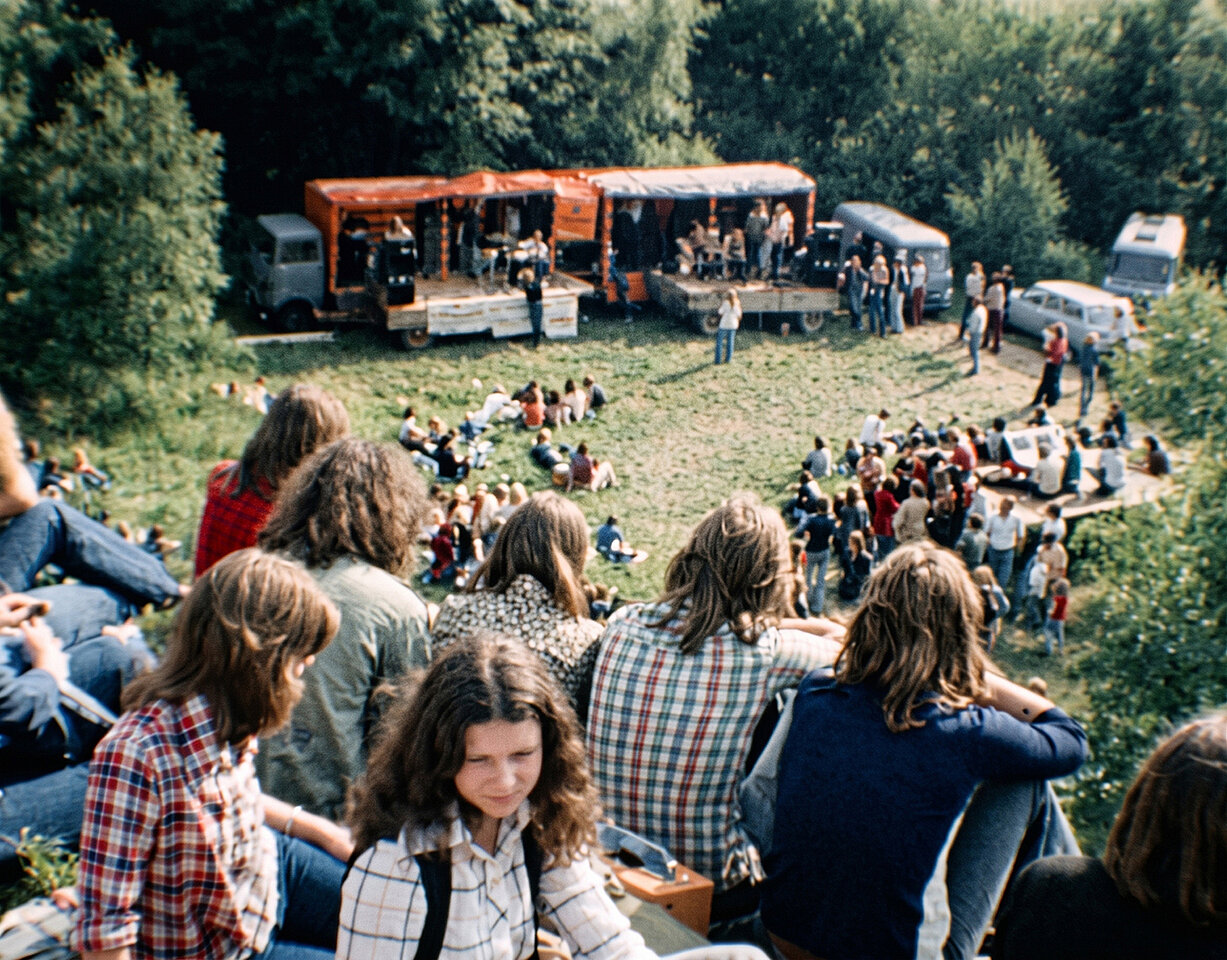
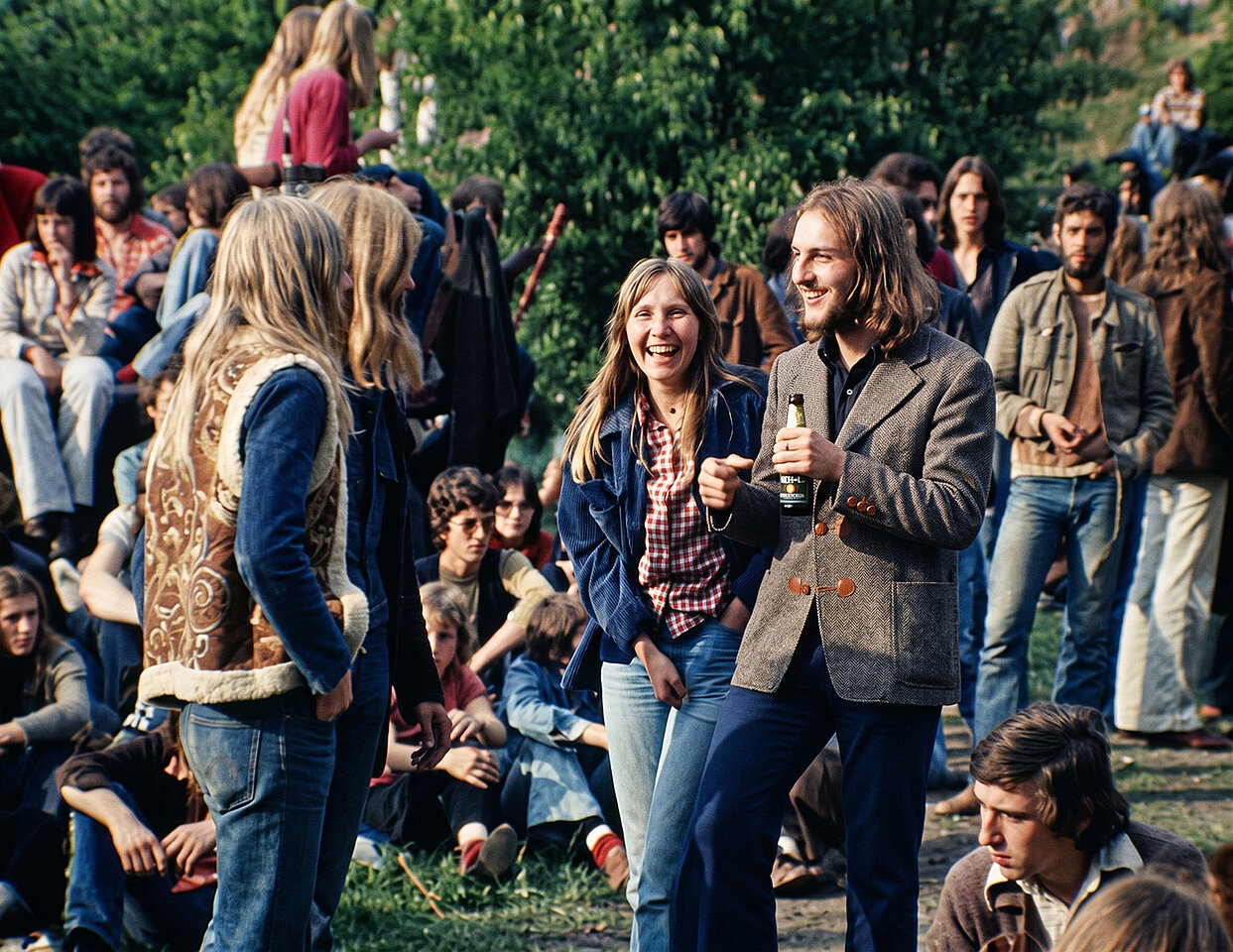
How did the bands pass on their knowledge? Primarily at festivals, such as the Essen Songtage in 1967 and the Burg Herzberg Festival in 1968, where the musicians exchanged ideas with one another. The emerging ‘Umsonst & Draußen’ festivals, such as the one held in Vlotho in 1975, were also used by the bands for this purpose – the independent Würzburg offshoot, which still takes place annually, has been running since 1988.
The project team led by Sebastian Dümling is analysing archive material, lyrics and album covers for its research. It is also conducting interviews with contemporary witnesses from the scene. Some of these musicians are still active today: “Admittedly, many bands did not survive the 1970s because they did not want to turn professional. But famous acts such as Faust and Guru Guru are still active today and some of them still live in their communes.”
There are also new bands carrying on the scene’s tradition: The Lindau Project, an ensemble founded in Regensburg in 2024, draws inspiration from the works of Popol Vuh in its songs.
Funding
The German Research Foundation (DFG) is providing just under 250,000 euros in funding for the project “Krautrock-Erzählungen. Wissensökologien, ländliche Avantgarden und posthumane Imaginationen in der BRD (1967-1979)" (Krautrock Narratives: Ecologies of Knowledge, Rural Avant-Gardes, and Posthuman Imaginations in the Federal Republic of Germany (1967–1979)). Sebastian Dümling’s team will officially begin work on March 1, 2027. Dümling plans to post job openings for a research assistant and a student assistant this September. The project will run for three years.
Contact
PD Dr Sebastian Dümling, Chair of European Ethnology/Empirical Cultural Studies, Institute of German Philology, T +49 931 31- 88203, sebastian.duemling@uni-wuerzburg.de
Additional images