
Taking a bird’s-eye view of the English language
09/15/2026As an interdisciplinary field, Geolingual Studies combines linguistics with remote sensing. A new anthology highlights the research opportunities this opens up.

English is the world’s leading language in most school systems, in international trade and on the internet. Most people probably think of the language standards from the USA and the United Kingdom, as taught in schools. In megacities such as Singapore, Hong Kong or Tokyo, however, there are countless variants of English which, since the 1980s, have increasingly come to the fore in linguistics through the research field known as ‘World Englishes ’.
The Department of Geolingual Studies (GLS) aims to systematically record and investigate variation in language use and its spatial distribution. This is because the new department brings together methods from linguistics, geography, remote sensing and the digital humanities within a single discipline.
An interdisciplinary team at the Julius-Maximilians-Universität Würzburg has come together, specialising in the interplay between language and space. Researchers from this network have now published a new anthology on variants of English in urban areas with Edinburgh University Press, which is dedicated to current research trends in GLS. Its title is *Geolingual Studies on Urban Space*.
It was edited by Professor Carolin Biewer, Head of the Chair of English Linguistics; her research assistants Dr Lisa Lehnen and Dr Ninja Schulz; and Professor Hannes Taubenböck, Head of the Chair of Global Urbanisation and Remote Sensing at the Earth Observation Research Cluster and Head of the ‘Geohazards and Civil Security’ Department at the Earth Observation Centre (EOC) of the German Aerospace Centre (DLR).
From a bird’s-eye and user’s perspective
Across ten chapters, researchers from the fields of linguistics and Earth observation describe various linguistic approaches to the study of urban spaces. Objective data from remote sensing, such as satellite and drone imagery, is also included. This provides insights into settlement developments, spatial structural variability, central or peripheral locations, mobility and migration over time. Combined with an understanding of language as an indicator of group affiliation and as a marker of how groups perceive urban life, Earth observation data and linguistics complement one another and enable a more holistic perspective.
The authors do not limit themselves to a bird’s-eye view: social media data, newspaper articles, surveys, interviews and ethnographic observations also form part of the research. Posts on platforms such as Twitter (now X) can contain information about users’ emotions regarding their urban environment and how they perceive it. Location tags or text content sometimes reveal where the posts are situated.
“GLS offers the opportunity to examine megacities as diverse and dynamic urban spaces in which socio-cultural trends and transformations are particularly visible,” says Carolin Biewer. The discipline provides the ideal systematic framework for linguistic analysis.
Book launch event
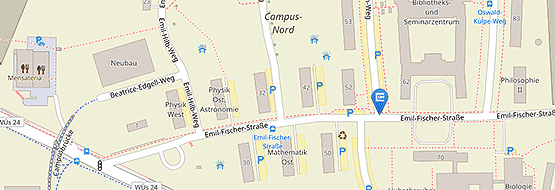
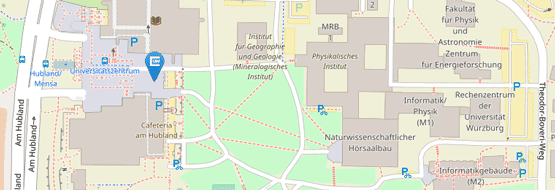
The public book launch will take place on Thursday, 15 October 2026, at the Centre for Philology and Digitality at the University of Würzburg on the Hubland Nord campus (Emil-Hilb-Weg 23, Room 00.002). Interested guests are warmly welcome.
Publication
Carolin Biewer, Lisa Lehnen, Ninja Schulz, Hannes Taubenböck (eds.) (2026): Geolingual Studies on Urban Space. Edinburgh University Press (series: New Directions in World Englishes Research). PDF ISBN: 978-1-3995-5662-0, Print ISBN: 978-1-3995-5660-6, 448 pages, £125.
Contact
Prof. Dr Carolin Biewer, T +49 931 31-80224, carolin.biewer@uni-wuerzburg.de
Prof. Dr Hannes Taubenböck, T +49 931 31-86778, hannes.taubenboeck@uni-wuerzburg.de